
RC Bearing Cleaning for Smooth-Running Models
16/10/2026
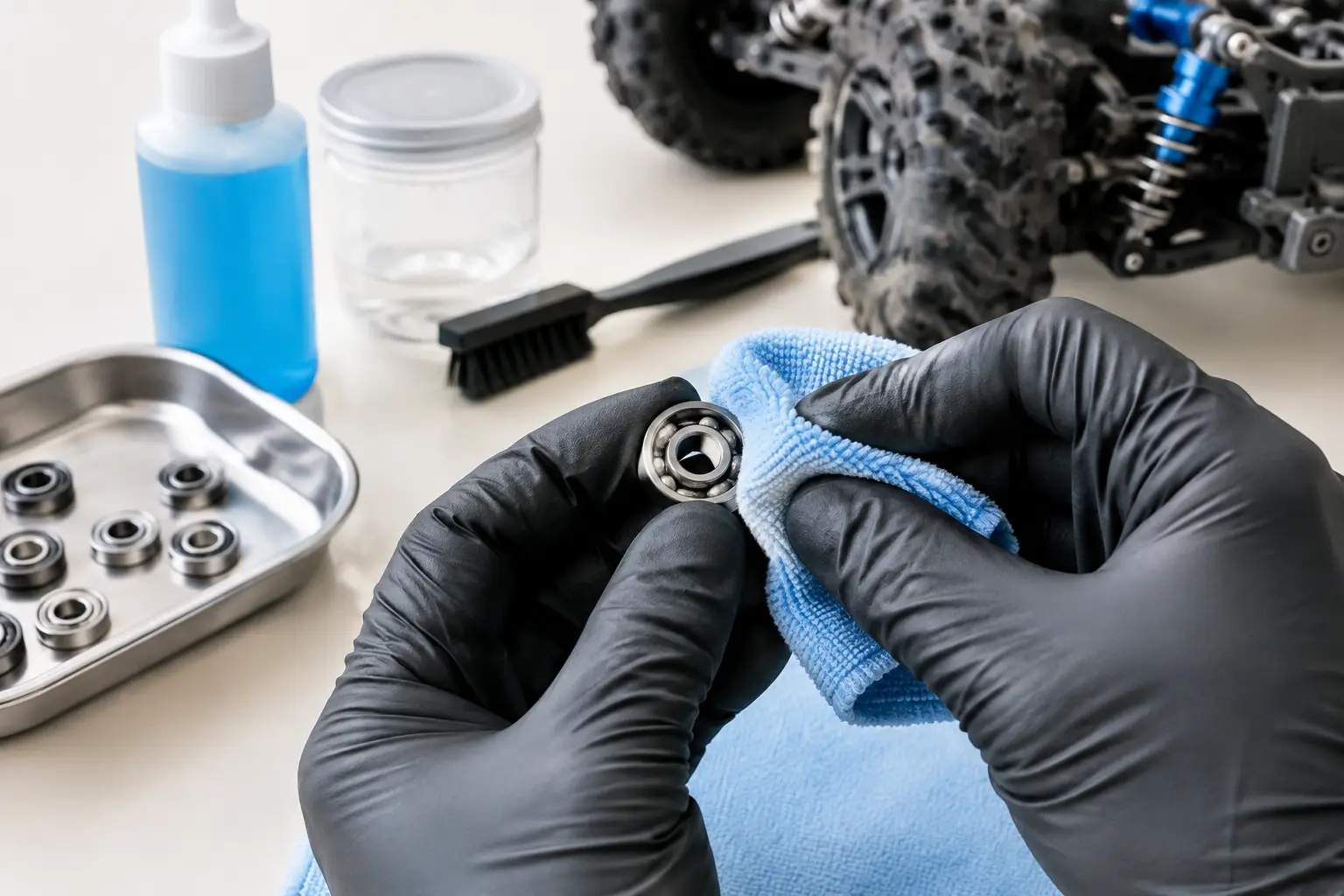
A gritty bearing rarely announces itself with a dramatic failure. More often, your model starts coasting less freely, the drivetrain feels notchy on the bench, or a wheel runs warmer than the others after a pack. Regular rc bearing cleaning is a small maintenance job that can protect gears, improve efficiency and make a well-used model feel properly smooth again.
It is not a job to do after every run. Over-cleaning can remove lubricant unnecessarily, and some sealed bearings are better replaced than repeatedly flushed. The right approach depends on where and how you run your model.
When do RC bearings need cleaning?
Bearings that have seen dry tarmac, clean indoor carpet or a gentle garden run may only need a quick inspection and a wipe around the outside. Mud, wet grass, sand, dust and saltwater are a different matter. Fine grit can work past shields, while moisture causes corrosion surprisingly quickly once the model is stored.
A simple check is to remove the wheel or driveshaft and turn the bearing with your fingertips. A good bearing should rotate smoothly and quietly, with no rough spots, grinding or obvious side-to-side movement. It does not need to spin for ages like a fidget spinner, especially if it is greased, but it should not feel crunchy.
Pay particular attention to wheel hub bearings, clutch or spur gear bearings, differential bearings and motor bearings. Wheel bearings take the worst of the outside conditions. Bearings close to the motor and transmission can cause drag that puts extra load on the electronics and reduces run time.
Before RC bearing cleaning, identify the bearing type
Most hobby-grade RC models use shielded or sealed ball bearings. Shielded bearings have a thin metal cover on one or both sides. Sealed bearings use rubber or plastic seals, often black or coloured, which are better at keeping dirt out. Some inexpensive ready-to-run models may use oil-impregnated bushes instead of bearings.
Do not treat all three in the same way. A metal-shielded bearing can usually be flushed effectively. Rubber-sealed bearings can often be cleaned too, but the seals need removing carefully with a fine pick or hobby knife if you want to clean the inside properly. Push underneath the seal gently rather than cutting into it.
Bushes are normally replaced rather than restored. They are cheap, and once worn or oval-shaped they will continue to create drag. If your model is regularly used in harsh conditions, upgrading key bushings to quality rubber-sealed bearings is often worthwhile.
What you need for the job
You do not need a complicated workshop set-up, but using the right products matters. Gather a bearing cleaner that is safe for RC use, a small glass or metal container, lint-free cloths or paper towel, cotton buds, a soft brush and suitable bearing oil. A bearing cleaning station is useful for cleaning several similarly sized bearings, though it is not essential.
Avoid using water as your cleaner. It may remove mud from the outside, but it will not remove old oil and can leave moisture inside the race. Also avoid soaking plastic parts, rubber seals or assembled components in aggressive solvents. Some cleaners can damage plastics or strip grease from areas that were not meant to be cleaned.
Work in a ventilated space, keep solvents away from flames and wear gloves if your skin is sensitive. The small parts are easy to lose, so lay down a clean cloth or tray before dismantling anything.
How to clean RC bearings properly
Start by removing the bearing from the model. Cleaning it in place is tempting, but flushing dirt through the bearing while it is still installed can carry contamination into the hub, gearbox or bulkhead. Take a quick photo before dismantling a complex corner or transmission so spacers and shims go back in the right order.
Brush away loose dirt from the bearing exterior first. If the seals are removable, lift them out carefully and keep them together. Place the bearing in the cleaner, agitate it gently and allow the solvent to loosen old oil and debris. With a cleaning station, follow the product instructions rather than overfilling it.
After a short soak, rotate the inner race between your fingers. If the solvent quickly turns dark or you can still feel grit, repeat with fresh cleaner. A heavily contaminated bearing may need two or three passes. There is little benefit in leaving bearings submerged for hours, particularly if rubber seals are involved.
Remove the bearing and let the cleaner drain onto a lint-free cloth. Compressed air can help dry it, but use low pressure and keep the nozzle at a sensible distance. Spinning a dry bearing at high speed with an air line can damage the race or send it flying across the workshop. Allow the bearing to dry fully before lubrication.
Once dry, check it again. A bearing that remains rough, noisy, rusty or loose has reached the point where replacement is the sensible option. Cleaner cannot repair pitted balls, worn races or corrosion below the surface.
Oil or grease after cleaning?
For most exposed wheel and drivetrain bearings, a light bearing oil is the usual choice. Apply only a small drop to each side of the bearing, then rotate it by hand to distribute the oil. More is not better. Excess oil attracts dust and can escape onto tyres, brake components or belts.
Grease offers better protection from water and dirt, but it creates more drag. It can suit slow-moving crawler axles, marine applications or bearings that live in particularly wet and muddy conditions. For high-revving race and bash models, a light oil generally gives freer movement and is easier to refresh.
Motor bearings deserve extra care. If the motor manufacturer permits servicing, use a very small amount of light oil. Do not flood the motor, and do not spray cleaner into it while it is fitted to the model. If a motor bearing is rough or noisy after cleaning, replacement may be needed before it damages the rotor or causes overheating.
Refit the seals after lubrication, wipe away any excess and reinstall the bearing. Make sure it sits squarely in its housing. Press on the outer race when fitting into a hub, and on the inner race when fitting onto a shaft. Pressing through the balls is an easy way to damage a perfectly good bearing.
Cleaning after wet, muddy or beach running
Wet running changes the maintenance schedule. Once mud has dried, it becomes harder to remove and holds moisture around the bearings. Rinse the model's exterior carefully where appropriate, dry it thoroughly, then inspect the wheel hubs and driveline before putting it away.
Saltwater requires much faster action. Salt continues to attract moisture and accelerates corrosion, even when the model looks dry. Strip, clean and lubricate affected bearings as soon as possible. In many cases, replacing wheel bearings after a saltwater session is less frustrating than trying to rescue them later.
Sand is equally unforgiving. Fine grains can pass seals and turn smooth bearings into a grinding paste. If you regularly run on beaches or sandy tracks, rubber-sealed bearings and a spare bearing kit are practical investments.
When replacement is better than cleaning
Bearings are service items, not lifetime parts. Replace them when they feel gritty after cleaning, show visible rust, have excessive play, bind under load or repeatedly lose smoothness after a few runs. A worn bearing can damage expensive hubs, pinion gears, differentials and motor mounts, so putting off a small repair often costs more later.
For a frequently used basher, keeping a few common wheel bearing sizes in the pit box prevents a damaged bearing ending a good day out. Check the model manual for sizes, or measure the inner diameter, outer diameter and width before ordering. RC Model Shop can help identify suitable replacements if you know the model and the bearing location.
A clean, correctly lubricated bearing is one of those details you notice most when it has been neglected. Give your model a quick spin check after rough conditions, replace the bearings that are beyond saving, and the next run will feel as it should: quiet, free and ready for more throttle.