
Brushed vs Brushless Motors Explained
13/05/2026
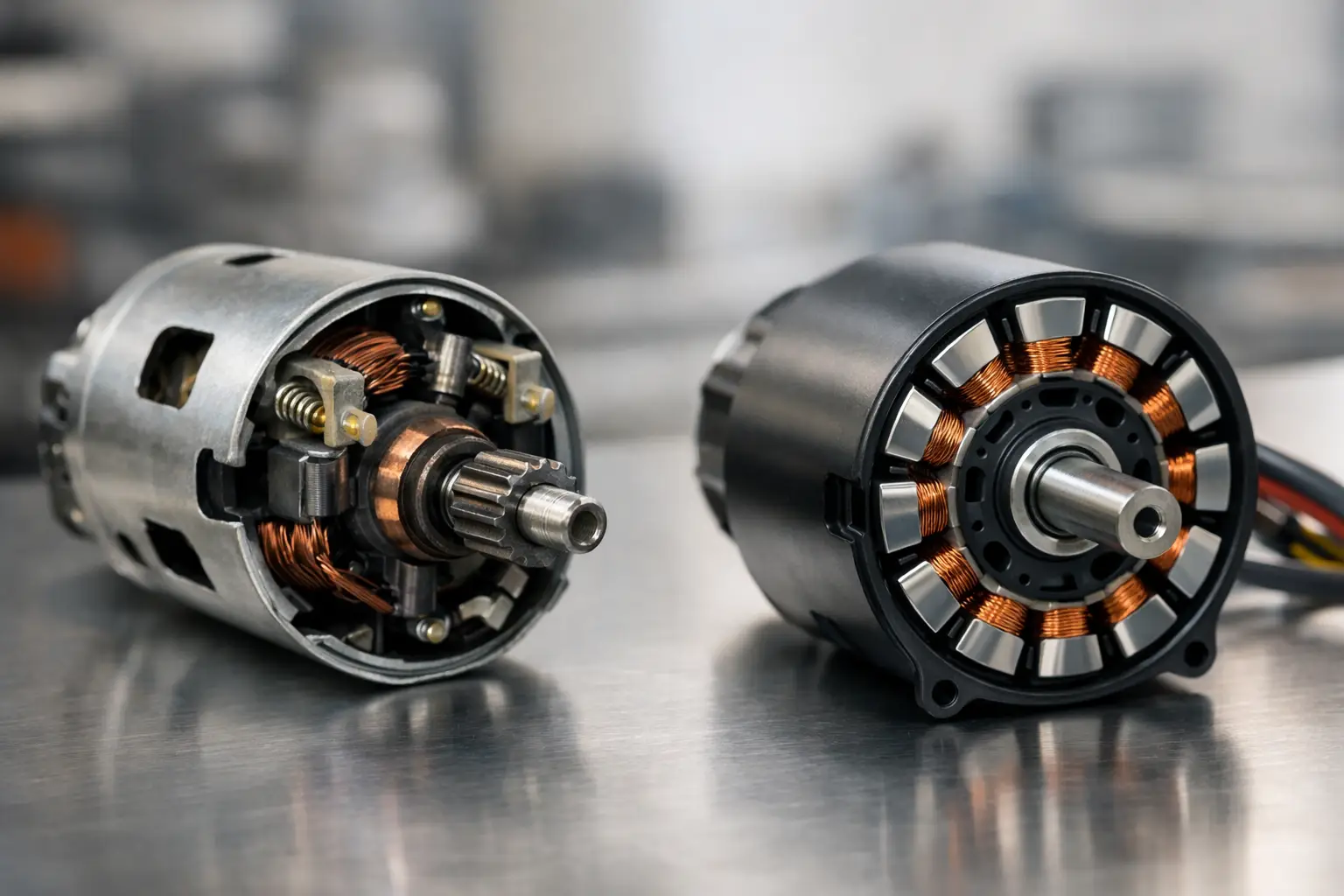
Brushed vs Brushless Motors - Which RC Motor Setup Is Actually Better?
If you are choosing electronics for an RC car, crawler, buggy or monster truck, the brushed vs brushless motors question usually comes up early - and for good reason.
The motor has a direct effect on:
-
speed
-
runtime
-
maintenance
-
upgrade cost
-
drivability
-
long-term reliability
Get the setup right and the whole vehicle feels properly balanced. Get it wrong and you can end up overspending, overheating electronics or building something harder to drive than you expected.
For most RC owners, this is not really about which motor type is universally better. It is about choosing the setup that suits:
-
the chassis
-
the terrain
-
the driver
-
the budget
-
the performance expectations
A beginner bashing in the park does not need the same electronics as someone building a race buggy or heavily upgraded crawler.
Brushed vs brushless motors - the basic difference
A brushed motor uses physical brushes and a commutator to transfer electricity inside the motor. It is a simpler and older design commonly used in:
-
entry-level RC cars
-
beginner models
-
lower-cost RTR platforms
Because the technology is straightforward, brushed systems are usually:
-
cheaper
-
easier to replace
-
simpler for beginners to understand
A brushless motor removes those physical brushes and uses electronic timing through the ESC instead.
That brings major benefits including:
-
improved efficiency
-
more power
-
stronger acceleration
-
reduced maintenance
-
better runtime
In practical RC use, brushless systems usually produce:
-
higher speed
-
more punch
-
cooler operation
-
better long-term efficiency
That still does not automatically make brushless the right choice for every build.
Sometimes simpler genuinely is better.
RC Model Shop stocks a large selection of RC motors and upgrade electronics suitable for both brushed and brushless RC vehicles.
Why brushed motors still make sense
Brushed motors are often dismissed as the "cheap option", but that undersells them slightly.
In the right setup, brushed motors remain:
-
dependable
-
affordable
-
easy to maintain
-
beginner-friendly
For first-time RC owners, brushed setups often provide enough performance to enjoy the hobby properly without introducing unnecessary complexity.
They are especially useful in:
-
starter bashers
-
younger drivers' vehicles
-
casual weekend models
-
scale builds
-
lower-budget projects
Brushed systems also tend to feel less aggressive on the trigger, which can actually improve drivability on smaller RC cars and lighter chassis.
In some situations, too much power simply creates:
-
traction rolling
-
stripped gears
-
broken driveshafts
-
difficult handling
For crawlers and scale trail trucks, brushed motors still maintain a strong following because many drivers like:
-
smooth low-speed control
-
predictable throttle feel
-
affordable replacement costs
The trade-off is efficiency and wear.
Brushed motors generally:
-
run less efficiently
-
produce more heat
-
require brush maintenance
-
offer shorter runtime on the same battery
They are dependable, but not usually the strongest long-term performance choice.
Where brushless motors pull ahead
If outright performance matters, brushless systems usually win comfortably.
The biggest advantages are:
-
speed
-
efficiency
-
power delivery
-
reduced maintenance
A brushless motor can deliver dramatically more punch than a similarly sized brushed setup.
That is why brushless electronics dominate:
-
modern bashers
-
race vehicles
-
speed builds
-
larger RC platforms
Improved efficiency means less wasted energy as heat. In practical terms, this often results in:
-
better runtime
-
stronger acceleration
-
more consistent performance across the battery pack
Brushless motors also avoid internal brush wear, reducing maintenance requirements once installed correctly.
For hobbyists interested in tuning and upgrading, brushless systems offer much more flexibility through:
-
gearing adjustments
-
programmable ESC settings
-
higher voltage batteries
-
sensored and sensorless options
That said, brushless setups also introduce:
-
higher cost
-
more drivetrain stress
-
greater heat potential
-
increased tuning requirements
Too much brushless power in a lightweight chassis can actually make the vehicle less enjoyable to drive.
Brushed vs brushless motors in real RC driving
This is where the conversation becomes more practical.
In real-world RC driving, the difference is less about engineering theory and more about how the vehicle behaves once the batteries are plugged in.
Beginner RC cars and casual bashing
For:
-
beginner stadium trucks
-
casual bashers
-
family RC vehicles
brushed power is often perfectly adequate.
It provides:
-
manageable acceleration
-
lower replacement costs
-
simpler maintenance
-
fewer drivetrain problems
For many casual users, that is the smarter overall balance.
Performance bashers and race vehicles
In:
-
1/10 buggies
-
truggies
-
short course trucks
-
race platforms
brushless systems make much more sense.
The stronger acceleration, increased efficiency and higher top-end performance suit:
-
LiPo batteries
-
upgraded drivetrains
-
aggressive terrain
-
repeated hard running
Crawlers and scale trucks
Crawlers sit somewhere in the middle.
Some owners still prefer brushed motors because they offer:
-
affordable replacement costs
-
predictable low-speed feel
-
simple setup
Others move toward sensored brushless systems for:
-
smoother throttle modulation
-
stronger efficiency
-
cleaner operation
-
improved drag brake behaviour
Neither approach is wrong.
The correct setup depends entirely on:
-
terrain
-
driving style
-
budget
-
tuning preference
Cost, maintenance and long-term value
Motor upgrades rarely happen in isolation.
Changing motors often means considering:
-
ESC compatibility
-
gearing
-
connectors
-
drivetrain strength
-
battery type
Brushed systems usually cost less initially, making them attractive for:
-
entry-level builds
-
spare vehicles
-
budget projects
Replacement brushed motors are also inexpensive, which matters for casual owners.
Brushless systems cost more upfront but can offer better long-term value for enthusiasts who use their RC vehicles regularly.
Higher efficiency and reduced wear often justify the extra investment over time.
The key is keeping the build balanced.
A massively powerful brushless system in a weak chassis often becomes more frustrating than enjoyable.
Choosing the right motor for your RC car
The best motor choice usually comes down to four questions:
-
What chassis are you running?
-
How experienced is the driver?
-
What performance do you realistically want?
-
What budget are you working with?
If the goal is:
-
affordable fun
-
easy maintenance
-
simple driving
then brushed still makes excellent sense.
If the goal is:
-
stronger acceleration
-
upgrade potential
-
higher efficiency
-
modern performance
then brushless becomes the stronger option.
Compatibility matters just as much as motor type itself.
You always need to check:
-
motor can size
-
kV rating
-
ESC compatibility
-
gearing
-
battery voltage
-
connector type
before upgrading.
Common mistakes to avoid
One of the most common mistakes is assuming brushless is automatically the smartest upgrade.
It is only an upgrade if:
-
the drivetrain supports it
-
temperatures remain safe
-
the handling stays usable
-
the driver actually wants the extra power
Another common mistake is focusing entirely on top speed.
In real RC driving, usable power usually matters far more than unrealistic speed figures.
A balanced setup with:
-
sensible gearing
-
proper cooling
-
manageable temperatures
will almost always feel better than an overpowered system constantly overheating.
Battery demands also matter.
Brushless systems usually show their biggest advantages when paired with quality LiPo batteries, but that introduces:
-
additional cost
-
charging requirements
-
storage considerations
For some owners that is part of the hobby. For others, brushed remains the more practical option.
So which motor type is best overall?
For many RC owners, brushed is the best place to start and brushless is the best place to grow into.
That is often the most sensible way to approach the hobby.
If you are:
-
building a dependable basher
-
shopping for a first RC car
-
controlling costs
then brushed still absolutely earns its place.
If you want:
-
stronger acceleration
-
greater efficiency
-
upgrade potential
-
long-term performance
then brushless becomes difficult to ignore.
At RC Model Shop, the focus is always on matching the motor properly to:
-
the chassis
-
the terrain
-
the battery setup
-
the driver
rather than simply recommending the most powerful option available.
The best RC motor is ultimately the one that:
-
runs reliably
-
suits the vehicle properly
-
feels enjoyable to drive
-
keeps you wanting another battery pack instead of another repair bill.
Frequently Asked Questions
Is brushless faster than brushed?
Yes. Brushless motors generally provide more speed, acceleration and efficiency than brushed systems.
Are brushed motors better for beginners?
In many cases, yes. Brushed setups are usually cheaper, simpler and easier to control for new RC owners.
Do brushless motors last longer?
Usually yes. Brushless motors avoid internal brush wear, reducing maintenance and improving long-term durability.
Can I convert a brushed RC car to brushless?
Many RC cars can be upgraded to brushless, but you may also need:
-
a compatible ESC
-
different gearing
-
stronger drivetrain parts
-
LiPo batteries
Are brushed motors better for crawlers?
Some crawler owners still prefer brushed motors for their predictable low-speed feel and affordable replacement cost, although sensored brushless systems are also very popular.
Written by the RC team at RCModelShop.co.uk / Appliance Electronics UK Ltd, UK supplier of RC motors, electronics, brushless systems and crawler upgrades.