
RC Transmitter Review UK - Choosing the Right Radio
07/11/2026
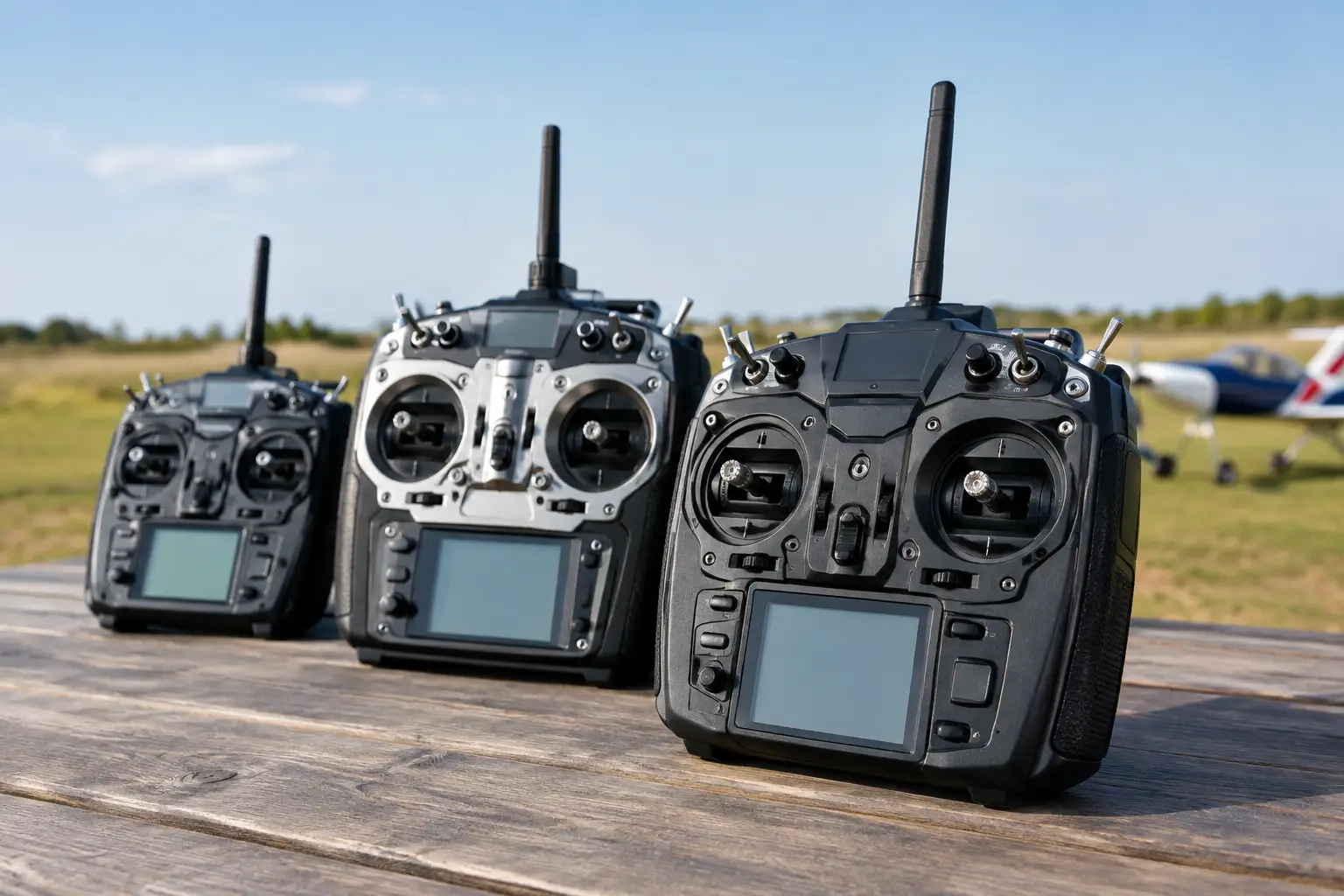
A good RC transmitter rarely gets the attention of a new model or a set of alloy upgrades, but it can change how a vehicle feels every time you drive it. This RC transmitter review UK guide focuses on the things that matter in real use: comfortable control, dependable signal, receiver availability and the features that match the way you enjoy the hobby.
For a first basher, a simple 2-channel radio may be all that is needed. For a crawler with a winch, lights and selectable drive modes, or a race car where precise steering adjustment matters, stepping up to a better transmitter makes sense. The right choice is not necessarily the most expensive one. It is the one that gives you useful control without making setup a chore.
What makes a good RC transmitter?
Every surface RC transmitter controls steering and throttle, but the difference between entry-level and higher-spec radios becomes clear in the details. The wheel should return smoothly to centre, the trigger should be comfortable through a full battery pack, and the receiver should maintain a reliable connection wherever you normally run your model.
Modern 2.4GHz radios are generally dependable for club use, bashing sites and gardens. Range figures can be useful, but they should not be the deciding factor for most car and crawler drivers. A transmitter with good receiver support, sensible programming and a comfortable grip will normally be a better long-term purchase than one with an impressive claimed range alone.
Look closely at channel count, model memory, adjustability and the cost of additional receivers. A radio system can look good value at first, then become costly when you want receivers for several cars, boats or projects.
Channel count is about future plans
Two channels cover steering and throttle. That is enough for the majority of ready-to-run RC cars, buggies, monster lorries and short-course lorries.
A third channel is useful for functions such as a two-speed gearbox, DIG unit, winch, lights or a mechanical brake. Crawlers and scale builds often benefit from four, five or more channels, particularly when accessories are part of the appeal. Buying more channels than you need is not always wasteful, but do make sure the extra controls are easy to reach and programme.
Receiver choice matters more than it seems
Before committing to a transmitter platform, check that compatible receivers are readily available in the UK and suitable for your models. Compact receivers are helpful in tight buggy and touring car chassis. Waterproof receivers make sense in bashers, boats and trail lorries, although waterproofing does not remove the need to dry equipment properly after use.
It is also worth checking whether receivers support stabilisation or telemetry, if those features interest you. Do not pay extra for functions you will never use, but avoid choosing a discontinued radio system simply because the transmitter is cheap.
RC transmitter review UK: the main types compared
The best radio depends on whether you value simplicity, extra functions or fine setup adjustment. These are the main routes for UK RC drivers.
Entry-level wheel radios
Basic 2-channel wheel transmitters are ideal for replacing a damaged ready-to-run controller or for a straightforward model where no additional functions are required. They are easy to hand to a friend or younger driver because there are fewer settings to alter accidentally.
The trade-off is limited adjustment. You may get steering trim, throttle trim and steering dual rate, but usually not the endpoint adjustment, exponential and model memories that are useful once you own more than one vehicle. For casual driving, this is often perfectly acceptable. For powerful brushless cars, a crawler with accessories or regular track use, it can become restrictive.
Mid-range programmable radios
This is the sweet spot for many hobbyists. A programmable radio with model memory lets you keep settings for several vehicles, while steering endpoints prevent servo strain and throttle adjustments can tame an aggressive power system.
Popular systems in this class often provide a backlit display, multiple channels and a choice of receiver types. They suit drivers who own a mixture of bashers, crawlers and kits, as well as those who want to improve the feel of a single favourite model. If you regularly swap between a fast 4S basher and a low-speed crawler, separate stored settings are far more convenient than re-trimming the radio every time.
Competition-focused radios
Race-oriented transmitters are lighter, more adjustable and designed around consistency. Features can include high-resolution steering, detailed throttle curves, adjustable trigger and wheel positions, mixing, lap-timing compatibility and fast-response receiver modes.
These radios are excellent when fractions of a second matter, but they are not essential for every driver. A casual basher may notice the improved ergonomics, yet gain little from advanced race menus. Also check receiver compatibility carefully, as some high-speed modes require specific receivers and suitable digital servos.
Multi-channel crawler and scale radios
Crawler drivers often need more than steering and throttle. A dedicated multi-channel system can operate a winch, lights, sound unit, DIG, rear-steer axle, transmission shift or proportional accessories from one handset.
The practical question is how those channels are controlled. Buttons are fine for lights, but a winch or rear steer may feel better on a dial, momentary switch or auxiliary trigger. Think through the functions you actually plan to install. An eight-channel radio with awkward switch placement is less useful than a six-channel unit laid out properly for your build.
Features worth paying for
Endpoint adjustment is one of the most valuable features on any programmable transmitter. It allows you to limit servo travel so steering components are not forced against their stops. This is particularly useful after fitting upgraded steering parts or changing servo horns.
Steering dual rate reduces maximum steering throw from the transmitter. On a powerful short-wheelbase vehicle, lowering it can make the car easier to place and reduce sudden direction changes. Exponential changes how sensitive the steering feels around centre, which helps drivers who want a calmer response without losing full lock.
Throttle settings deserve similar attention. Throttle endpoints can limit maximum speed for a new driver, while throttle exponential can soften the initial trigger response. Some radios also offer an assigned switch for a reduced-power mode. That can be genuinely useful when sharing a fast model, rather than relying on a vague promise to “go easy”.
Telemetry can show useful information such as receiver voltage, temperature or speed when paired with compatible sensors. It is beneficial for some drivers, especially when monitoring a competition setup or a large electric model, but it is not a replacement for proper maintenance. Check battery condition, gearing and motor temperature in the usual way.
How the transmitter should feel in your hand
Specifications do not tell the whole story. If possible, hold a transmitter before buying, particularly if you run long sessions or have larger hands. Grip angle, trigger reach, wheel diameter and overall weight all affect comfort.
A lighter radio is welcome at a track or during a long trail run, but weight can also make a transmitter feel more planted. Foam wheels offer a secure feel and can be replaced when worn. Adjustable trigger and wheel positions are useful on premium radios, though not everyone needs them.
Battery type is another small but worthwhile consideration. Some transmitters use AA cells, while others accept rechargeable packs or have a built-in battery. AA-powered radios are convenient because fresh cells are easy to keep in a pit bag. A rechargeable system can be tidier and cheaper over time, provided you remember to charge it before a day out.
Set up a new radio properly
Once the transmitter and receiver are bound, set the model up before driving at speed. First check that steering and throttle move in the correct direction. Then centre the steering trim, set steering endpoints carefully and confirm that the failsafe applies neutral throttle or braking as appropriate for the model.
Set throttle endpoints according to the ESC instructions, then test the model with wheels clear of the ground. On a crawler, make sure auxiliary functions operate as intended before heading onto the trail. On a fast car, begin with reduced steering dual rate and moderate throttle settings, then increase them as you get used to the response.
Keep the transmitter antenna undamaged, protect the receiver from vibration and moisture, and switch the transmitter on before the model. Those basics prevent many of the radio problems that are mistakenly blamed on the vehicle itself.
Choosing the right radio for your model
For most ready-to-run bashers, choose a dependable 2- or 3-channel system with steering dual rate, endpoints and affordable extra receivers. For crawlers and scale rigs, prioritise channels, switch layout and receiver size. For racers, focus on low weight, precise adjustment and the receiver mode required by your electronics.
If you are building a collection, choose a transmitter ecosystem rather than buying separate radios for every model. It keeps the workbench clearer, makes settings easier to manage and means spare receivers are worth keeping on hand. RC Model Shop can help match a radio system to the vehicle, servo and accessories you plan to run.
The best time to upgrade a transmitter is when your current radio is limiting the model or your enjoyment of it. Choose the features you will use next weekend, leave room for the project you want to build later, and spend the first few minutes on careful setup. Your model will feel better for it.