
RC Boats: Choosing the Right Model for Your Water
14/10/2026
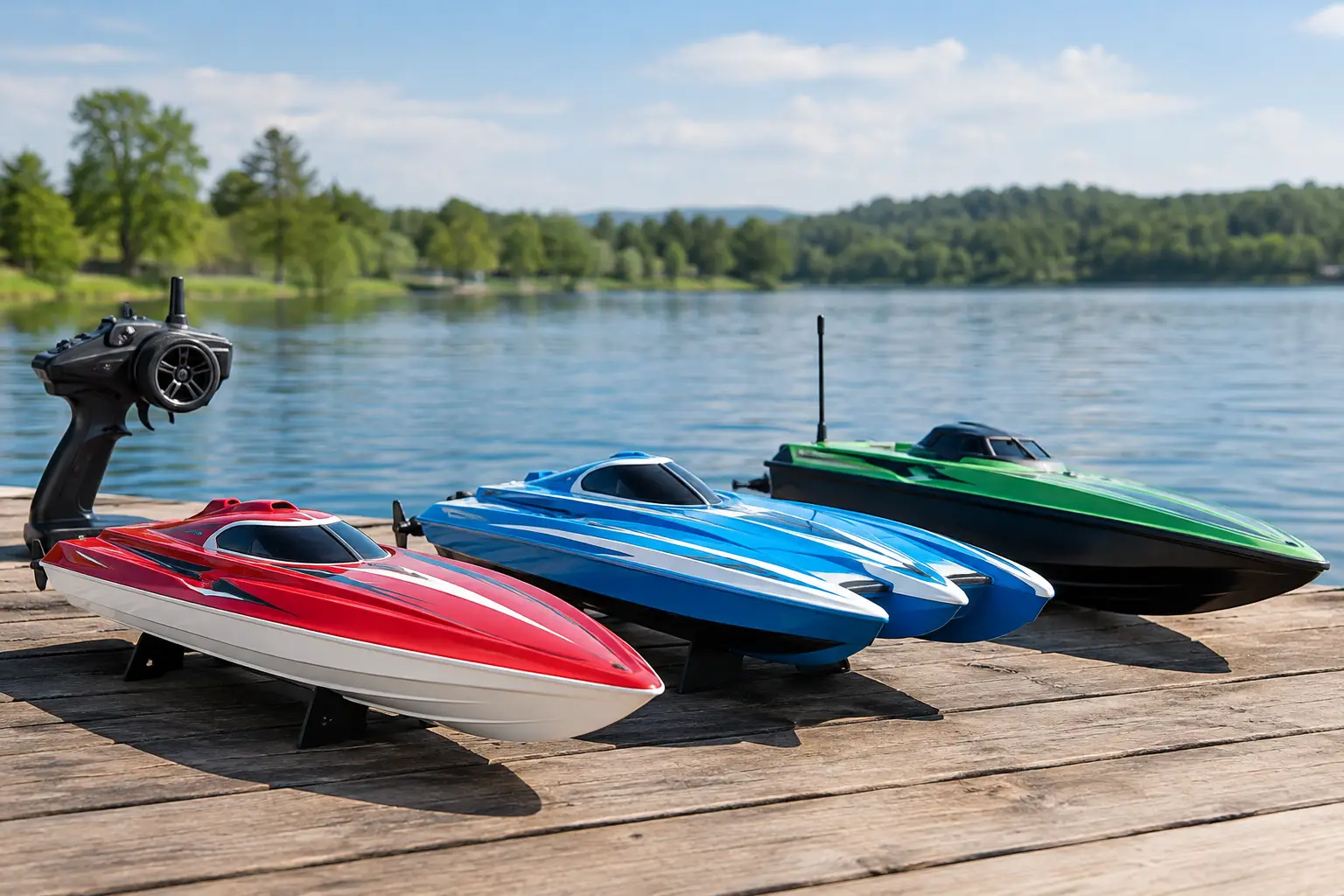
A fast electric boat skimming across a calm lake is one of the most satisfying sights in RC. But RC boats are less forgiving than many first-time buyers expect: the wrong hull, battery or launch spot can turn an exciting first run into a short recovery mission. Choosing the right model starts with where you plan to run it, how much speed you genuinely want and whether you are happy carrying out basic maintenance afterwards.
For most people, an electric ready-to-run boat is the sensible starting point. It arrives largely assembled, includes the main electronics and lets you focus on learning throttle control, steering and safe retrieval. Faster brushless models offer serious performance, while smaller brushed boats can be a better fit for sheltered ponds, younger users and relaxed family running.
Choose RC Boats by Where You Will Run Them
Water conditions should lead the decision, not the top speed printed on the box. A small boat in choppy water will bounce, lose propeller bite and may struggle to turn consistently. Equally, a powerful deep-V boat can feel excessive on a narrow, quiet pond where there is little room to build speed safely.
A calm lake, large pond or sheltered reservoir suits most electric models. Larger stretches of water give high-speed boats space to turn and reduce the chance of running too close to anglers, wildlife or other visitors. Always check that RC boating is permitted before launching. Many managed fisheries and parks have their own rules, and some waters prohibit powered models altogether.
For a first boat, look for a place with clear access to the edge, a gentle launch point and enough open water to retrieve the model if it stops. Avoid rivers unless you understand the current and have a safe recovery plan. Even a modest flow can carry a disabled boat out of reach surprisingly quickly.
Hull Types Explained
The hull shape has a major effect on speed, stability and handling. There is no single best option - each style suits a different type of running.
Deep-V boats
A deep-V hull is the familiar speedboat shape. It cuts through light chop better than flatter designs and tends to track predictably at speed. This makes it a strong all-round choice for beginners who want a properly quick boat without needing perfectly flat water.
The trade-off is that a deep-V can lean into turns and may roll over if it is pushed too hard in rough conditions or turned sharply at full throttle. Start with wider, gentler turns and increase speed as you learn how the boat reacts.
Catamarans
Catamarans use two narrow hulls with a tunnel between them. They are fast, stable in a straight line and efficient across relatively smooth water. They are popular with experienced drivers because they can carry speed exceptionally well.
They do need room. A catamaran generally prefers longer, sweeping turns rather than tight manoeuvres, and gusty wind or uneven chop can make a lightweight model harder to control. They are excellent for open-water speed runs, but not always the easiest first choice on a compact pond.
Hydroplanes and race-focused hulls
Hydroplanes are built for speed and spectacle. At pace, they ride on a small part of the hull and can look as though they are barely touching the water. That performance comes with a narrower setup window. Balance, propeller choice, water conditions and throttle control all matter more.
These models are best considered once you are comfortable with basic launch checks, battery care and high-speed driving. They reward careful setup, but they are not the model to choose solely because the advertised top speed looks impressive.
Scale and utility boats
Scale RC boats place more emphasis on realistic looks and controlled handling than outright pace. Tugs, rescue boats and scale cruisers can be enjoyable on smaller water and make excellent projects for modellers who want to add lights, figures or detailed fittings.
Their lower speeds are not a drawback if your priority is realism. A scale boat gives you more time to enjoy the run and is often easier to handle around a shared waterside area.
Brushed or Brushless Power?
Brushed motors are straightforward, affordable and usually fitted to entry-level boats. They offer manageable speed and are a sensible option for learning the basics. If you want a boat for occasional summer use, a brushed setup can be all you need.
Brushless power provides more speed, stronger acceleration and greater efficiency when paired correctly with the right battery and electronic speed controller. It also creates more heat and places greater demand on the driveline. A brushless boat is not automatically difficult to own, but it does require a more deliberate approach to battery choice, cooling checks and maintenance.
If you are buying your first performance model, do not judge it by motor type alone. Check the recommended battery specification, whether a battery and charger are included, and the space available in the hull. A capable boat that runs reliably is far more enjoyable than one that is overpowered for your chosen water.
Batteries, Chargers and Run Time
Most electric RC boats use lithium polymer batteries, commonly known as LiPo packs. They deliver the current needed for strong acceleration, but they must be charged, stored and handled correctly. Use a suitable balance charger, charge on a non-flammable surface and never leave a charging battery unattended.
Battery voltage affects speed, while capacity, measured in mAh, has a greater influence on run time. A larger capacity pack may extend running time, but it can also add weight and alter how the boat sits in the water. Follow the manufacturer’s recommended voltage and physical battery size rather than forcing in the largest pack that will fit.
Real-world run time is often shorter than new owners expect. A fast boat may run hard for only several minutes before the battery needs changing, especially with repeated full-throttle passes. That is normal. Two correctly specified packs are often a better purchase than one oversized battery, as long as you allow the motor and speed controller to cool between runs.
After running, disconnect the battery before carrying the boat. Do not leave LiPo packs fully charged for long periods; use the storage setting on a compatible charger if the boat will not be used for several days.
Essential Checks Before Launching
Water and electronics do not forgive shortcuts. A quick inspection before every run prevents many common problems. Check that the hatch seal is clean and properly seated, the propeller is secure, the steering moves freely and the cooling water lines are not pinched.
With the transmitter switched on first, connect the boat battery and confirm the controls work in the correct direction. Turn the wheel right and make sure the rudder turns right. Test the throttle briefly with the propeller clear of fingers, clothing and loose objects. When finishing, disconnect the boat battery first, then switch off the transmitter.
It is also worth carrying a simple recovery option. A tennis ball on a length of strong cord can help guide a stranded boat back towards shore without damaging the hull. On larger water, a bait boat or small inflatable craft may be appropriate only where permitted and safe to use. Never enter deep or cold water to retrieve an RC model.
Looking After a Boat After Each Run
A few minutes of care keeps a boat ready for the next outing. Remove the battery, dry any water from inside the hull and leave the hatch off while the model airs. A small amount of water can enter through the driveshaft or hatch during normal use, but repeated large amounts deserve investigation.
Check the propeller, flex shaft and rudder for weed or fishing line. On boats with a flexible driveshaft, regular lubrication is essential to reduce wear and keep the drivetrain running smoothly. If you have used the boat in salt or brackish water, rinse the outside carefully with fresh water, dry it thoroughly and inspect metal components for corrosion. Freshwater running is much easier on a model and should be the default where possible.
Spare propellers, propeller tools, hatch tape, a suitable battery and a basic set of hex drivers are practical items to keep in your field bag. Crashes happen, and having a small selection of spares can save a planned day at the water.
Buy for Enjoyment, Not Just Top Speed
The best RC boat is the one that matches your water, confidence and appetite for maintenance. A stable ready-to-run deep-V with the right battery may provide more enjoyable running than a race hull that only performs well in perfect conditions. Experienced hobbyists may value adjustability and upgrade potential, while gift buyers often benefit from a simpler package with clear battery and charger guidance.
RC Model Shop can help match hull type, power system, batteries and essential spares before you commit. Start with a safe place to run, allow room to learn the controls and give yourself a reliable way to recover the model. The first clean, controlled pass across the water is usually all it takes to make the next outing a priority.