
Best RC Charger for LiPo: What to Buy
18/04/2026
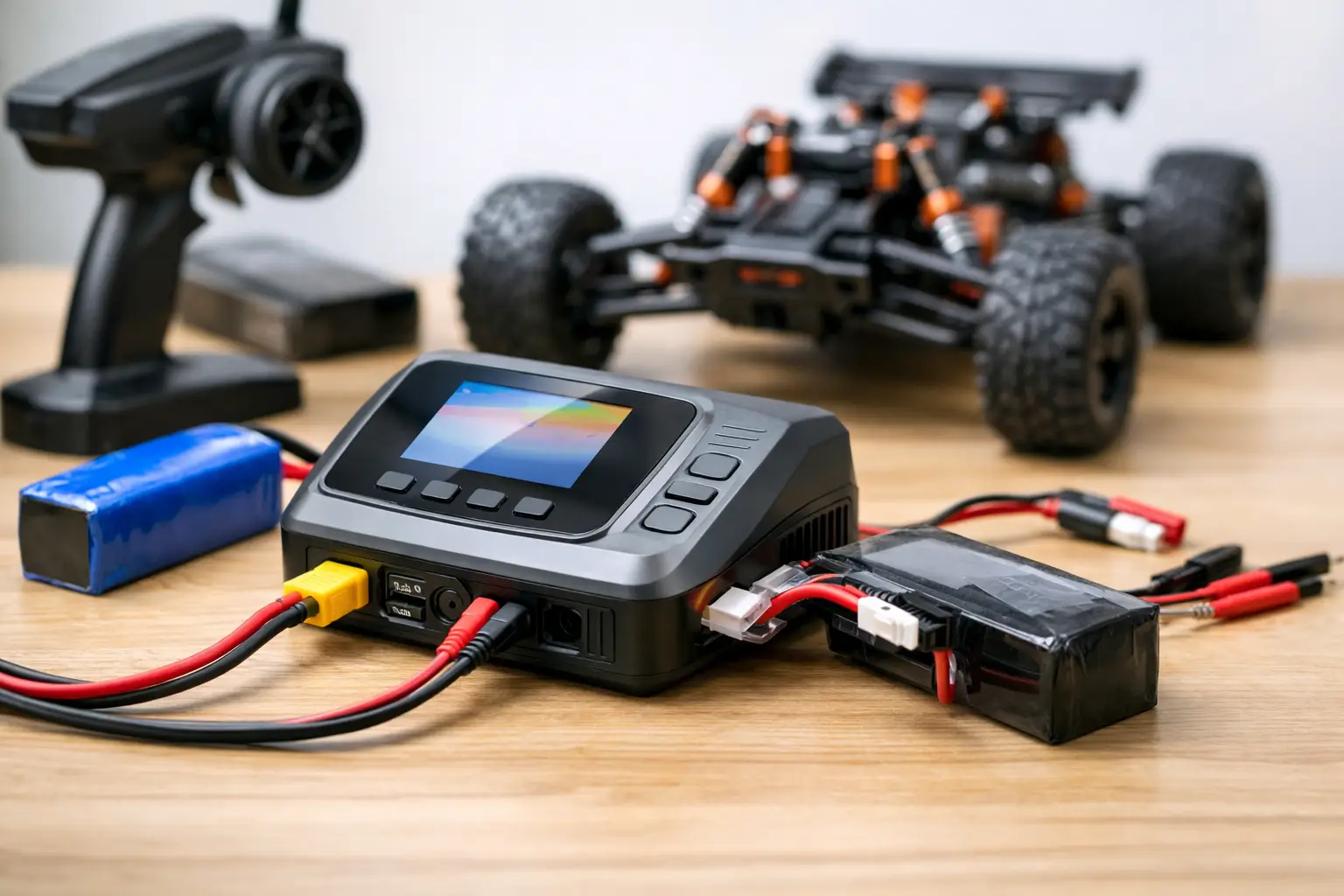
Best RC Charger for LiPo Batteries - What Actually Matters When Choosing One
A LiPo battery that charges properly:
-
lasts longer
-
performs better
-
stays healthier
-
causes fewer problems at the field or track
That is why choosing the best RC charger for LiPo batteries matters far more than many hobbyists initially realise.
The mistake most buyers make is not necessarily buying a cheap charger.
It is buying:
the wrong type of charger for how they actually use RC.
A simple balance charger may be perfect for:
-
one basher
-
a crawler
-
occasional weekend use
A dual-output high-wattage charger makes much more sense if you:
-
run multiple vehicles
-
charge several packs weekly
-
use larger 4S or 6S batteries
-
regularly attend tracks or events
The right charger should match:
-
your battery setup
-
your charging routine
-
your experience level
-
your future upgrade plans
RC Model Shop stocks a large range of RC battery chargers and charging accessories suitable for LiPo batteries, crawlers, bashers and RC aircraft.
What makes a good LiPo RC charger?
The best charger is usually the one that:
-
balances safely
-
supports your battery voltage properly
-
provides enough charging power
-
remains easy to use consistently
That sounds obvious, but it immediately rules out many unsuitable chargers.
LiPo batteries require:
balance charging.
A proper balance charger monitors:
-
each individual cell
-
voltage consistency
-
charging behaviour
through the balance lead.
This helps:
-
maintain battery health
-
reduce cell imbalance
-
improve long-term reliability
For modern RC vehicles:
balance charging is not optional.
Why charger wattage matters more than many buyers expect
Many hobbyists focus only on:
-
charge amps
without checking:
-
wattage.
That creates confusion quickly.
A charger may technically support:
10A charging
but still charge slowly on:
-
higher-voltage packs
-
larger batteries
because wattage becomes the real limit.
Example:
-
a 2S battery requires less power
than: -
a large 4S or 6S pack
to maintain the same charging rate.
This is why larger RC setups usually benefit from:
-
stronger charger output
-
more wattage headroom
rather than simply bigger amp numbers.
If you regularly run:
-
multiple batteries
-
larger brushless vehicles
-
bigger LiPo packs
buying slightly above your current needs usually makes sense long-term.
Single-output vs dual-output RC chargers
This is normally the first major decision.
Single-output chargers
Single-output chargers suit:
-
beginners
-
casual users
-
single RC vehicle ownership
-
occasional weekend use
They are usually:
-
cheaper
-
simpler
-
easier to store
-
less intimidating
If you mainly charge:
-
one or two batteries at a time
a good single-output charger is often perfectly adequate.
Dual-output chargers
Dual-output chargers become worthwhile if:
-
multiple RC vehicles are involved
-
several packs get used weekly
-
family members share charging equipment
-
waiting becomes frustrating
The ability to charge:
-
two batteries independently
saves huge amounts of time long-term.
Dual chargers also allow:
-
different battery sizes
-
different voltages
-
different chemistries
to charge simultaneously if supported.
The trade-off is:
-
higher cost
-
more bench space
-
potentially larger power supply requirements
For frequent RC use though:
convenience usually outweighs the extra spend.
AC vs DC RC chargers
AC chargers
AC chargers include:
built-in mains power supplies.
They plug directly into:
-
UK wall sockets
making them ideal for:
-
home charging
-
beginners
-
gift buyers
-
simple setups
AC chargers reduce:
-
setup confusion
-
extra cabling
-
external PSU requirements
which makes them very beginner-friendly.
DC chargers
DC chargers require:
-
external power supplies
or: -
12V power sources
They are popular with:
-
experienced hobbyists
-
race users
-
trackside charging setups
DC chargers often provide:
-
more charging power
-
better value per watt
-
increased flexibility
especially for advanced setups.
If you mainly charge at home:
AC is usually the simplest route.
If you:
-
charge at tracks
-
already own a bench PSU
-
run large battery collections
DC starts making much more sense.
Storage charge mode matters heavily
This is one of the most useful charger features.
LiPo batteries should not sit:
-
fully charged
or: -
completely flat
for long periods.
Storage charging helps:
-
reduce cell stress
-
improve lifespan
-
maintain battery condition
-
reduce swelling risk
For regular RC users:
storage mode is essential.
A charger without proper storage charging functionality is usually not worth considering for modern LiPo use.
Clear menus matter more than people think
Many RC charger problems come from:
-
incorrect settings
-
wrong chemistry selection
-
charging mistakes
A charger with:
-
clean menus
-
simple navigation
-
obvious prompts
dramatically reduces user error.
Some hobbyists enjoy:
-
advanced tuning
-
full control
-
detailed charging data
Others simply want:
-
reliable charging
-
straightforward setup
-
less confusion
Neither approach is wrong.
The best charger is the one you:
actually feel comfortable using properly.
Features that are genuinely useful
Some RC charger features genuinely help.
Useful examples include:
-
storage charging
-
balance charging
-
internal resistance checking
-
memory profiles
-
firmware updates
-
temperature monitoring
Bluetooth and app control can be useful too, but:
they are not essential for everyone.
Many hobbyists still prefer:
-
physical buttons
-
simple displays
-
direct controls
over app-based charging systems.
Charging safety matters more than charging speed
When buyers search for:
“best RC charger for LiPo”
they often focus on:
-
fastest charging
-
highest amps
-
biggest specifications
Safety matters more.
A proper RC charger should include:
-
overcharge protection
-
cell count verification
-
clear warnings
-
balance charging support
Safe charging habits still matter too.
You should:
-
inspect batteries regularly
-
avoid charging damaged packs
-
use LiPo-safe charging bags where appropriate
-
charge on safe surfaces
No charger can make:
-
damaged batteries
or: -
unsafe charging habits
completely risk-free.
Matching chargers to different RC users
Beginner RC users
For beginners:
-
AC balance charger
-
simple menus
-
modest wattage
-
recognised RC brand
usually makes the most sense.
Reliability and ease of use matter far more than:
-
racing features
-
extreme charge output
initially.
Regular RC hobbyists
If you run:
-
several vehicles
-
multiple packs weekly
-
larger LiPos
a:
-
higher-wattage
-
dual-output charger
usually becomes worthwhile quickly.
It reduces:
-
waiting
-
charging frustration
-
charging bottlenecks
during busy RC sessions.
Advanced RC setups
Experienced hobbyists often benefit from:
-
DC chargers
-
larger wattage reserves
-
advanced diagnostics
-
stronger charging flexibility
especially if:
-
charging away from home
-
running race packs
-
managing multiple chemistries
RC batteries and charger compatibility
Not all chargers include every lead required.
Before buying, check:
-
connector compatibility
-
balance connector support
-
charge lead types
This matters especially with:
-
XT60
-
XT90
-
EC5
-
IC5
-
Traxxas connectors
You can browse a large range of RC batteries and LiPo packs suitable for modern RC charging setups.
Battery and charger combo kits simplify things
For many hobbyists:
combo kits reduce confusion massively.
Matched battery and charger bundles simplify:
-
compatibility
-
connectors
-
charging setup
-
beginner setup mistakes
You can browse compatible RC battery and charger combo kits here.
Common RC charger mistakes
The biggest mistake is:
buying only for today.
Many hobbyists start with:
-
one RC vehicle
then quickly add:
-
another car
-
a crawler
-
larger batteries
-
brushless systems
A charger that feels powerful initially may become restrictive surprisingly fast.
Other common mistakes include:
-
ignoring wattage
-
overlooking connector compatibility
-
buying race-level chargers unnecessarily
-
charging damaged batteries
-
using incorrect settings
The best charger is usually:
-
reliable
-
understandable
-
correctly matched
-
easy to live with
rather than simply the most expensive option available.
A smarter way to choose an RC LiPo charger
Before buying:
-
Check your battery voltages
-
Estimate future charging needs
-
Decide AC vs DC
-
Consider how many packs you charge regularly
-
Prioritise safety and ease of use
That process avoids most RC charger buying mistakes.
At RC Model Shop, the focus is always helping hobbyists match chargers properly to:
-
the batteries
-
the RC vehicles
-
the charging routine
-
the intended use
rather than simply chasing headline specifications.
Because a good RC charger should:
-
simplify the hobby
-
improve battery lifespan
-
reduce downtime
-
keep charging safe and reliable
every time the packs go back on charge.
Frequently Asked Questions
What is the best RC charger for LiPo batteries?
The best charger is usually one that:
-
supports balance charging
-
provides enough wattage
-
matches your battery setup
-
remains easy to use safely
Are dual-output chargers worth it?
For hobbyists charging multiple batteries regularly, yes. Dual-output chargers save significant time and improve convenience.
Why is balance charging important?
Balance charging monitors individual LiPo cells and helps:
-
maintain voltage balance
-
improve battery health
-
reduce charging risks
Should beginners buy AC or DC RC chargers?
For most beginners, AC chargers are simpler because they plug directly into mains power without requiring external power supplies.
Why do some RC chargers charge slowly?
Usually because:
-
wattage is limited
-
battery voltage is high
-
charge output is restricted
even if the charger supports higher amp settings on paper.
Written by the RC team at RCModelShop.co.uk / Appliance Electronics UK Ltd, UK supplier of RC chargers, LiPo batteries and RC power accessories.