
Portal Versus Straight Axles: Which Works Best?
12/10/2026
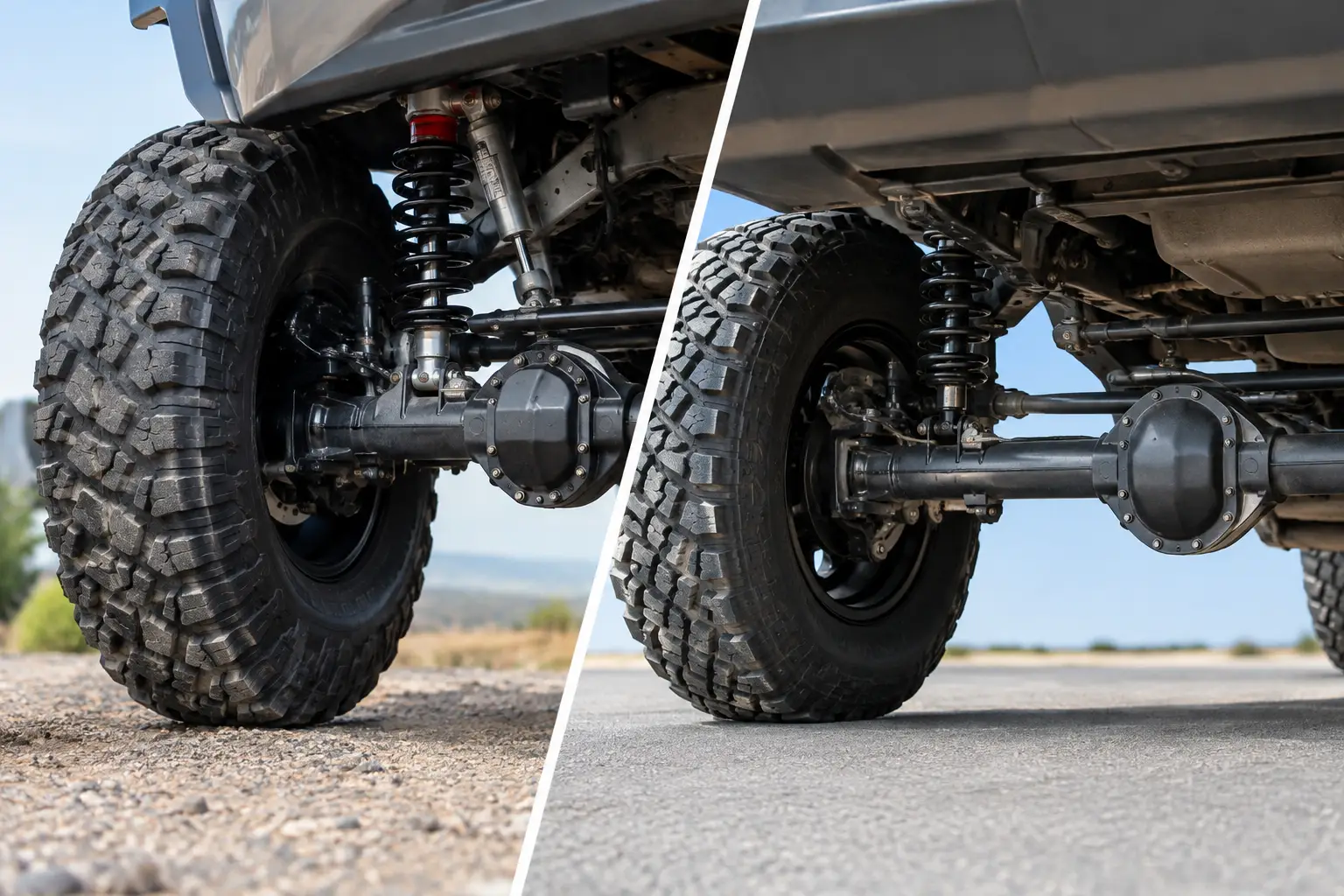
A crawler can look capable on the bench and still snag its differential on the first rock step. That is why the portal versus straight axles decision matters far more than appearance. The axle design changes ground clearance, final drive reduction, steering feel, weight distribution and the kind of terrain where your RC performs at its best.
Neither layout is automatically better. Portal axles are a strong choice for technical crawling and uneven woodland trails, while straight axles often suit drivers who value simplicity, predictability and a lower centre of gravity. The right option depends on your chassis, tyre size, motor setup and, most importantly, where you actually drive.
What Are Portal Axles?
A portal axle places a small reduction gearbox at each wheel hub. Rather than the axle shaft entering the wheel at the centre line of the wheel, the drive is transferred through gears positioned higher in the housing. This raises the axle tube and differential pumpkin relative to the wheel centre.
The most obvious result is extra clearance beneath the differential. On a crawler, the differential is usually the first major component to catch on a rock, root or deep rut. Raising it can make a noticeable difference when the lorry is working through awkward terrain, particularly without fitting oversized tyres.
Portal gears also add reduction at the wheels. This lowers the effective final drive ratio, giving more controlled low-speed movement and reducing the load passing through the drivetrain further up the vehicle. A portal-equipped crawler may therefore feel more deliberate and planted on a steep climb, even with the same motor and battery as a straight-axle model.
There is a trade-off. Portal housings add parts, rotating mass and width at the outer ends of the axles. They can also make the vehicle feel more affected by side slopes if the rest of the build is not set up to manage the higher axle position. Good tyres, sensible wheel weights and careful suspension tuning matter just as much as the axle choice.
What Are Straight Axles?
A straight axle runs the driveshaft through the axle housing directly to the wheel hex or hub. There is no final reduction gearbox at each corner, so the wheel centre line is broadly aligned with the axle shaft. It is the familiar layout found on many scale trail lorries and competition-inspired crawlers.
The key advantage is simplicity. There are fewer gears, bearings and seals to maintain, less weight at the wheels, and often a more direct steering response. A straight axle can also help keep the vehicle lower overall, which is useful on side hills and fast, flowing trail sections where a tall crawler may feel nervous.
Its limitation is differential clearance. The central pumpkin sits lower than it would on a comparable portal axle, so it is more likely to drag across a sharp ridge. That does not mean straight axles are poor crawlers. A well-driven model with suitable tyres, a balanced chassis and sensible line choice can tackle demanding terrain very effectively. It simply asks the driver to be more aware of where the diff is travelling.
Portal Versus Straight Axles on the Trail
Ground clearance is the easiest difference to see, but it is not the only one worth considering. Portal axles can let a lorry crest obstacles that would stop a straight-axle lorry at the differential. For drivers running muddy woodland courses, loose rocks, exposed roots or rutted ground, that clearance is genuinely useful rather than just a specification figure.
Straight axles tend to reward clean driving. Since the differential sits lower, you need to choose lines that keep it away from high points. Many experienced crawler drivers enjoy that challenge, especially in scale driving where realistic tyre placement and careful throttle control are part of the appeal.
On side slopes, the answer is less clear-cut. A portal axle raises clearance, but a higher chassis can increase the tendency to roll downhill. A straight-axle setup may have less diff clearance yet feel steadier when traversing an off-camber section. The outcome depends on the complete vehicle: battery position, body weight, wheel offset, tyre compound, suspension travel and how much weight sits low in the chassis all play a part.
Portal axles can also create more torque twist because of their extra gear reduction. Under hard throttle, particularly on a high-grip climb, the chassis may lift or lean to one side. This can usually be improved through suspension geometry, shock setup and throttle discipline, but it is something to expect rather than a fault with the axle.
Gearing, Motor Choice and Drivetrain Stress
The reduction inside a portal axle changes the gearing calculation. If you fit portals to a build designed around straight axles, the crawler will usually become slower at the wheels unless you compensate with a different pinion, spur ratio or motor choice. For slow, technical crawling, this is often welcome. The lorry gains fine throttle control and may run cooler under load.
For trail driving, the additional reduction can make a model feel too slow if it is paired with an already low-turn motor and conservative gearing. A sensored brushless system offers useful adjustment through motor selection and settings, while brushed setups may need more thought around motor turns and pinion size.
Portals can reduce stress on some internal drivetrain components because the gear reduction occurs at the wheel ends. However, the portal gears, bearings and housings themselves must be good quality and properly maintained. A powerful brushless setup, large tyres and repeated shock loads can expose weak gears or poorly supported bearings in either axle design.
When upgrading, check the entire drivetrain rather than choosing an axle in isolation. Confirm compatibility with your chassis link mounts, driveshaft lengths, steering links, wheel hex size, track width and transmission ratio. A portal conversion may need more than just two complete axle assemblies.
Which Axle Layout Suits Your Build?
Choose portal axles if you want maximum differential clearance, regularly crawl over rough natural terrain, or want extra wheel-end reduction without relying solely on transmission gearing. They are particularly useful for drivers who find themselves repeatedly caught on the diff housing, even after improving tyres and technique.
Choose straight axles if you prefer a lower, lighter and simpler build, enjoy scale trail running, or drive terrain where side-hill stability matters more than clearing large ledges. They also make sense when you want straightforward maintenance and readily available replacement parts for a popular platform.
Tyre size should influence the decision. Fitting taller tyres can increase diff clearance on a straight-axle crawler, but it also affects gearing, steering load and scale appearance. Portals may provide the clearance you need while allowing a more realistic tyre diameter. Conversely, a modest tyre and straight-axle setup can feel exceptionally composed on a carefully built scale rig.
It is also worth separating full-size realism from RC performance. Some real off-road vehicles use portal axles, so portals can suit particular scale builds. Yet a straight axle may be the more authentic choice for another vehicle, even if portals would offer a practical advantage on the rocks. There is no reason a scale-focused lorry cannot prioritise looks and driving character over outright obstacle clearance.
Maintenance and Buying Considerations
Straight axles are generally quicker to service because there are fewer gears at the hubs. Keep the differential gears greased, inspect bearings and ensure the axle shafts remain free from play. With portals, add regular checks of the portal gear mesh, lubrication, housing screws and wheel-end bearings. Water, grit and repeated immersion make this more important.
Avoid treating axle choice as a shortcut for poor setup. A portal crawler with unsuitable tyres, a top-heavy body and poorly adjusted suspension will not suddenly become a strong performer. Equally, a straight-axle lorry with quality tyres, low battery placement and controlled throttle can surprise much more expensive builds.
If you are planning a conversion or a complete custom crawler, start with the terrain and driving style rather than the parts list. Bring together the chassis, tyres, gearing and axles as one system, and choose the layout that gives you more confidence to take the next line rather than simply more parts to fit.