
Best Scale Crawler Tyres for UK Trail Driving
22/09/2026
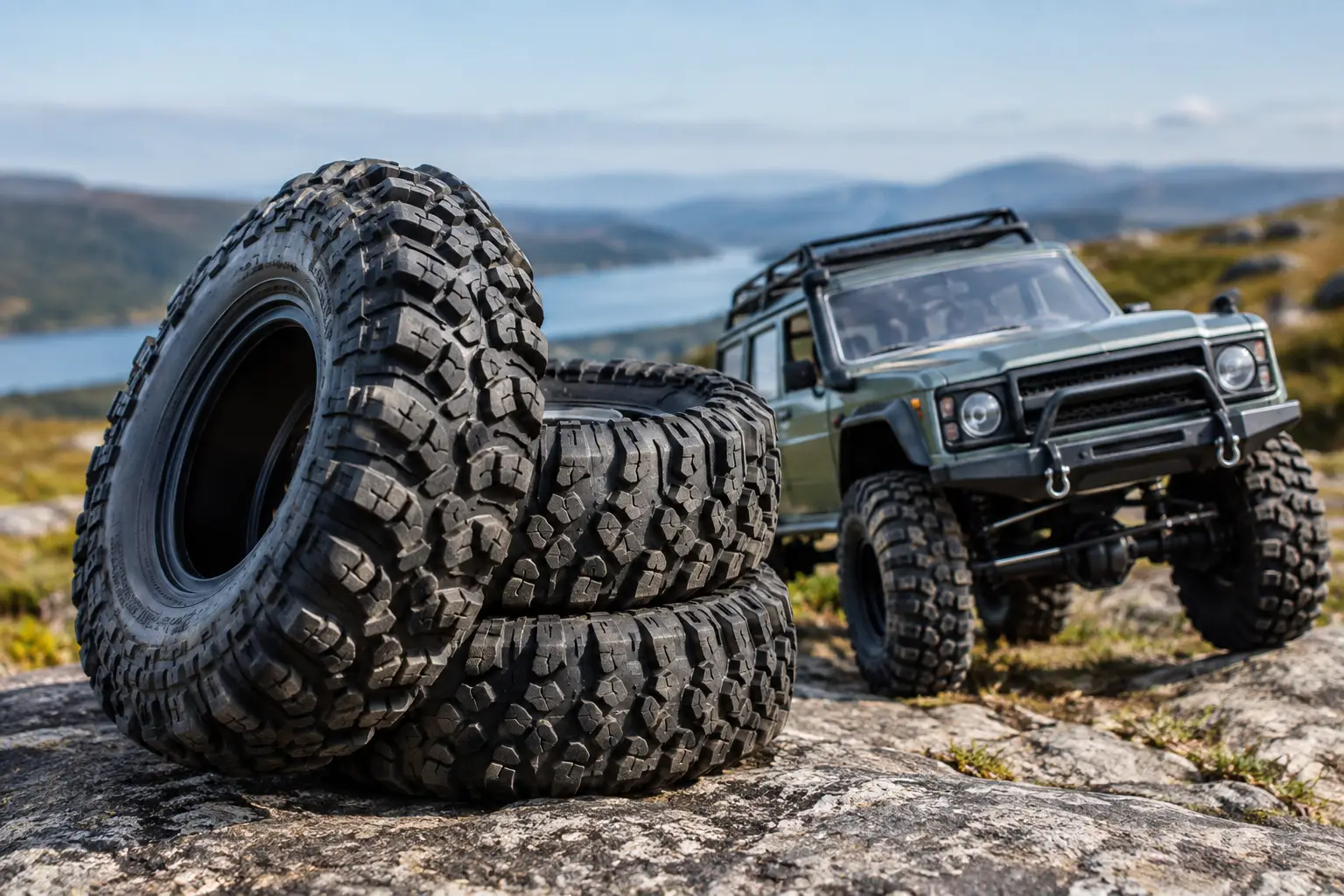
A scale crawler can have a detailed body, portal axles and carefully chosen brass upgrades, yet still struggle on a damp bank if the tyres are wrong. The best scale crawler tyres are not simply the most aggressive-looking set on the shelf. They need to suit your wheel size, the weight and gearing of your rig, and the ground you actually drive on.
For many UK crawler owners, that means coping with wet roots, mossy stone, loose woodland soil and patches of sticky mud in a single run. A sensible tyre choice makes the vehicle easier to place, more predictable on side slopes and far more enjoyable to drive at low speed.
What makes the best scale crawler tyres?
A crawler tyre works by allowing its tread blocks and sidewall to conform to the surface. On rock, the compound needs to grip rather than skate across the top. On roots and uneven hardpack, the carcass needs enough flex to maintain contact without folding over when the model leans.
There is no one tyre that is genuinely best everywhere. A deep, open tread may clear mud very well but feel less settled on dry rock. A soft, tightly spaced trail pattern can be excellent on stone and packed earth, but may clog sooner in thick clay. The right choice depends on where you drive, how heavy the model is and whether scale appearance matters as much as outright traction.
For a realistic trail lorry, start with a scale-pattern tyre in a soft compound. For a competition-focused crawler, a taller and wider tyre with a more flexible carcass may give a clear advantage, although it can look oversized on a scale body.
Start with wheel diameter and tyre size
Before comparing tread patterns, confirm the wheel diameter. Most scale crawlers use 1.9-inch or 2.2-inch beadlock wheels, while smaller rigs may use 1.0-inch or 1.55-inch wheels. Tyres are designed around that bead diameter, so a 1.9-inch tyre will not fit a 2.2-inch wheel regardless of its outside diameter.
Outside diameter has a bigger effect on the way the crawler drives than many people expect. A larger tyre improves ground clearance and helps the axle housing pass over rocks and roots. It also effectively raises the gearing, which can reduce low-speed control and place more load on the motor and electronics. On a scale chassis, tyres that are too tall can rub the arches, catch on bumpers and make the body proportions look wrong.
Width brings another trade-off. A wider tyre can create a broader contact patch and more flotation on soft terrain. However, a narrow tyre often bites more effectively into loose soil and looks more authentic on older-style scale lorries. If your model regularly catches tyres on inner arches at full steering lock, fitting a wider option may create more problems than grip.
Check clearance at full articulation
Test a proposed size with the suspension compressed and the steering at full lock, not just with the vehicle sitting level on the bench. This is where rubbing normally appears. It is also worth considering the effect of wheel offset and brass wheel weights, as both can move the tyre closer to links, portals and bodywork.
Choose a tread for the terrain you use
Tyre tread is often the first feature shoppers notice, and it should be considered alongside compound rather than on its own. The following broad categories make choosing easier.
- All-round trail patterns use medium-sized, closely arranged lugs. They are a practical choice for mixed woodland, dry earth, roots and light mud. They usually provide the most scale-friendly look for expedition lorries and classic 4x4 bodies.
- Rock-focused patterns tend to use larger blocks, deep siping and a soft carcass. They conform well to rock faces, slabs and tree roots, particularly when paired with suitable inserts. They can wear faster on abrasive surfaces if the compound is very soft.
- Mud-oriented patterns have larger gaps between the lugs to help shed loose soil and mud. They can keep moving when a conventional trail tyre packs up, but the open pattern may feel less precise on smooth hard surfaces.
- Hybrid patterns sit between trail and rock tyres. They are often the best place to start for a UK scale crawler used on varied sites, as they offer useful self-cleaning without making the model look like a dedicated competition rig.
Sipes - the fine cuts across tread blocks - also matter. They allow each lug to flex around small edges and irregularities. More siping can improve grip on damp rock and roots, but a heavily siped tread may feel less supported on a heavier vehicle.
Soft compound is useful, but not always the answer
Soft rubber is popular for good reason. It grips polished stone, uneven rock and wet timber better than a hard compound in most crawler situations. It can make a noticeable difference before any changes are made to motor, gearing or suspension.
That said, extremely soft tyres are not automatically right for every model. A heavy scale lorry with brass wheels, a hard body and roof accessories can cause a very soft tyre to roll over in turns or on off-camber ground. The vehicle may gain forward bite but lose steering accuracy. On sharp gravel or frequent hard-surface running, soft compounds can also wear noticeably quicker.
Medium-soft compounds are often a sensible all-round choice for trail rigs. They retain enough flex for technical ground while offering better support and durability. If you drive mainly on wet natural terrain, prioritise compound grip. If the crawler spends plenty of time on tarmac while travelling to the trail, accept that any soft crawler tyre will wear faster than a general-purpose RC tyre.
Inserts are part of the tyre setup
A good tyre with unsuitable foam inserts will not perform as intended. Inserts support the tyre carcass, control sidewall flex and influence how much the tread wraps around obstacles. Standard open-cell foam is simple and effective, but it can absorb water during wet running and may take time to dry.
Dual-stage inserts combine a firmer inner section with a softer outer foam. This gives the wheel more support while allowing the tread to flex for grip. They are particularly useful on heavier rigs, portal-axle models and crawlers with added brass low down in the chassis.
Water-resistant or closed-cell inserts are worth considering for regular wet-weather use. They do not take on water in the same way as conventional foam, helping the tyres retain a consistent feel through puddles and muddy ground. The trade-off is that insert tuning can become more important, as a setup that is too firm will reduce the tyre's ability to conform to terrain.
Front and rear inserts do not always need to match. A slightly softer front setup can improve steering grip and help the front tyres climb onto obstacles, while firmer rear support can keep a loaded scale lorry stable. Make changes in small steps so you can feel what has actually improved.
Match tyre choice to vehicle weight and driving style
A lightweight RTR trail lorry and a fully detailed hard-body build do not ask the same things of their tyres. More weight can improve traction, especially when it is positioned low, but it also demands more sidewall support. If your crawler feels vague on side slopes or folds a front tyre under steering load, firmer inserts may be more beneficial than changing to a harder tyre compound.
Driving style matters too. Slow, deliberate crawling rewards a tyre that conforms well and grips at very low wheel speed. Trail driving at a quicker pace needs a little more stability and predictable handling over ruts, gravel and off-camber paths. For realistic scale driving, a tyre that works consistently is usually more satisfying than one that only excels on a single steep rock.
It is also worth checking clearance around the steering and suspension after fitting new tyres. Larger diameter tyres increase leverage on the steering servo, particularly when wedged against rocks. A strong servo, sensible endpoint settings and correctly adjusted steering links help protect the drivetrain and improve control.
Practical setup checks before your first run
Mount beadlock tyres carefully and inspect the bead all the way around both wheel faces. A pinched bead can create an obvious wobble and allow dirt or water inside. Rotate each wheel by hand before fitting it to the model to check that it runs true.
Once fitted, set the crawler on a flat surface and look at the contact patch. The tyre should flatten slightly under the vehicle's weight, not sit rigidly round and not collapse at the sidewall. Then test it on the sort of obstacle you normally encounter. A short climb over a root or brick tells you more than bench testing ever will.
If the model bounces, loses grip on small edges or feels nervous on wet ground, tyres and inserts are a sensible first area to investigate. If it grips well but rolls excessively on side slopes, add support before abandoning a compound that otherwise works.
The best approach is to choose a sensibly sized, soft or medium-soft scale tyre for your regular terrain, pair it with inserts suited to your vehicle weight, and give it a few proper trail runs before judging it. A well-matched set will make every careful line feel less like luck and more like driving.