
Essential RC Tool Kits for Every Workshop
28/10/2026
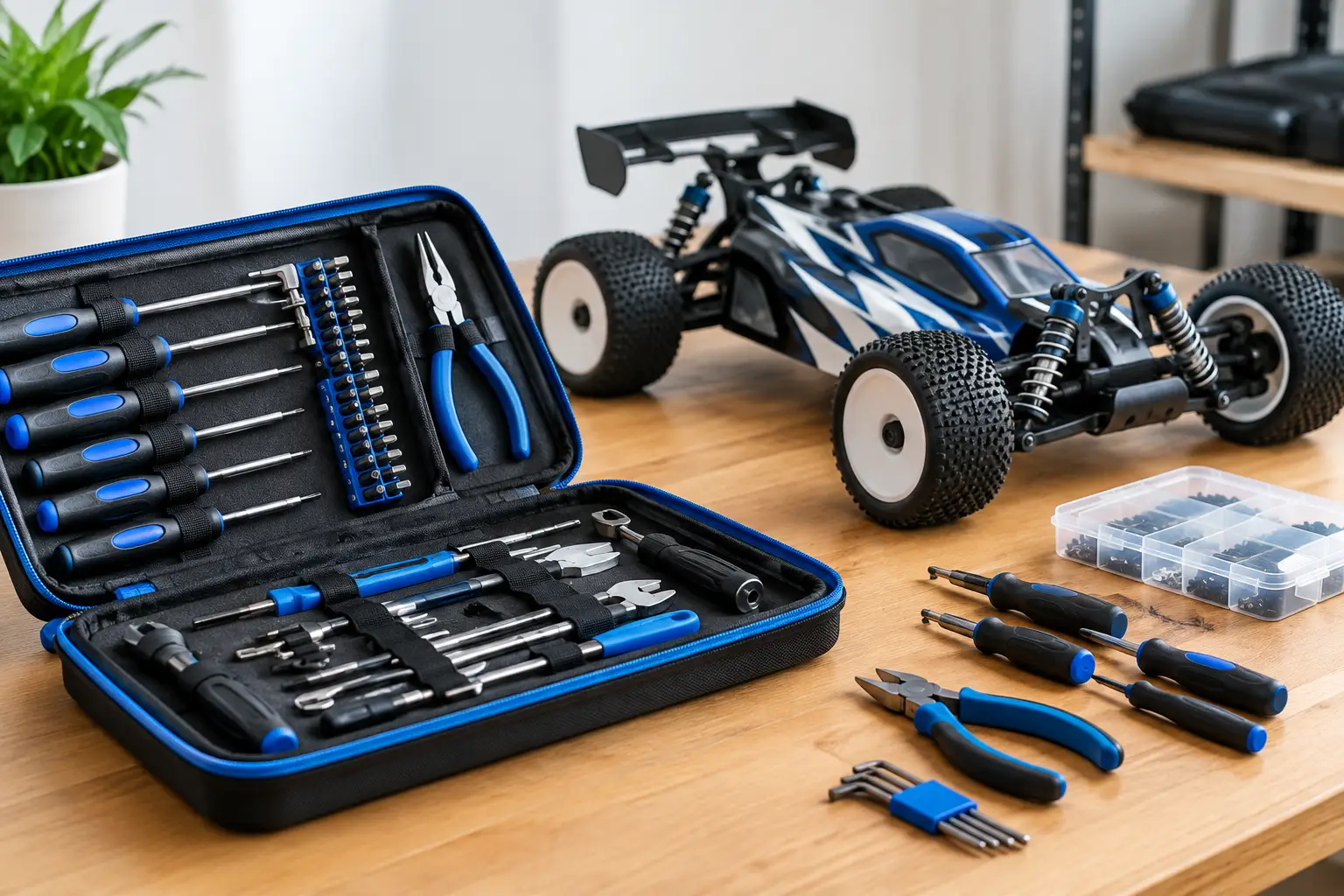
Essential RC Tool Kits: Must-Have Tools for RC Car Maintenance and Repairs
A loose wheel nut, a stripped hex screw or a pinion gear that has worked free can bring a great RC session to an unexpected stop. Whether you're racing, bashing, crawling or simply maintaining your favourite model, having the right tools makes all the difference.
Investing in essential RC tool kits means spending less time struggling with repairs and more time enjoying your RC vehicles. From precision hex drivers and wheel nut wrenches to pliers and specialist maintenance equipment, a well-equipped toolbox makes routine servicing quicker, easier and more reliable.
The good news? You don't need to spend a fortune or buy every specialist tool available.
In this guide, we'll explain which RC tools are worth buying, what beginners should prioritise and how to build a practical maintenance kit that grows alongside your hobby.
Looking to get started? Explore our full range of RC tools and tool kits at RC Model Shop UK.
Why Every RC Hobbyist Needs a Proper Tool Kit
RC cars, trucks and crawlers use compact components and precision fasteners that require correctly sized tools.
Although household screwdrivers and general-purpose tools might work occasionally, they're not designed for the smaller hardware commonly found on hobby-grade RC vehicles.
Using the wrong equipment can result in:
-
Rounded or stripped screw heads
-
Damaged wheel nuts and fasteners
-
Scratched or damaged chassis components
-
Difficult and unnecessarily time-consuming repairs
-
Loose components caused by incorrect tightening
-
Increased maintenance costs
A dedicated RC car tool kit provides better control, more accurate fitting and easier access to tight spaces.
For beginners, a compact selection of essential tools is usually sufficient. More experienced enthusiasts may benefit from individual precision drivers and specialist equipment for suspension, drivetrain and electronics maintenance.
The key is choosing tools that match your particular RC model.
1. Hex Drivers – The Most Important RC Tools
If there's one type of tool every RC enthusiast should own, it's a good-quality set of hex drivers.
Most hobby-grade RC cars use hex socket screws throughout their chassis, suspension, drivetrain and motor mounting systems.
Common metric hex driver sizes include:
-
1.5mm: Small screws, grub screws and electronic mounting hardware
-
2.0mm: General chassis and suspension fasteners
-
2.5mm: Larger chassis and drivetrain screws
-
3.0mm: Heavier-duty fasteners on certain models
Not every RC vehicle uses these sizes. Some manufacturers and older models use imperial hardware, so always check your instruction manual.
What Makes a Good RC Hex Driver?
Look for hardened steel tips, comfortable handles and accurately machined ends.
A poorly fitting hex driver can quickly round off a screw head, particularly when dealing with small grub screws.
Individual handled drivers are ideal for frequent maintenance, while interchangeable-tip sets offer a compact solution for carrying tools to the track.
Our advice: Prioritise quality when buying hex drivers. They're among the most frequently used tools in RC maintenance.
Browse our RC tool kits and precision tools to find suitable options.
2. Nut Drivers and Wheel Wrenches
Removing wheels is one of the most common maintenance jobs on an RC vehicle.
Whether you're changing tyres, inspecting bearings, repairing suspension components or cleaning your drivetrain, a correctly sized wheel wrench makes the job much easier.
Common nut driver sizes include 5.5mm and 7mm, although the correct size depends on your model.
Some larger RC vehicles use substantially bigger wheel nuts and require dedicated wheel wrenches.
Why Use a Dedicated Wheel Wrench?
A correctly fitting wrench helps prevent rounded nuts and allows you to tighten wheel hardware securely.
Loose wheel nuts can cause wheels to wobble, damage wheel hexes or even detach during a run.
Always check that the wheel rotates freely after tightening and follow your manufacturer's recommendations.
Keeping a spare wheel nut or two in your trackside tool kit is also a sensible precaution.
3. Screwdrivers for Smaller RC Components
Although hex screws dominate many modern RC cars, cross-head and flat-head screws are still found on certain models and accessories.
They're commonly used for:
-
Receiver boxes
-
Servo accessories
-
Battery compartments
-
Electronic housings
-
Body fittings
-
Smaller-scale RC models
Choosing the correct screwdriver profile is essential.
Some screws require specific cross-head profiles, and using an incorrectly shaped screwdriver can damage the screw even when it appears to fit.
A compact precision screwdriver set is particularly useful for smaller models and electronics maintenance.
4. Needle-Nose Pliers and Side Cutters
A good pair of needle-nose pliers is one of the most versatile additions to any RC maintenance tool kit.
They make it easier to handle small components in areas where your fingers simply won't fit.
Needle-Nose Pliers
Useful for:
-
Removing and fitting small clips
-
Holding tiny nuts and components
-
Adjusting linkages
-
Handling body clips
-
Positioning wires and connectors
Fine-tipped pliers are especially useful when working on compact RC chassis.
Side Cutters
Side cutters are ideal for trimming cable ties, cutting suitable wire and removing excess plastic from components.
They're also useful when tidying electronic installations or shortening cable ties after fitting an ESC or receiver.
Avoid using ordinary hobby cutters on hardened steel screws or thick metal wire, as this can permanently damage their cutting edges.
5. Threadlock – Prevent Screws from Working Loose
RC vehicles experience constant vibration, particularly during high-speed driving, jumping and off-road use.
Over time, vibration can cause certain metal fasteners to loosen.
This is where threadlock becomes useful.
Medium-strength blue threadlock is commonly used on appropriate metal-to-metal threaded connections, including certain motor mount screws and pinion grub screws.
Important Threadlock Advice
Never apply threadlock indiscriminately.
Many RC components use screws threaded directly into plastic. Conventional threadlock can damage some plastics and should not be used unless the manufacturer specifically recommends a compatible product.
Apply only a small amount to suitable metal fasteners and follow the manufacturer's curing instructions.
Using threadlock correctly can help prevent unexpected drivetrain problems and loose components.
6. Cleaning Brushes and Maintenance Accessories
Keeping your RC vehicle clean is just as important as repairing it.
Dirt, mud, grass and dust can accumulate around suspension arms, bearings, drivetrain components and motor housings.
A simple cleaning kit should contain a soft brush, microfibre cloth and suitable cleaning accessories.
After wet or muddy driving, remove accumulated debris and dry the vehicle thoroughly before storage.
Pay particular attention to bearings and moving drivetrain components.
If your vehicle has started feeling rough or less efficient, read our guide to RC bearing cleaning and maintenance for more detailed servicing advice.
Regular cleaning makes it easier to spot worn parts, damaged components and loose screws before they become more serious problems.
7. Magnetic Parts Trays and Screw Organisers
One of the most frustrating parts of RC maintenance is losing a tiny screw or washer halfway through a repair.
A magnetic parts tray helps keep suitable metal hardware together while you're working.
For larger repairs, a compartment organiser is even more useful.
Separate screws, washers, bearings, suspension pins and other components into labelled sections.
This becomes particularly valuable when rebuilding differentials, replacing chassis components or carrying out a complete strip-down.
Remember that not all RC hardware is magnetic, so a divided parts tray remains useful for plastic and non-magnetic components.
8. Body Reamers for RC Bodyshells
A body reamer is a specialist tool designed to create clean, accurately sized holes in polycarbonate RC bodyshells.
It's useful when fitting:
-
Body posts
-
LED lighting accessories
-
Aerial tubes
-
Custom body mounts
-
Additional accessories
Unlike drilling with an unsuitable bit, a sharp body reamer allows you to enlarge holes gradually with greater control.
Always start with a smaller hole and increase the size carefully.
This helps reduce the risk of cracking or damaging your bodyshell.
9. Digital Callipers and Measuring Tools
As you become more involved in RC maintenance, measuring tools become increasingly valuable.
Digital callipers are useful for checking:
-
Bearing dimensions
-
Screw lengths
-
Shaft diameters
-
Wheel and hex measurements
-
Component spacing
-
Replacement part dimensions
They're particularly helpful when identifying replacement hardware or fitting aftermarket upgrades.
A small steel ruler can also assist with ride-height measurements, body trimming and linkage adjustments.
For more advanced setups, specialist camber, toe and ride-height gauges help improve consistency.
Crawler owners can also benefit from accurate suspension measurements. Our Axial crawler setup guide explains how adjustments can influence performance.
10. Soldering Equipment for RC Electronics
Not every beginner needs a soldering iron, but it becomes an important tool when modifying or repairing RC electronics.
Soldering equipment is useful for:
-
Installing battery connectors
-
Replacing damaged wiring
-
Fitting brushless motor connections
-
Repairing suitable electrical joints
-
Customising electronic installations
A temperature-controlled soldering station, appropriate solder and heat-shrink tubing can help produce reliable electrical connections.
Poor soldering can cause unreliable connections, overheating or damaged connectors, so proper technique matters.
If you're planning to upgrade your electronics, our RC brushless motor upgrade guide is a useful starting point.
Safety tip: Never solder directly onto lithium battery cells unless you're appropriately trained and equipped. Use suitable pre-assembled battery packs and connectors.
What Should Be in a Beginner RC Tool Kit?
If you've just purchased your first hobby-grade RC car, you don't need a professional workshop.
Start with the tools that cover common repairs and adjustments.
| Essential tool | Main purpose |
|---|---|
| Metric hex driver set | Chassis and suspension screws |
| Wheel nut wrench | Wheel removal and fitting |
| Precision screwdrivers | Small screws and electronics |
| Needle-nose pliers | Clips, linkages and small components |
| Side cutters | Cable ties and suitable wiring |
| Cleaning brush | Removing dirt and debris |
| Parts tray | Organising screws and hardware |
| Threadlock | Suitable metal-to-metal fasteners |
Always confirm the sizes and fastener types used on your model before purchasing.
You can find a selection of suitable equipment in our RC tools and tool kits collection.
Essential Tools to Carry in Your RC Trackside Bag
Your home workshop can contain a large selection of tools, but your trackside bag should focus on quick repairs.
A practical field kit should include your most frequently used hex drivers, wheel wrench, pliers, side cutters and a small selection of spare hardware.
It's also worth carrying spare body clips, wheel nuts, screws and any small components your model commonly needs.
Extra Tools for Different RC Models
RC bashers: Prioritise wheel tools, suspension hardware and replacement screws.
RC crawlers: Carry linkage tools, hex drivers and spare hardware suitable for your suspension and drivetrain.
RC race cars: Add setup gauges, tyre tools and equipment for making repeatable adjustments.
Nitro RC cars: Include the correct glow plug wrench, spare glow plug and engine-specific tools.
RC boats and aircraft: Choose tools suited to your model's propeller hardware, control linkages and manufacturer-specific fittings.
Store LiPo batteries safely, away from loose metal tools, sharp objects and anything that could damage the battery casing or wiring.
Budget vs Premium RC Tool Kits – Which Is Better?
RC tools are available across a wide range of prices.
A budget kit can be perfectly suitable for occasional maintenance, particularly if you're new to the hobby.
However, cheaper tools sometimes use softer metal tips or less accurately machined fittings.
These can wear quickly and increase the risk of damaging small screws.
Premium tools generally offer better tip quality, comfortable handles and improved durability, although this varies between manufacturers.
Where Should You Spend More?
Our recommendation is to invest in quality versions of the tools you use most frequently.
Hex drivers and nut drivers are particularly important because they're in constant contact with small fasteners.
For less frequently used accessories, a basic tool may be perfectly adequate.
The best RC tool kit isn't necessarily the most expensive. It's the one that fits your vehicle correctly and performs reliably.
How to Maintain Your RC Tools
Good-quality tools can last for years when looked after properly.
After working on a muddy or wet vehicle, wipe your tools clean and dry them before storage.
Inspect hex driver tips regularly for wear, rounding or damage.
Replace worn tips before they start slipping inside screw heads.
Keep cutting tools clean and avoid using them on materials they're not designed to cut.
Organising your equipment in a dedicated toolbox or carry case also helps prevent damage and makes it easier to find what you need.
Frequently Asked Questions About RC Tool Kits
What tools do I need for my first RC car?
Most beginners should start with correctly sized hex drivers, a wheel nut wrench, precision screwdrivers, needle-nose pliers and side cutters. The exact sizes depend on the model.
Are all RC car tool kits universal?
No. Many RC cars use metric hardware, but some models require imperial drivers or manufacturer-specific tools. Always check compatibility before buying.
What hex driver sizes are most common for RC cars?
Common metric sizes include 1.5mm, 2.0mm, 2.5mm and 3.0mm. However, not every model uses all four sizes.
Do I need expensive RC tools?
Not necessarily. A decent budget kit can handle occasional maintenance, but investing in better-quality hex drivers and frequently used tools can help prevent damaged hardware.
Can I use ordinary household tools on RC cars?
Some household tools may work, but dedicated RC tools are generally better suited to small fasteners and confined spaces. Correct sizing is essential.
Should I buy a complete RC tool kit or individual tools?
A complete kit is convenient for beginners and trackside use. Individual precision tools may be better for enthusiasts who regularly service or rebuild their vehicles.
Final Thoughts – Build Your RC Tool Kit the Right Way
Having the right tools makes RC maintenance more enjoyable and helps keep your vehicles running reliably.
You don't need a fully equipped workshop from day one. Start with quality hex drivers, the correct wheel wrench, basic screwdrivers and a few essential maintenance accessories.
As your experience grows, you can add specialist tools for drivetrain repairs, suspension tuning, electronics upgrades and complete rebuilds.
A carefully chosen essential RC tool kit can save time, prevent damaged hardware and make those unexpected repairs much easier to manage.
At RC Model Shop UK, we stock a range of RC tools, maintenance accessories and tool kits suitable for beginners and experienced hobbyists.
Ready to upgrade your toolbox?
Shop RC Tools & Tool Kits at RC Model Shop UK
Find the right equipment for your RC car, truck, crawler or next maintenance project.
Written by RC Model Shop UK
RC Models, Parts, Accessories & Hobby Advice