
Why RC Differential Leaks Happen and How to Stop Them
18/10/2026
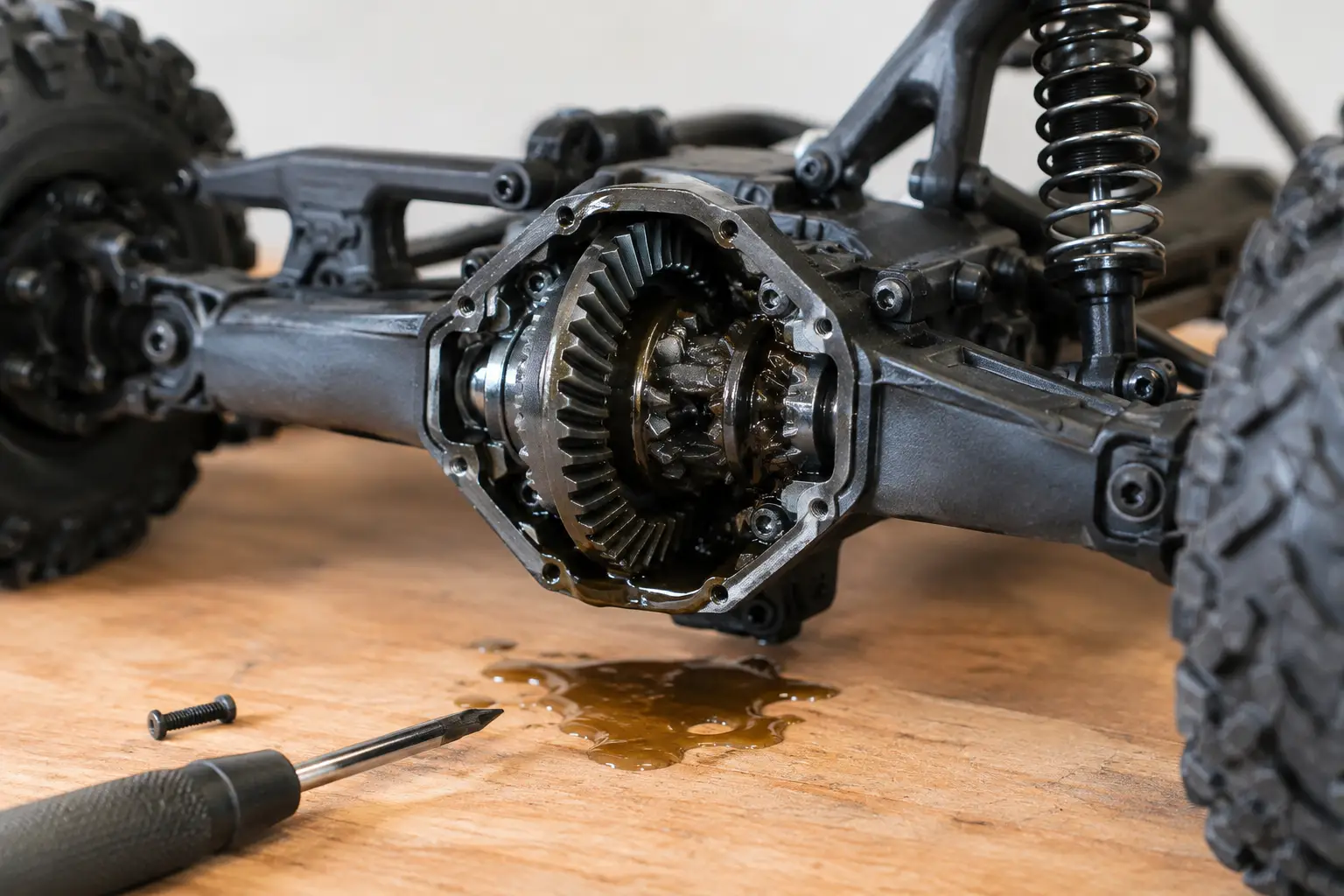
A damp patch around the gearbox after a run is frustrating, but it is usually fixable without replacing half the vehicle. Understanding why RC differential leaks starts with identifying exactly where the oil is escaping. A diff case, outdrive seal and pinion area can all end up coated in oil, yet each points to a different fault.
A small amount of residue after a fresh rebuild is not always a concern. Silicone oil can sit in screw threads, around the case seam or inside the gearbox housing, then work its way out once the model gets warm. If the area stays wet after cleaning, however, or the differential is losing oil between services, it is time to inspect it properly.
Why RC differential leaks occur
Most oil-filled RC differentials leak for one of four reasons: damaged seals, a poor case seal, worn or bent outdrives, or an issue with the diff casing itself. Hard bashing, repeated strip-downs and overtightened screws all make these problems more likely.
The differential uses O-rings or silicone seals around its outdrives to keep oil inside while allowing the shafts to turn. These small parts do a demanding job. Grit can get past the outer bearings, score the outdrive surface and wear the seal. A crash can bend an outdrive slightly, creating a gap that lets oil pass every time the drivetrain rotates.
Leaks can also appear along the seam where the two halves of the differential case meet. This often happens after a rebuild if the gasket is pinched, missing or fitted the wrong way round. On many models, the case relies on a thin gasket or a precisely moulded sealing surface. Even a tiny piece of dirt trapped between the halves can leave a route for oil.
Heat adds another factor. Silicone diff oil expands as the drivetrain warms up, particularly during fast running or sustained high-load use. A correctly built differential should cope with this, but an overfilled case, weak seal or damaged casing may start weeping when hot. That is why a model can look dry on the bench but leak after a few minutes at full throttle.
The outdrive seal is the usual culprit
Oil around the ends of the diff, cup joints or driveshafts usually means an outdrive seal issue. Remove the differential and look closely at the O-rings. A flattened, split or swollen O-ring should be replaced, not reused.
Check the outdrive itself as well. Run a fingernail across the area where it passes through the seal. If you can feel a groove, corrosion or a rough edge, a new O-ring may only provide a short-term cure. Replace the worn outdrive at the same time. It is a modest extra cost compared with stripping the gearbox again after the next run.
A small amount of appropriate silicone grease on the O-ring can help it seat without tearing during assembly. Do not pack the area with grease, though. Excess grease attracts dirt and can mask a leak while the differential continues to lose oil.
A leaking case seam needs careful rebuilding
If oil is visible around the centre join of the diff case, clean the outside first and confirm the source. Oil thrown from a leaking outdrive can spread across the case, making the seam look guilty when it is not.
Once removed, inspect both case halves under good light. Look for warped edges, hairline cracks around screw holes and damage caused by overtightened screws. Plastic cases can distort, while alloy cases may develop damage around threads or sealing faces after an impact. Replace a damaged case rather than trying to seal it with excessive gasket compound.
Fit a new gasket where the model uses one. If there is no separate gasket, make sure the mating faces are completely clean and free from old sealant. Tighten the screws evenly, moving between opposite sides rather than fully tightening one screw at a time. The aim is an even seal, not maximum force.
How to find the real source of an RC differential leak
Before dismantling anything, remove the wheels if needed and clean the gearbox area with a suitable RC-safe cleaner or a lint-free cloth. Let the model dry, then inspect it after a short, gentle run. Fresh oil will show the path far more clearly than old grime.
Start at the highest visible wet point. Oil travels downward and is often flung backwards by rotating parts, so the lowest oily area is not always the source. Check around the outdrive exits, the case seam, the pinion input area and any screws that pass into the differential chamber.
Do not assume every oil leak is diff oil. Shock oil from a leaking damper can run down the suspension arm and collect near a gearbox. Grease from driveshafts, bearing oil and residue from previous maintenance can also look similar. Differential oil usually has a smooth, clear feel, while grease is thicker and tends to hold dirt in place.
If your model has front, centre and rear differentials, identify which one is losing fluid before ordering parts. A centre differential can throw oil along the chassis and make both ends of the vehicle look wet. A quick clean and test saves unnecessary strip-down time.
Rebuild the differential without creating another leak
A reliable rebuild is mostly about cleanliness and restraint. Work on a clean bench, lay out the parts in removal order and refer to the exploded diagram for the correct seal and shim positions. Similar-looking O-rings are not always interchangeable between models.
First, replace any seals that show wear. If a diff has been opened because it was leaking, fitting new O-rings and a new gasket is sensible preventative maintenance. Reusing old seals can work, but it is a false economy if access requires removing bumpers, suspension arms and a gearbox housing.
Inspect bearings beside the outdrives too. A rough or loose bearing lets the outdrive move more than it should, which quickly damages a new seal. Bearings that feel notchy, gritty or loose should be replaced before the diff goes back in.
Fill the differential to the level specified by the manufacturer. Most diffs should not be filled to the absolute top. Leave the small air space intended by the design, then rotate the internal gears slowly to release trapped air before closing the case. Overfilling can force oil past healthy seals once the unit warms up.
Use the correct silicone diff oil for the model and your intended driving. Very thick oil does not automatically cause a leak, but it places greater resistance on the internal gears and can highlight a weak seal. Thin oil is more likely to escape through a marginal gap. For bashers and beginners, the factory oil weight is normally the best place to start. Racers and experienced drivers may tune oil weights for handling, but the case and seals must be in good condition first.
Avoid threadlock near plastic diff cases unless the manual specifically calls for it. Liquid threadlock can damage certain plastics, and excess product may migrate into the case or interfere with the seal. Where screws enter metal and threadlock is required, apply only a very small amount to the thread.
Preventing repeat leaks after repair
Differentials live a hard life in UK conditions, especially when a basher or crawler has been run through wet grass, loose gravel and mud. Keeping dirt away from the outdrive area is one of the best ways to protect the seals. After a wet or muddy session, brush debris from the drivetrain and check that the gearbox housings are not packed with grit.
Do not ignore clicking, binding or excessive drivetrain play. These symptoms can point to worn bearings, damaged gears or bent shafts that place extra load on the seals. Deal with them early, before a small leak becomes a diff that runs low on oil and damages its internal gears.
It also helps to check the diff oil whenever the gearbox is already open for another job. There is no need to strip a healthy vehicle constantly, but inspecting fluid level during routine maintenance is much easier than diagnosing unpredictable handling later. A low or empty differential can make a model pull under acceleration, unload a wheel too easily, or behave inconsistently through corners.
For frequently used vehicles, keep a few correct O-rings, gaskets, bearings and outdrives in the spares box. RC Model Shop can help match parts to the exact model when there are several versions or generations available.
A differential that stays dry outside and correctly filled inside will make the whole drivetrain more consistent. Clean the area, trace the true source, replace the worn part rather than guessing, and give the repaired diff a short test before sending the model back into its next hard run.