
Buying RC Car Spare Parts Online
19/04/2026
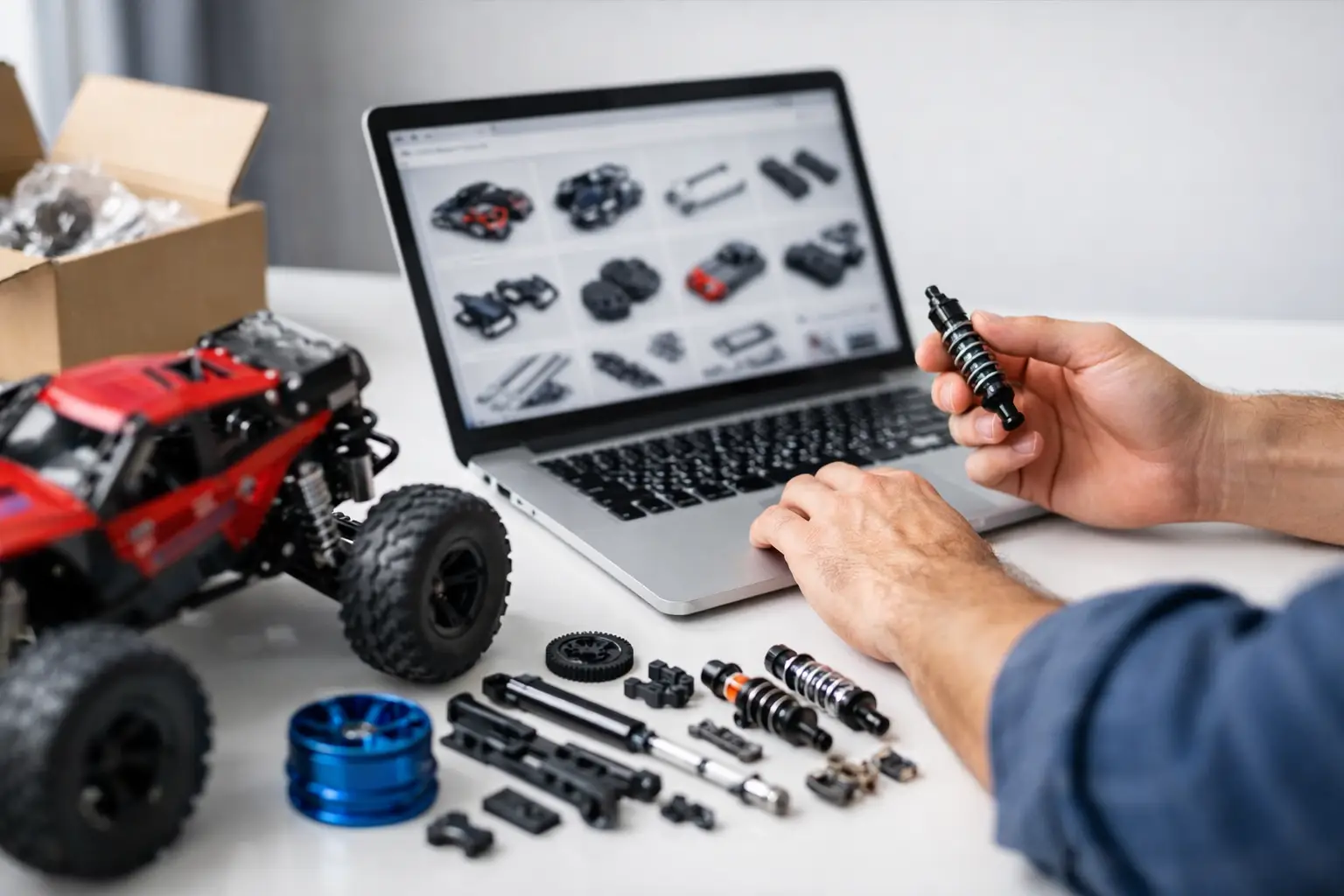
RC Car Spare Parts Online - How to Buy the Right Parts Without Wasting Money
A snapped suspension arm on Saturday afternoon usually means one thing:
you want the correct part quickly.
Not:
-
vague compatibility notes
-
random marketplace listings
-
poor-quality copies
-
confusing model references
That is why more hobbyists now buy RC car spare parts online.
Done properly, online RC parts shopping gives:
-
wider choice
-
faster access
-
easier compatibility checking
-
better upgrade options
However, RC parts only become convenient when the listing actually tells you:
-
what fits
-
what version it suits
-
what the dimensions are
-
whether the stock is genuine
RC models evolve constantly, and even cars that look almost identical can use:
-
different hubs
-
different driveshafts
-
different wheelbases
-
different electronics
That means:
accuracy matters as much as price.
RC Model Shop stocks a large range of RC accessories, spare parts and upgrade components suitable for bashers, crawlers, race cars and trail trucks.
Why buy RC car spare parts online?
For most UK hobbyists, the biggest advantage is:
range.
A specialist RC parts retailer can stock far more than:
-
local hobby shop shelves
-
generic marketplaces
-
limited in-store inventory
That matters when searching for:
-
older RC parts
-
uncommon upgrades
-
specific drivetrain pieces
-
replacement electronics
Online RC parts shopping also makes comparison easier.
You can quickly compare:
-
stock levels
-
materials
-
compatibility
-
upgrade versions
-
genuine vs aftermarket parts
Sometimes:
a standard replacement is the smartest buy.
Other times:
-
hardened steel
-
aluminium
-
heavy-duty composite
may reduce repeated failures and long-term downtime.
Why exact RC model names matter
This is where most ordering mistakes happen.
“1/10 buggy” tells you almost nothing.
You need:
-
exact manufacturer
-
full chassis name
-
version number if possible
because manufacturers often release:
-
V1 and V2 revisions
-
brushed and brushless versions
-
different wheelbase options
-
updated drivetrain layouts
Even similar-looking models may use:
-
different hubs
-
different arms
-
different gearbox parts
-
different electronics mounts
The safest approach is always:
exact model first.
Exploded diagrams save huge amounts of time
If you still have the original manual:
use the exploded diagrams.
They are usually the fastest route to:
-
correct part codes
-
compatibility confirmation
-
assembly positioning
Exploded diagrams also help identify:
-
hidden hardware
-
surrounding components
-
upgrade opportunities
before ordering.
If the manual is missing:
-
moulded numbers
-
stamped codes
-
chassis labels
can often help identify the correct part too.
Never order RC parts by appearance alone
This causes huge amounts of wasted money.
Two suspension arms can look:
-
almost identical
while still differing in: -
hinge pin spacing
-
shock mounting
-
track width
-
geometry
The same applies to:
-
steering parts
-
driveshafts
-
wheel hubs
-
ESCs
-
body shells
Good RC listings should clearly show:
-
compatibility
-
dimensions
-
version notes
-
part numbers
rather than relying purely on photos.
Replacement part or upgrade part?
This depends entirely on:
-
how the RC vehicle gets used.
Standard replacement parts
For casual bashers and general park use:
-
stock replacement parts
often make the most sense.
They:
-
restore factory handling
-
keep costs sensible
-
maintain chassis balance
without creating extra stress elsewhere.
Upgrade parts
Upgrades change the RC vehicle behaviour.
Examples:
-
alloy steering parts reduce flex
-
hardened drivetrain parts improve durability
-
stronger servos sharpen steering response
However:
upgrades shift stress elsewhere too.
A stronger drivetrain can:
-
transfer impact force
-
expose weak transmission parts
-
increase drivetrain wear
That is why balanced upgrades work far better than randomly replacing parts with alloy components everywhere.
Electronics compatibility matters heavily
Electronics are one of the biggest RC compatibility traps online.
When buying:
-
motors
-
ESCs
-
servos
-
batteries
you must check:
-
dimensions
-
voltage
-
connector type
-
current handling
-
spline count
-
mounting pattern
A motor that physically fits may still:
-
overheat
-
overload the ESC
-
destroy gearing
Likewise:
-
a battery may fit electrically
but not: -
physically inside the tray
RC Model Shop stocks a large range of:
for hobby-grade RC platforms.
RC parts worth keeping in stock
If you drive regularly, some RC parts are worth owning before they fail.
Useful spares include:
-
suspension arms
-
body clips
-
wheel nuts
-
spur gears
-
bearings
-
driveshaft pins
-
steering links
Off-road RC vehicles especially wear:
-
driveline components
-
suspension hardware
-
tyres
-
bearings
far faster than many beginners expect.
A small stock of workshop basics often saves:
-
downtime
-
emergency postage
-
missed weekends
long-term.
Why good RC listings matter
A proper RC parts listing should clearly show:
-
exact compatibility
-
part numbers
-
dimensions
-
stock status
-
version notes
The best listings remove:
guesswork.
That matters massively because many generic marketplaces contain:
-
duplicated listings
-
incorrect compatibility
-
vague naming
-
incomplete information
Specialist RC retailers usually provide:
-
cleaner compatibility data
-
better support
-
more accurate stock information
which reduces ordering mistakes heavily.
Common mistakes when buying RC spare parts online
Ordering by appearance
This is the biggest mistake.
Many RC parts:
-
look similar
but are not compatible.
Ignoring dimensions
This catches buyers constantly with:
-
batteries
-
body shells
-
wheels
-
electronics
Correct scale size does NOT guarantee fitment.
Upgrading without balance
A faster motor may also require:
-
stronger ESC
-
upgraded gearing
-
better cooling
-
stronger driveline parts
Ignoring that creates:
-
heat
-
reliability issues
-
repeated failures
Buying the cheapest aftermarket option
Some aftermarket RC parts are excellent.
Others:
-
fit poorly
-
wear quickly
-
create tolerance problems
If the RC vehicle is driven hard:
quality matters.
When RC expert support becomes valuable
Not every RC car remains stock.
Many second-hand RC vehicles already contain:
-
mixed upgrades
-
modified electronics
-
swapped drivetrains
-
non-standard parts
That makes compatibility much harder.
In these situations:
-
specialist advice
-
photo support
-
model identification help
often saves huge amounts of:
-
time
-
money
-
incorrect ordering
This matters especially for:
-
beginners
-
gift buyers
-
returning hobbyists
who may not know:
-
connector standards
-
ESC types
-
wheel fitment
-
drivetrain compatibility
yet.
Shop smarter, not just cheaper
The cheapest RC part is not always:
the best value.
A low-cost part that:
-
breaks quickly
-
fits poorly
-
delays repairs
-
creates compatibility issues
often becomes more expensive overall.
The best RC spare part is usually the one that:
-
fits properly
-
arrives quickly
-
suits the intended use
-
restores reliability properly
At RC Model Shop, the focus is always helping hobbyists match:
-
spare parts
-
upgrades
-
electronics
-
driveline components
properly to the chassis and intended use rather than simply chasing specifications or lowest prices.
Because the goal is not just buying parts.
It is getting the RC vehicle back:
-
running properly
-
reliably
-
consistently
with less frustration and less wasted money.
Frequently Asked Questions
How do I find the correct RC spare part?
Use:
-
exact model name
-
exploded diagrams
-
part numbers
-
compatibility notes
rather than relying purely on appearance.
Are all 1/10 RC parts interchangeable?
No. Even RC vehicles from the same manufacturer often use different:
-
hubs
-
suspension geometry
-
electronics layouts
-
driveline parts
Should I buy standard parts or upgrades?
For casual use, standard parts are often best.
Upgrades make more sense when:
-
durability
-
performance
-
handling precision
matter more.
What RC spares are worth keeping at home?
Useful RC spares include:
-
suspension arms
-
body clips
-
bearings
-
spur gears
-
steering links
-
wheel nuts
Why do RC upgrades sometimes create new problems?
Upgrades can transfer stress elsewhere in the chassis, exposing:
-
weak driveline parts
-
overheating issues
-
handling imbalance
if the setup is not matched properly.
Written by the RC team at RCModelShop.co.uk / Appliance Electronics UK Ltd, UK supplier of RC spare parts, upgrades, electronics and hobby-grade RC accessories.