RC Shop Walsall for Models, Parts and Advice
27/08/2026
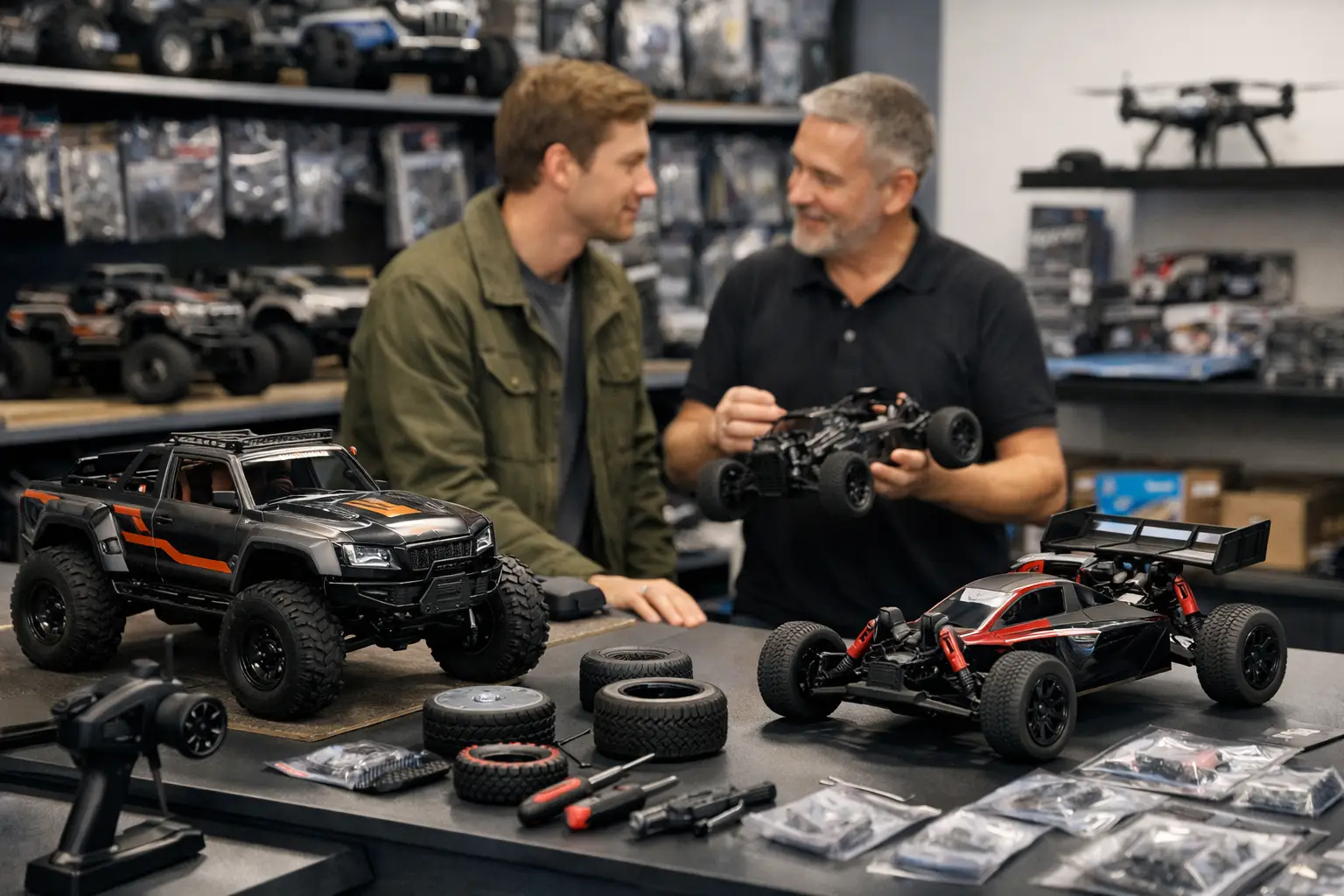
RC Shop Walsall – Local RC Models, Parts, Repairs & Expert Advice
A snapped suspension arm on a Saturday morning, a battery that will not fit the tray, or a first RC car that is far quicker than expected – these are the moments when a good RC shop Walsall customers can visit or call makes a real difference. Buying an RC model is only the first step. Keeping it running, choosing the right equipment and knowing which upgrade is worth fitting are what make the hobby enjoyable over time.
For beginners, the choice can look overwhelming. For established hobbyists, the challenge is usually finding the exact replacement part or compatible component without wasting money on the wrong version. A specialist retailer should make both jobs easier with clear product information, useful stock availability and advice based on how RC models are actually used.
At RC Model Shop UK in Walsall, we supply hobby-grade RC models, batteries, chargers, replacement parts and upgrades, as well as offering an in-house RC repair service for customers who would rather have a problem professionally diagnosed.
What a specialist RC shop should help with
A proper RC retailer is more than a shelf full of ready-to-run cars. The most useful range covers the whole ownership cycle: the model itself, the batteries and charger needed to run it, common crash parts, routine maintenance items and upgrades for when standard components are no longer enough.
That matters because RC compatibility is specific. Two vehicles from the same manufacturer can use different wheel hexes, body mounts, pinion gears or battery connectors. A part that looks almost identical in a photograph may be the wrong length, pitch or fitment. Checking the model name, version and manufacturer part number before ordering is the quickest way to avoid frustration.
At RC Model Shop UK, the range includes cars, lorries, crawlers, boats and aircraft alongside electronics, tools, tyres, spares and upgrades. That breadth is useful whether you are collecting a birthday present, replacing a damaged driveshaft or planning a full performance build.
Choosing the right model for how you will use it
The best first question is not, “Which model is fastest?” It is, “Where will it be driven?”
A 2S brushless basher may be ideal for a park or firm dirt track, but it can be too quick for a small garden or a younger driver. A crawler is much slower but delivers more control and satisfaction over rocks, woodland trails and scale obstacles.
Bashers and monster lorries
These are built for jumps, loose ground and high-energy running. They tend to have big tyres, long-travel suspension and a design that tolerates the occasional hard landing.
Electric brushless power offers serious speed, but it also places more demand on batteries, gearing, drivetrain parts and driver control.
For a first model, a well-supported ready-to-run vehicle is usually a better choice than chasing the highest speed figure. Look for readily available arms, hubs, bumpers, body posts and drivetrain parts.
No RC car is indestructible, regardless of the marketing, but good parts support makes a crash a repair job rather than the end of a model.
Crawlers and scale vehicles
Crawlers reward patience rather than outright pace. Their low-speed torque, locked axles and soft tyres make them suited to technical terrain.
They are also a strong option for those with limited space, as a small natural trail or purpose-built obstacle course can provide a long session of driving.
Scale realism is part of the appeal, but it introduces choices. Heavy metal accessories look excellent and can improve low-down weight distribution, yet too much weight can strain the motor and reduce performance on side slopes.
Build gradually, test often and upgrade for a clear reason.
RC boats and aircraft
Boats and aircraft bring different practical considerations.
For boats, water safety, access to the launch spot and waterproofing matter as much as power. For aircraft, suitable flying locations, local rules, correct radio setup and a careful pre-flight check are essential.
They can be hugely rewarding categories, but they benefit from measured buying advice and the right support equipment from the start.
Batteries and chargers are part of the purchase
Many disappointing first runs come down to the power system rather than the model.
A battery needs the right physical size, connector and voltage, as well as sufficient discharge capability. A charger must be suitable for the battery chemistry and should be used correctly every time.
LiPo batteries are popular because they offer strong performance and good capacity for their weight. They also require responsible handling.
Charge them on a suitable non-flammable surface, use the correct balance connection where required, never leave charging batteries unattended and store them at the recommended storage voltage when they will not be used for a while.
Higher voltage can increase speed and punch, but it is not automatically the right upgrade. Moving from 2S to 3S or 4S can expose weaknesses in tyres, diffs, gearing and driving technique.
Check the manufacturer specification for your exact model and consider whether more runtime, rather than more power, would improve your sessions more.
Finding RC parts without guesswork
When a model needs repair, start with the manual or exploded diagram.
Identify the damaged component and check whether it is supplied individually or as part of an assembly. It is often sensible to inspect nearby components at the same time.
A hard impact that breaks a front lower arm may also bend a hinge pin, damage a steering link or loosen a shock cap.
Part numbers are more reliable than broad descriptions such as “fits Arrma” or “Traxxas compatible”. Manufacturer names can cover several platforms, and parts may differ between generations.
If you are unsure, have the model name, version, part number and a clear photograph of the damaged area ready before asking for help.
An established RC shop in Walsall can be particularly useful for this. Being able to discuss a repair with someone who understands the difference between a consumable part and an upgrade can save repeated orders.
RC repairs in Walsall
Not everyone wants to diagnose and repair their own RC vehicle, and some faults are considerably easier to identify with the model physically on the workbench.
RC Model Shop UK offers an RC model diagnosis and repair service from our Walsall store.
This can be useful for problems such as drivetrain faults, steering problems, damaged suspension, electrical issues or an RC model that simply is not behaving as it should.
Our repair service is charged at £45 per hour plus any parts required. Repairs need to be booked in advance, with the first hour paid upfront.
Where possible, bring the complete model together with the equipment relevant to the problem. For example, if you are experiencing a power or charging problem, bringing the battery, charger and associated leads can make diagnosis much easier.
Hobby-grade RC models are designed to be maintained and repaired throughout their life. Sometimes replacing a damaged component yourself is straightforward; other times, having the complete model inspected can save considerable time and guesswork.
You can find further information and arrange a repair through our RC repair service.
Upgrades that genuinely earn their place
Upgrades should solve a problem or improve the type of driving you enjoy.
Aluminium components are a good example. They can add strength and precision in the right locations, but replacing every plastic part with metal is not always an improvement.
Plastic suspension arms can flex and absorb impact energy; a rigid alloy arm may transfer that force into a bulkhead, chassis or gearbox.
For bashers, useful first upgrades are often practical rather than flashy: better tyres for the terrain, a stronger servo for more precise steering, quality bearings, a reliable fan for a hot motor system or reinforced components in known weak areas.
For crawlers, tyre compound, wheel weight, steering servo performance and suspension setup can have more effect than raw motor power.
Premium machined upgrades, including Vitavon components, suit hobbyists building for demanding running or a particular performance goal. They are best selected by fitment and purpose, not simply because they are available.
A well-planned build feels better to drive and is easier to maintain than one assembled from random upgrades.
What to bring or check before visiting our Walsall RC shop
If you are visiting for advice, bring the vehicle where practical, especially for a repair or battery-fitment question.
If that is not possible, take photographs of the model, its battery tray, connectors and damaged component. The original box label, manual or manufacturer part number can speed things up considerably.
For a new purchase, be clear about the driver's age and experience, where the model will run, your realistic budget and whether you need everything to get started.
Some ready-to-run models include a battery and charger, while others require them separately. There is no benefit in taking home a great model only to find the right power pack is still needed.
It is also worth thinking ahead to the first few spares. Body clips, wheel nuts, spare arms, gears and a suitable tool set can turn a minor issue into a quick fix.
You do not need to buy every possible part in advance, but a few sensible essentials keep more time focused on driving.
Shop with support, not just a product listing
Price matters, and competitive pricing is rightly important. Yet the lowest initial price is not always the best value if the model has limited spares support or the wrong battery setup.
A specialist RC retailer can help match the model, power system, charger and maintenance parts as one workable package.
Fast dispatch is valuable when you know exactly what you need. Helpful technical support matters when you do not. Having access to a physical RC shop in Walsall and a repair service adds another option when a problem cannot easily be diagnosed remotely.
Choose the model that suits your ground, your confidence and the time you want to spend maintaining it.
The right RC setup is not necessarily the loudest, fastest or most expensive one – it is the one you will be keen to charge, run, repair and take out again next weekend.
Frequently Asked Questions
Is there an RC shop in Walsall?
Yes. RC Model Shop UK is based in Walsall and specialises in hobby-grade RC models, parts, batteries, chargers, electronics and upgrades.
Can you repair RC cars in Walsall?
Yes. RC Model Shop UK offers a professional RC repair service. Repairs are booked in advance and charged at £45 per hour plus any required parts.
Can I bring my RC car into the shop for advice?
Yes. If you have a compatibility or repair question, having the actual model available can make identifying the correct part considerably easier. Bringing the model number, manual or manufacturer part number is also helpful.
Do you sell RC spare parts?
Yes. RC Model Shop UK stocks a wide range of replacement and upgrade parts for hobby-grade RC models. Always check the exact model and version when selecting parts because similar vehicles can use different components.
Can you help me choose my first RC car?
Yes. The best model depends on the driver's experience, budget and where it will be used. Rather than simply choosing the fastest vehicle, consider the terrain, available space, parts support and the level of maintenance you are comfortable with.
Do I need a separate battery and charger?
It depends on the model. Some ready-to-run packages include both, while others require one or both to be purchased separately. Check exactly what is included before ordering.
Are broken RC parts covered by warranty?
A warranty generally covers genuine manufacturing or component faults rather than damage caused through crashes, wear or normal use. Hobby-grade RC models contain serviceable and replaceable components, so the cause of a failure needs to be established before determining whether it is a warranty matter.
Written by RC Model Shop UK
This article was written by the team at RC Model Shop UK, our specialist RC shop in Walsall.
Our team works with hobby-grade RC vehicles every day, helping customers choose new models, identify compatible batteries and chargers, locate replacement parts, diagnose faults and decide which upgrades are genuinely worthwhile.
That practical experience is particularly important with RC equipment because compatibility cannot always be determined from appearance alone. Battery dimensions, connectors, gearing, model generations and individual manufacturer part numbers all need to be considered.
We also see what happens after an RC model has been used. Through our workshop and customer support, we deal with everything from straightforward suspension and drivetrain repairs to electrical and power-system problems. That gives us practical experience of the issues RC owners encounter beyond the original purchase.
Whether you're buying your first hobby-grade RC car, trying to identify a replacement component or have a model that needs professional attention, our aim is to help you get the right solution rather than simply sell another part.
For a model that needs workshop attention, find out more about our RC repair service in Walsall or contact RC Model Shop UK for help with your RC model, parts, batteries, chargers and upgrades.