4WD Versus 2WD RC Cars - Which Is Right?
27/11/2026
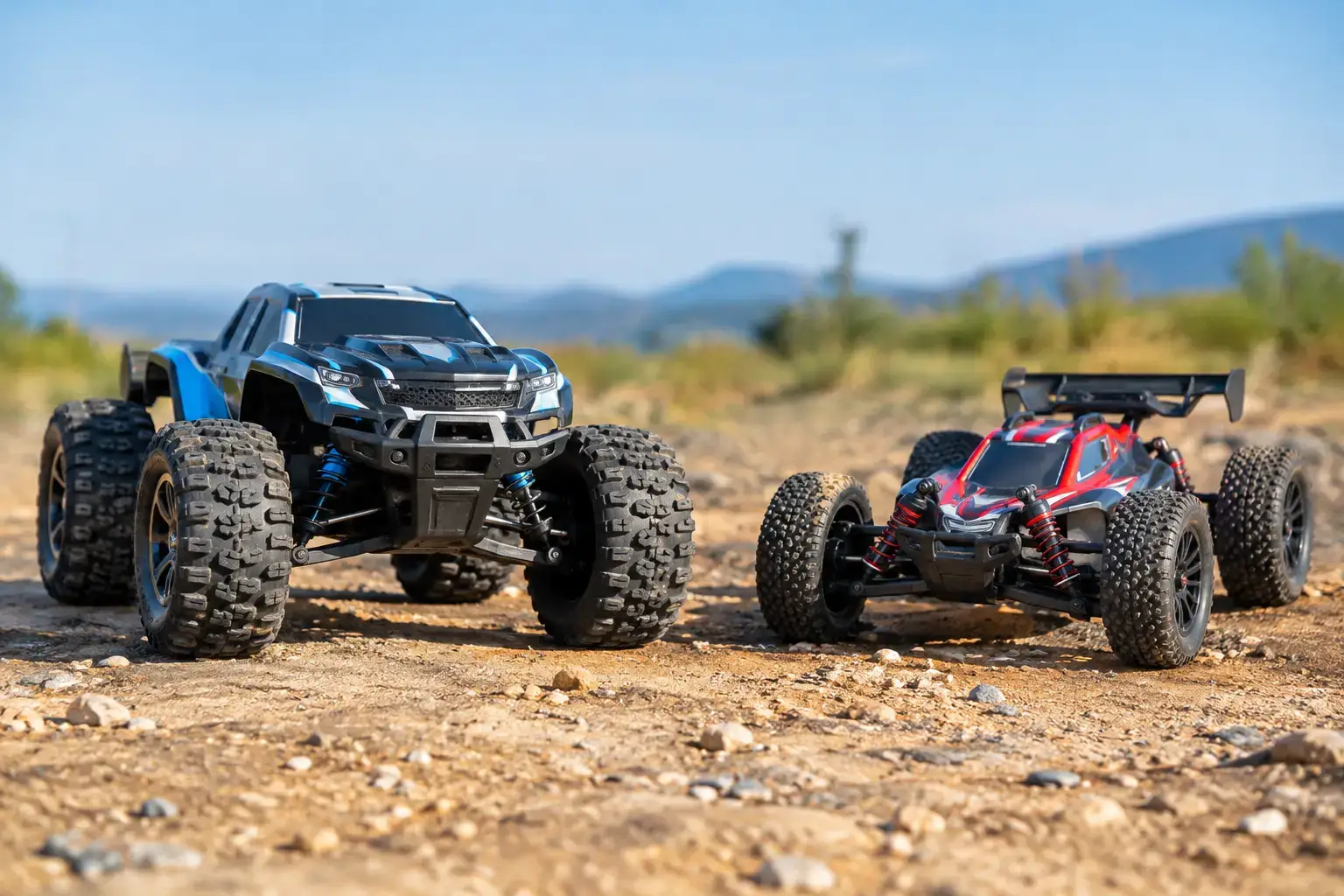
A wet patch at the local BMX track can make one RC car look unstoppable and another look like it is skating on ice. That is why the choice between 4WD versus 2WD RC cars matters far more than a number on the box. It affects how the model launches, turns, jumps, wears tyres and responds when the surface gets loose.
Neither layout is automatically better. A 4WD model gives you reassuring traction and speed over mixed ground, while a 2WD model can feel lighter, simpler and more rewarding when you learn to drive it properly. The right choice comes down to where you run, what type of RC driving you enjoy and how much maintenance you are happy to take on.
4WD versus 2WD RC cars: the real difference
A 2WD RC car sends power to either the rear wheels or, less commonly, the front wheels. Most performance buggies, stadium lorries and bashers are rear-wheel drive. The rear tyres push the car forwards, while the front wheels steer it. This gives the car a lively character, particularly on loose dirt, where throttle control makes a real difference.
A 4WD RC car sends power to both front and rear axles through a more involved drivetrain. With all four wheels helping to propel the model, it can put down power earlier and more confidently. On grass, gravel, damp soil and rough ground, that extra traction is immediately noticeable.
The trade-off is mechanical complexity. A typical 4WD vehicle has a front differential, rear differential, centre driveshaft or centre differential, plus additional gears, bearings and universal joints. These parts are not a problem when maintained correctly, but there are simply more of them to inspect and replace after a hard season of running.
Where 4WD makes sense
For many first-time buyers, 4WD is the easier route into fast RC driving. It is more forgiving when the throttle is applied too early in a corner, and it tends to track straight when accelerating over uneven ground. If your regular spot is a field, woodland trail, gravel car park or an off-road area with changing grip, 4WD is usually the safer bet.
Loose surfaces and wet UK conditions
British running conditions are rarely consistent. One corner of a park may be dry and dusty, while the next is muddy after a short shower. A 4WD buggy, truggy or monster lorry has a clear advantage here because power is shared across four tyres rather than relying on the rear pair to find all the grip.
This does not mean a 4WD model cannot slide. In fact, high-powered 4WD cars can still spin or traction-roll if driven carelessly. The difference is that they recover more easily. Point the wheels where you want to go, ease into the throttle and the car is more likely to pull itself straight.
Faster bashing and bigger power systems
If outright pace is high on your list, 4WD handles brushless power well. More driven wheels reduce wheelspin, helping the car accelerate hard without constantly fishtailing. Larger-scale 4WD bashers also tend to feel planted when running on 3S, 4S or 6S LiPo power, although their weight and speed demand a suitable open space.
A 4WD platform is often the better choice for drivers who want to progress from relaxed weekend use to bigger jumps, faster batteries and performance upgrades. It provides a stable foundation, provided the drivetrain is properly maintained and the slipper clutch or centre differential is set correctly.
Crawling and technical trail driving
Most dedicated RC crawlers are 4WD for a simple reason: all four tyres need to keep pulling when the vehicle is climbing rocks, roots and steep banks. The ability to crawl slowly with controlled power at both axles is fundamental to technical driving.
Even so, 4WD alone does not make a capable crawler. Tyre compound, weight distribution, suspension setup and gearing matter just as much. A heavy crawler with poor tyres will struggle where a well-balanced one with quality tyres can climb confidently.
When 2WD is the better choice
A 2WD RC car is not the budget compromise some buyers assume it to be. It has its own strengths, and in the right setting it can be an excellent first model or a thoroughly enjoyable racer.
Because there are fewer driven components, 2WD vehicles are usually lighter and easier to work on. Accessing the gearbox, cleaning the chassis and replacing worn parts can be more straightforward. Fewer rotating parts can also mean less drivetrain drag, which gives a 2WD buggy a direct, free-feeling response.
On hard-packed dirt, short grass, tarmac or a prepared RC track, a 2WD car can be quick and great fun. It asks more of the driver, especially under acceleration, but that is exactly why many enthusiasts enjoy it. You learn to balance steering and throttle rather than relying on four-wheel traction to tidy up every mistake.
A more involving driving experience
Rear-wheel-drive RC cars naturally rotate through a corner. Give them too much throttle and the rear can step out; manage the trigger carefully and you can carry speed with a controlled slide. That makes 2WD especially satisfying for drivers who enjoy developing car control.
The learning curve can be steeper on loose ground. A beginner may find a 2WD buggy difficult if it is fitted with an aggressive brushless system and run on wet grass. However, a sensibly powered 2WD model with suitable rear tyres is entirely manageable. Starting in a low-power mode, if the speed controller provides one, is a sensible way to build confidence.
Lower purchase and repair costs
Like-for-like, 2WD models are often less expensive than their 4WD equivalents. They use fewer drivetrain parts, and routine repairs may cost less after a crash. This can leave more of the budget for worthwhile essentials such as a decent charger, spare battery packs, tools and tyres.
There are exceptions. A premium competition 2WD buggy can cost more than an entry-level 4WD basher, so compare the full specification rather than the drivetrain layout alone. Check whether a battery and charger are included, whether spare parts are readily available, and which batteries the model is designed to use.
Handling, tyres and setup matter as much as drive layout
It is easy to blame 2WD or 4WD when an RC car is difficult to control, but setup often tells the real story. Worn tyres, loose wheel nuts, poor shock settings or a badly adjusted steering trim can make any vehicle frustrating.
Tyres are particularly important. A 4WD car with road tyres will struggle in mud, while a 2WD model with good rear all-terrain tyres can perform far better than expected on dry dirt. For off-road running, use a tread pattern that suits the surface and replace tyres once the pins have rounded off. On tarmac, choose tyres designed for the heat and abrasion of high-grip running.
Battery choice changes the experience too. A car that feels perfect on a 2S LiPo may become much more demanding on 3S. More voltage can be exciting, but it also increases heat, wear and the chances of breaking parts in a heavy impact. Start with the power level that suits your space and ability, then increase it when the vehicle is consistently under control.
Maintenance differences to expect
Both layouts need regular checks after running. Remove dirt and moisture, inspect for damaged suspension arms, check wheel bearings and make sure the motor, speed controller and battery connections are secure. Never put a wet, muddy model away without cleaning it first.
With 4WD, pay extra attention to front and rear driveshafts, differential outdrives and the centre drivetrain. Small stones can work into exposed areas, and worn bearings can quickly damage more expensive components. If the car starts making clicking noises under power, stop and inspect it before a minor issue becomes a stripped gear.
With 2WD, the rear gearbox and differential carry all the drive load, so check for excess play and listen for rough gears. The simpler layout makes these jobs less intimidating, which is useful if you are new to maintaining RC models.
Which drivetrain should you buy?
Choose 4WD if you want confident off-road bashing, regularly run on grass or loose ground, prefer easy traction or plan to use more power. It is also the natural choice for crawling, trail lorries and drivers who want a stable model that works well across mixed terrain.
Choose 2WD if you run mainly on firmer surfaces, enjoy a more involved driving style, want easier maintenance or need to keep the initial cost down. It is a particularly good option for drivers who want to learn throttle control and for anyone who values a lighter, simpler machine.
Before buying, think about the ground you actually have access to, not just the spectacular terrain in product videos. A knowledgeable RC retailer can help match the model, battery, charger, spares and tyres to your intended use. The best RC car is the one you will take out regularly, maintain confidently and enjoy driving long after the first battery pack.