Traxxas Slash Review UK - Is It Worth Buying?
05/08/2026
You’re right—the Radient battery link was already embedded in Soro’s original blog, not separately supplied by you. I’ll remove all embedded links from future drafts unless you specifically add them after the article.
Here is the corrected version with only your brushed and brushless Slash links retained:Traxxas Slash Review UK: Which Model Should You Buy?
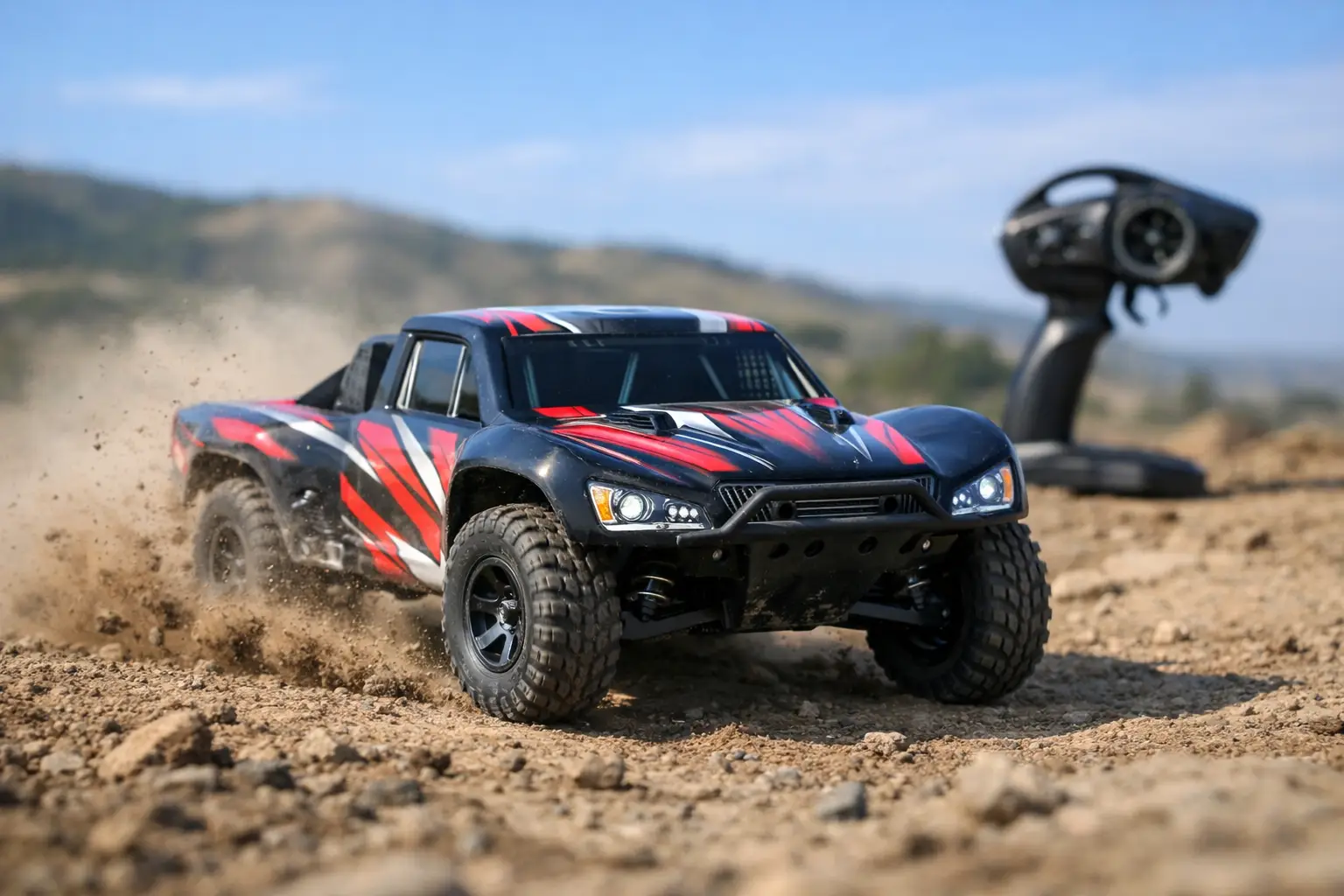
The Traxxas Slash has earned its place at UK bashing spots for a simple reason: it makes fast, messy off-road driving easy to enjoy.This Traxxas Slash review for UK buyers looks beyond the famous short-course body shell to cover the details that matter after the first few battery packs—handling, battery choice, maintenance, running costs and whether a 2WD or 4X4 version suits you best.The Slash is not intended to be a competition race truck in standard form. It is a ready-to-run platform designed for grass, loose dirt, compacted gravel and BMX or skate-park-style terrain.For anyone buying their first proper hobby-grade RC car, its combination of performance, durability and excellent parts support is a major advantage.
What Makes the Traxxas Slash Different?
The Traxxas Slash is based on the appearance and proportions of a full-size short-course racing truck. It has a wide stance and a large body shell that covers the wheels rather than leaving them completely exposed.This gives the Slash its distinctive appearance and can reduce some of the direct impacts taken by the wheels and suspension during a tumble. The shell will not prevent damage, but it offers more coverage than the narrow body of a typical buggy.More importantly, the Slash has a layout that works well for everyday driving. Its broad track width provides reassuring stability, while the raised ride height and suspension travel help it deal with uneven grass, loose ground and rough landings.It can still roll if you turn sharply at speed or land badly, but it is approachable enough for a new driver while remaining entertaining for experienced owners.Traxxas has developed the Slash platform over many years, creating a large supply of:
· Replacement parts
· Optional upgrades
· Alternative tyres and wheels
· Body shells
· Batteries and chargers
· Setup information
That support matters more than a headline top speed once you begin using and maintaining the vehicle. A broken suspension arm after an ambitious jump should be a straightforward repair rather than the end of the model’s useful life.Traxxas Slash 2WD or 4X4?
This is the most important decision to make before thinking about motors, batteries or upgrades.Both versions are great fun, but they have different handling characteristics, maintenance requirements and prices.
Traxxas Slash 2WD
The rear-wheel-drive Slash is the simpler and usually more affordable route into the range.Its 2WD layout is lively on loose surfaces and can kick the rear end out under power. This makes it entertaining to drive while teaching useful throttle and steering control.Advantages of the Slash 2WD include:
· Lower initial cost
· Simpler drivetrain
· Fewer moving parts
· Easier maintenance
· Lighter handling
· Enjoyable rear-wheel-drive characteristics
It performs well on dry dirt, firm grass and tarmac. The trade-off is reduced traction on wet grass, deep mud and loose gravel, particularly when using a powerful brushless motor.Beginners can absolutely enjoy a 2WD Slash, but learning to feed in the throttle progressively is important. Applying full power everywhere will normally produce wheelspin rather than faster progress.Browse the available brushed Traxxas Slash models.Traxxas Slash 4X4
The Slash 4X4 is the stronger all-round choice for many UK bashers.Four-wheel drive helps the truck launch cleanly, hold a line on slippery ground and remain composed when conditions become damp or loose. It is also easier to drive quickly because the front wheels help pull the vehicle through corners.Advantages of the Slash 4X4 include:
· Better acceleration on loose surfaces
· More grip on wet grass
· Greater control on mixed terrain
· Easier high-speed driving
· Improved performance on rough ground
That additional capability comes with a higher purchase price and a more complicated drivetrain. There are more bearings, driveshafts and gears to inspect and maintain.For frequent all-weather use, however, the additional grip and confidence are often worth the extra cost.A 2WD Slash can be a sensible starting point for a younger driver or anyone who wants a simple platform to maintain. If you want one truck for garden grass, local BMX areas, loose dirt and damp fields, the 4X4 is likely to be the better choice.Brushed or Brushless Traxxas Slash?
Not every Traxxas Slash uses the same power system. Brushed versions offer manageable performance and a lower initial price, while brushless models deliver much stronger acceleration and higher potential speeds.Always check the exact product specification because the motor, ESC, battery compatibility and included equipment vary between models and packages.
Brushed Slash
A brushed Slash is a sensible option for:
· First-time hobby-grade RC owners
· Younger or less experienced drivers
· Smaller running areas
· Buyers working with a tighter budget
· Drivers who value simple maintenance over maximum speed
Brushed power is still quick enough to be enjoyable, but its smoother and more manageable performance makes it easier to learn the model.Brushes and commutators wear over time, so a brushed motor will eventually require maintenance or replacement. However, replacement motors are generally affordable.Browse the available brushed Traxxas Slash models.Brushless Slash
A brushless Slash provides considerably more performance, greater efficiency and reduced motor maintenance.It suits:
· Experienced RC drivers
· Larger running spaces
· Higher-speed bashing
· Owners who want stronger acceleration
· Drivers planning to use suitable LiPo batteries
More speed also means harder crashes, longer braking distances and increased wear on tyres and drivetrain components. A brushless model is not automatically the best choice if your available running area is small.Browse the available brushless Traxxas Slash models.Traxxas Slash Battery Options
Battery compatibility depends on the exact Slash model and its electronic speed controller. Check the vehicle specifications before buying a pack.A NiMH battery is a practical starting point. It is relatively forgiving, provides enjoyable performance and simplifies the learning process for a new owner.A suitable 2S LiPo battery can provide stronger acceleration, more consistent performance and useful run time. However, the physical dimensions, connector and compatibility must all be checked against the exact vehicle before ordering.A 2S LiPo is often the sweet spot for general bashing. It provides enough power to make the Slash properly entertaining without creating the extreme performance and additional strain associated with higher-voltage setups.Some brushless Slash versions can use higher-voltage batteries, but compatibility must be confirmed in the manual. More voltage can produce:
· Higher speeds
· Harder acceleration
· Increased motor and ESC temperatures
· Faster tyre wear
· Greater drivetrain stress
· More severe crash damage
The fastest compatible battery is not necessarily the best battery for your experience, terrain or available space.Use a suitable balance charger, select the correct charging programme and charge LiPo batteries on a stable, non-flammable surface. Never leave a charging battery unattended, and do not use a pack that is damaged or swollen.LiPo batteries should also be returned to an appropriate storage voltage when they will not be used for an extended period.How Does the Traxxas Slash Handle?
The Slash is most at home on surfaces where a road car would quickly run out of ground clearance.Suitable terrain includes:
· Short grass
· Dry soil
· Loose gravel
· Hard-packed dirt
· BMX tracks
· Skate parks
· General off-road bashing areas
The suspension absorbs bumps and imperfect landings well, while the wide stance helps the model feel stable at speed.Driving on Grass
Short grass is manageable, although it creates more resistance than hard-packed dirt. Long or wet grass places considerably more load on the motor and can cause temperatures to rise.The Slash 4X4 has a clear traction advantage on damp grass, but thick grass can still wrap around driveshafts and collect inside the chassis.Check motor and ESC temperatures regularly if grass is your main running surface.
Driving on Gravel and Dirt
Loose gravel and compacted dirt suit the Slash particularly well. The truck can slide predictably, and the suspension handles ruts and smaller stones without making the model difficult to control.Loose stones can become trapped inside the body or around the drivetrain, so inspect the chassis after each session.
Driving on Tarmac
The Slash feels stable and responsive on tarmac, but standard off-road tyres will wear more quickly on abrasive surfaces.Sustained high-speed running can also create more heat than stop-start bashing. If tarmac use is a regular part of your driving, check temperatures and consider tyres designed for harder surfaces.
Can You Use a Traxxas Slash in Wet Conditions?
Applicable Traxxas Slash models use waterproof or water-resistant electronic components, but you must check the specification of the exact version you own.Waterproof electronics do not make the complete vehicle maintenance-free or suitable for prolonged submersion.Puddles, wet grass and mud introduce moisture and grit into:
· Bearings
· Driveshaft joints
· Screws
· Connectors
· Suspension pivots
· The drivetrain
After wet running, disconnect and remove the battery, clean away debris and dry the vehicle thoroughly. Check that the wheels and drivetrain rotate freely before storing it.Avoid putting the Slash away while it is still wet. Corrosion and seized bearings often become noticeable days later rather than immediately after the run.Traxxas Slash Durability and Maintenance
The Traxxas Slash is tough, but no fast RC vehicle is unbreakable.Common areas that may eventually require attention include:
· Suspension arms
· Steering components
· Body mounts
· Wheel hexes
· Driveshafts
· Spur gears
· Bearings
· Body shells
These components can be damaged through crashes, hard landings and ordinary wear. The important advantage is that Traxxas replacement parts are widely supported and the platform is relatively straightforward to repair.Useful items to keep at home include:· Spare suspension arms
· Body clips
· Wheel nuts
· Basic bearings
· The correct hex drivers
· A wheel-nut driver
· A cleaning brush
Before and after each run, check the wheel nuts, suspension fixings and steering. Listen for clicking, grinding or rough drivetrain noises, and stop to investigate before a minor issue becomes more expensive.Check the pinion and spur gear mesh after any motor work or significant impact. Depending on the model, you may also need to inspect the slipper clutch, centre driveshaft or centre differential.Should You Upgrade a Traxxas Slash?
Do not feel that every component needs replacing immediately.Plastic suspension parts are designed to provide a degree of flexibility during an impact. Replacing every plastic component with aluminium can transfer crash forces into the chassis, bulkheads, hinge pins or differential housings.Upgrade to solve a specific problem.Worthwhile improvements may include:
· Tyres suited to your normal terrain
· A stronger or reinforced body shell
· Improved steering components
· Suitable motor or ESC cooling
· Upgraded driveshafts for higher-power setups
· Better-quality tools
· Additional protection for known impact areas
Premium aftermarket parts can improve strength and precision in the correct areas. However, they make the most sense as part of a planned build rather than being fitted simply because they are made from metal.The right upgrades depend on whether the Slash is used for jumping, speed runs, wet-weather bashing or controlled circuit driving.Is the Traxxas Slash Good Value?
The real cost of an RC vehicle includes more than the initial purchase price.Depending on the package, you may also need:
· A suitable battery
· A compatible charger
· Transmitter batteries
· Basic tools
· Occasional replacement parts
A second battery is often one of the most worthwhile early purchases because it increases your running time without requiring a rushed recharge at the field.The Slash offers good long-term value for someone who wants a repairable, well-supported hobby-grade RC platform. Its familiar layout, strong parts availability and wide range of versions mean it can remain enjoyable as your skills develop.For relaxed dry-weather bashing and a simpler mechanical learning experience, the 2WD Slash remains a sound choice.For mixed terrain, damp conditions and more confident power delivery, the Slash 4X4 is the better all-rounder for many UK drivers.Choose the version that fits your experience, running space and budget—not simply the one with the highest advertised speed.