
Remote Control Cars: What to Buy First
05/05/2026
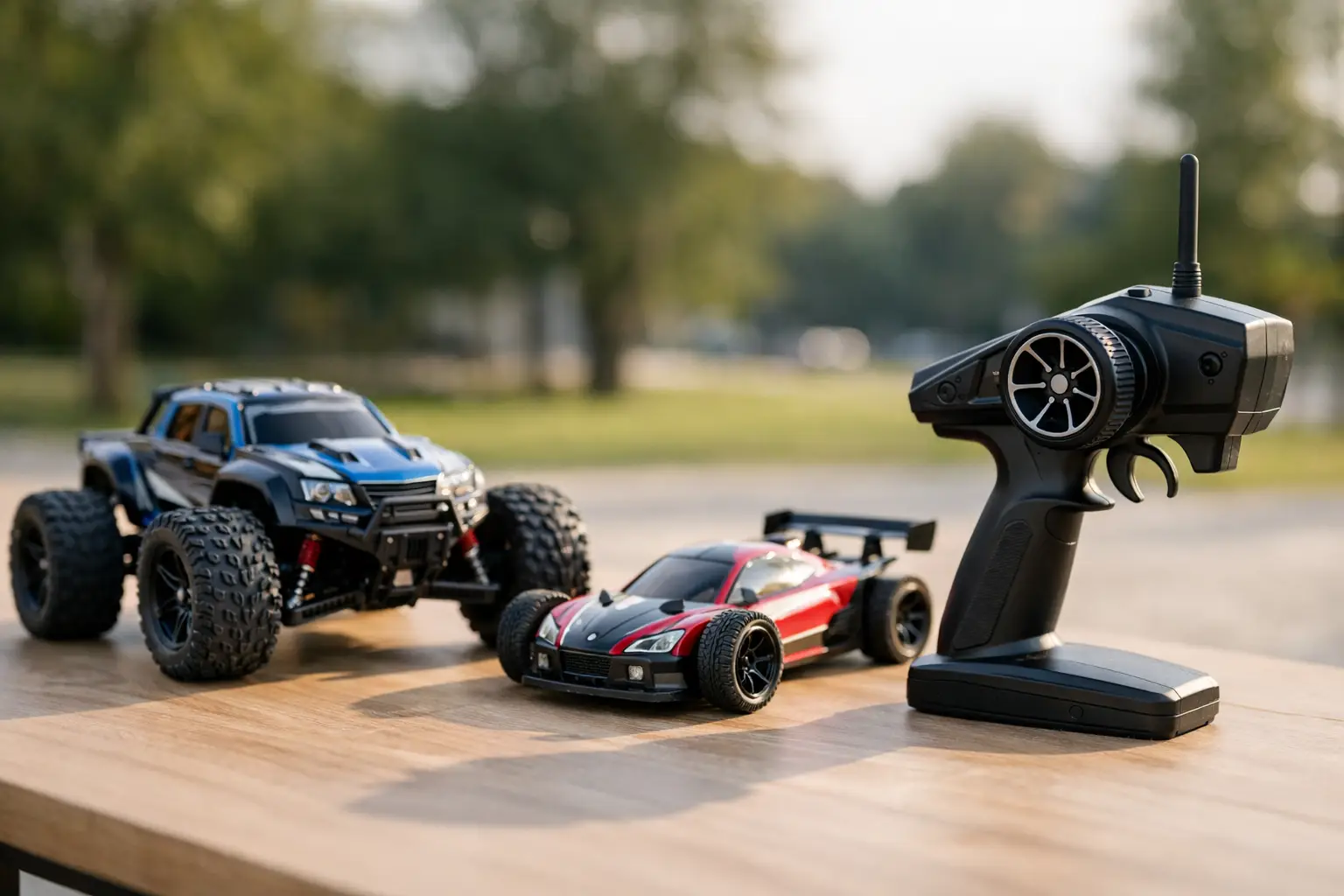
Remote Control Cars Guide - Choosing the Right RC Car for How You Actually Drive
A fast buggy that keeps traction on loose gravel, a monster truck that shrugs off rough grass, or a road car built for smooth tarmac - remote control cars are not one-size-fits-all.
If you are buying your first RC car, choosing a gift or upgrading from a beginner model, the best starting point is rarely the fastest option on the page.
The right RC car is usually the one that:
-
suits the surface you actually drive on
-
matches your experience level
-
has good spare parts support
-
stays enjoyable after the first few runs
A powerful brushless setup may sound impressive, but if it constantly flips, overheats or breaks drivetrain parts, the experience quickly becomes frustrating.
On the other hand, buying too basic can leave enthusiasts wanting upgrades almost immediately.
The best RC cars usually sit somewhere in the middle of:
-
performance
-
durability
-
upgrade potential
-
long-term value
RC Model Shop stocks a large range of remote control cars, RC trucks and crawler platforms suitable for beginners, bashers and experienced hobbyists alike.
Why remote control cars vary so much
At first glance, many RC cars appear very similar.
In practice, the differences are huge.
Things such as:
-
scale size
-
drivetrain layout
-
battery type
-
tyre choice
-
motor setup
-
suspension travel
-
ground clearance
all affect:
-
handling
-
durability
-
maintenance
-
speed
-
rough-ground ability
That matters because a great RC car is usually the one that gets driven regularly, not the one with the biggest speed number on the box.
Choosing an RC car based on where you drive
The easiest way to narrow down the market is to start with the terrain.
RC cars for grass, parks and rough ground
Monster trucks and off-road bashers are usually the safest all-round recommendation for rough terrain.
They offer:
-
larger tyres
-
better ground clearance
-
improved suspension travel
-
stronger rough-ground ability
This matters more than many first-time buyers realise.
Short grass alone can create significant drag for smaller or lower-powered RC cars.
Vehicles with:
-
larger wheels
-
decent torque
-
proper ride height
usually perform much better outdoors.
RC cars for pavements and tarmac
On-road touring cars and street bashers suit:
-
driveways
-
smooth car parks
-
tarmac
-
paved surfaces
These platforms often provide:
-
sharper steering
-
higher speed stability
-
cleaner handling
The downside is reduced practicality on rough surfaces.
Loose stones, potholes and uneven ground can damage low-slung RC cars much more easily than off-road platforms.
RC crawlers and scale trail trucks
Crawlers are completely different from speed-focused RC cars.
They prioritise:
-
low-speed control
-
torque
-
obstacle handling
-
technical driving
rather than outright pace.
For many hobbyists, crawlers become more engaging long-term because they reward:
-
setup tuning
-
throttle precision
-
line choice
-
scale realism
rather than simple top speed.
The RC specifications that actually matter
Product pages can quickly become technical, but a few core terms matter far more than most others.
Brushed vs brushless motors
Brushed RC cars
Brushed setups are usually:
-
cheaper
-
easier to control
-
beginner-friendly
-
simpler to maintain
They remain an excellent option for:
-
first RC cars
-
younger drivers
-
casual weekend use
Brushless RC cars
Brushless systems provide:
-
more speed
-
stronger acceleration
-
improved efficiency
-
better upgrade potential
For experienced hobbyists, the performance jump is obvious.
However, brushless systems also introduce:
-
greater drivetrain stress
-
higher battery demands
-
more heat
-
increased repair costs
For beginners, moderate performance is often more enjoyable than overwhelming speed.
2WD vs 4WD RC cars
2WD RC cars
2WD platforms are:
-
lighter
-
mechanically simpler
-
cheaper to maintain
-
more playful on loose terrain
They can also teach throttle control more effectively.
4WD RC cars
4WD setups provide:
-
better traction
-
stronger acceleration
-
improved stability
-
easier drivability
especially for less experienced users.
The trade-off is:
-
increased cost
-
additional maintenance
-
more drivetrain complexity
For mixed terrain and all-round use, 4WD is often easier to recommend.
RC battery choices
Battery setup dramatically affects how an RC vehicle feels to drive.
NiMH batteries
NiMH batteries remain:
-
beginner-friendly
-
affordable
-
easy to manage
They are still perfectly suitable for many casual RC owners.
LiPo batteries
LiPo batteries offer:
-
stronger acceleration
-
lower weight
-
improved efficiency
-
higher discharge capability
which is why enthusiasts often prefer them.
They also require:
-
proper charging
-
sensible storage
-
compatible electronics
RC Model Shop stocks a large range of RC batteries and LiPo upgrades suitable for bashers, crawlers and brushless RC setups.
Scale size and practicality
Larger-scale RC vehicles generally provide:
-
improved rough-ground ability
-
greater stability
-
stronger road presence
but they also increase:
-
battery cost
-
storage space requirements
-
spare part costs
Smaller scales are:
-
easier to transport
-
cheaper to maintain
-
often more convenient
but may struggle more on rough terrain.
The right scale depends heavily on:
-
available driving space
-
transport/storage
-
intended terrain
-
budget
Ready-to-Run vs RC kits
For most buyers, Ready-to-Run (RTR) is the correct place to start.
RTR models usually provide:
-
assembled vehicle
-
electronics installed
-
easier setup
-
faster first run
This makes them ideal for:
-
beginners
-
gifts
-
casual hobby use
RC kits suit hobbyists who enjoy:
-
assembly
-
tuning
-
building
-
custom setups
They can be extremely rewarding, but are rarely the simplest route to immediate driving.
RC upgrades and long-term ownership
Many hobbyists start with an RTR platform and improve it gradually over time.
Common upgrades include:
-
stronger servos
-
improved shocks
-
steering upgrades
-
brushless systems
-
alloy parts
-
tyres
-
gearing
This approach spreads cost while helping owners understand what the chassis actually needs rather than upgrading randomly.
RC Model Shop also stocks a large range of RC spare parts and upgrade accessories for many popular RC platforms.
What beginners often get wrong
The biggest mistake is buying purely based on speed.
Fast sells, but usable performance is what keeps RC ownership enjoyable.
A controllable RC car with:
-
good spare support
-
sensible handling
-
strong durability
usually delivers better long-term value than an overpowered setup constantly needing repairs.
Another common issue is ignoring spare parts availability.
Items such as:
-
suspension arms
-
wheel hexes
-
body posts
-
spur gears
-
driveshafts
are normal wear and crash items.
Easy parts access matters far more than most beginners realise.
Buying RC cars as gifts
Gift buying works slightly differently from enthusiast buying.
The safest choice is usually:
-
durable
-
manageable
-
easy to maintain
-
simple to repair
rather than simply the fastest or most aggressive model available.
For younger users and complete beginners:
-
stability
-
spare support
-
moderate speed
-
straightforward charging
usually matter most.
For teenagers and adults already interested in:
-
motorsport
-
engineering
-
RC hobbies
there is more room to choose upgrade-focused platforms with stronger performance potential.
When spending more on an RC car makes sense
Higher prices become worthwhile when they improve:
-
durability
-
electronics quality
-
upgrade support
-
drivetrain strength
-
long-term reliability
They make less sense when the extra money only buys performance levels the owner may never realistically use.
Experienced hobbyists often value:
-
steering precision
-
drivetrain strength
-
quality suspension
-
upgrade compatibility
far more than headline speed numbers.
That is why many serious RC owners eventually shop by:
-
platform support
-
spare availability
-
upgrade ecosystem
rather than appearance alone.
A smarter way to choose an RC car
If you are still deciding, keep the buying process simple:
-
Choose the terrain first
-
Set the budget second
-
Decide how much maintenance you are comfortable with
-
Then look at performance and upgrades
That order reflects how RC ownership actually works.
The vehicle needs to:
-
suit the available space
-
feel enjoyable to drive
-
remain easy to repair
-
have strong spare support
Get those basics right and the rest becomes much easier.
At RC Model Shop, the goal is always helping buyers match the RC car properly to:
-
the terrain
-
the experience level
-
the upgrade goals
-
the intended use
rather than simply recommending the fastest model available.
The best RC car is usually the one that:
-
keeps getting used
-
survives regular driving
-
remains easy to maintain
-
makes you want to charge another battery and go again.
Frequently Asked Questions
What is the best RC car for beginners?
For most beginners, a durable RTR off-road basher with manageable speed and strong spare parts support is the safest starting point.
Is brushless better than brushed?
Brushless systems provide more speed and efficiency, but brushed setups are often easier and cheaper for beginners to manage.
Are 4WD RC cars better than 2WD?
4WD vehicles generally provide:
-
better traction
-
improved stability
-
easier handling
especially on rough terrain.
Can RC cars run on grass?
Yes, but:
-
tyre size
-
ride height
-
motor power
all affect performance heavily on grass.
What RC spare parts should owners keep?
Useful spare parts include:
-
suspension arms
-
body clips
-
wheel nuts
-
spur gears
-
steering links
-
bearings
Written by the RC team at RCModelShop.co.uk / Appliance Electronics UK Ltd, UK supplier of RC cars, batteries, upgrade parts and crawler accessories.