
RC Radio Systems Explained
14/06/2026
Choosing The Right Transmitter And Receiver For Your RC Model
If you have ever picked up a ready-to-run RC car, truck, crawler, boat or aircraft, chances are the radio system was the last thing on your mind. Most hobbyists focus on the vehicle itself, the battery, the motor or the upgrades. However, the radio system is one of the most important parts of any RC model.
A good radio system gives you reliable control, better precision and the flexibility to run multiple vehicles from a single transmitter. Whether you are just getting started or looking to upgrade from the standard radio included with your model, understanding RC radio systems can help you make a much better buying decision.
Browse RC Radio Systems: https://www.applianceelectronics.co.uk/products/523/radio-systems
What Is An RC Radio System?
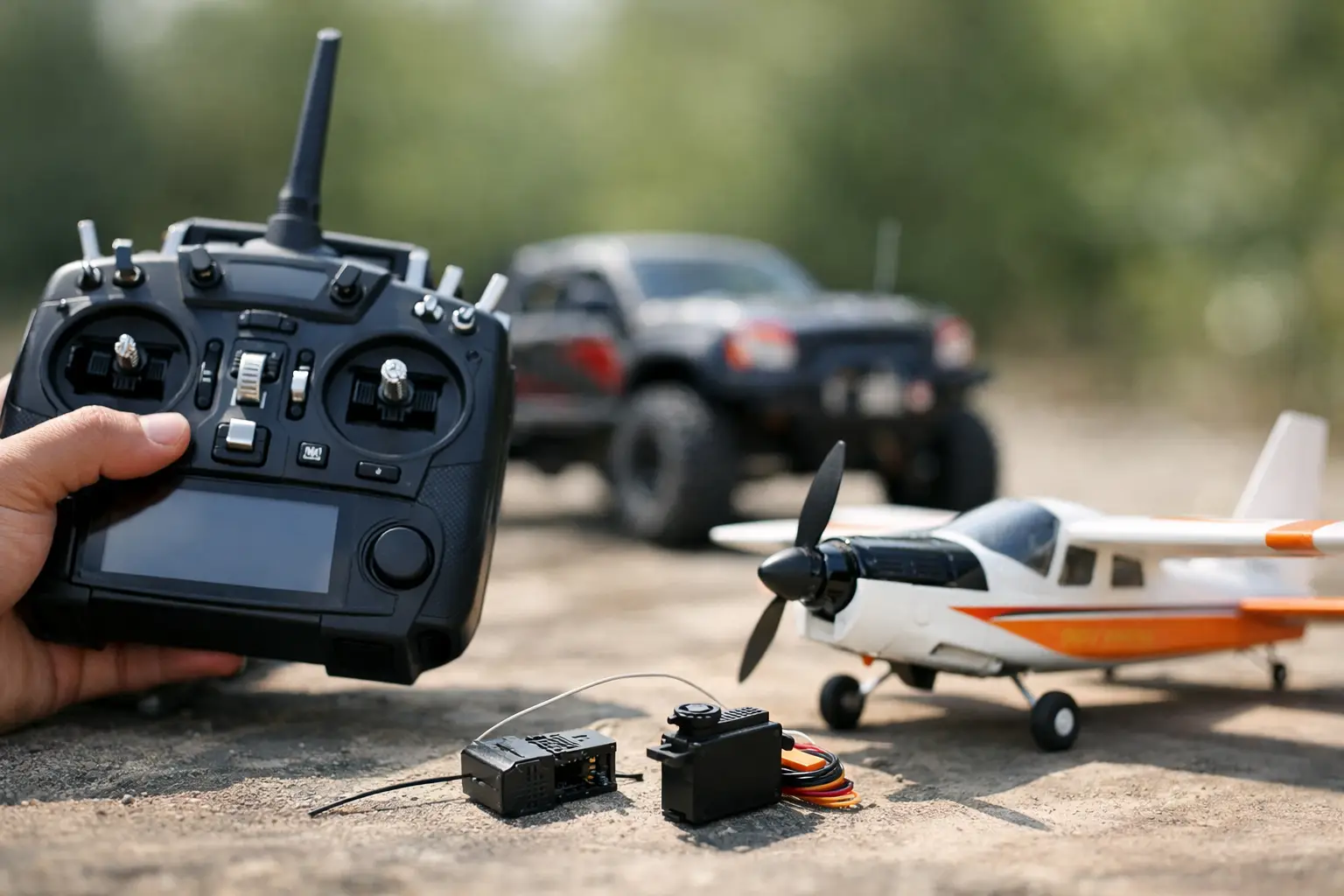
An RC radio system consists of two main components:
-
Transmitter (the handset you hold)
-
Receiver (installed inside the model)
The transmitter sends commands to the receiver using a radio signal. The receiver then passes those commands to the steering servo, speed controller, throttle servo, lights, winches or other accessories depending on the model.
Whether you are steering a monster truck, climbing rocks with a crawler or flying an aircraft, the basic principle remains the same. The radio system acts as the communication link between you and your model.
Without a reliable radio system, even the most expensive RC vehicle can become frustrating to drive.
Why Radio Systems Matter More Than Most People Realise
Many ready-to-run models include perfectly usable radio gear, but not all systems are created equal.
A higher quality radio system can provide:
-
Improved steering precision
-
Better throttle control
-
More consistent signal strength
-
Increased operating range
-
Faster response times
-
Multiple model memory
-
Additional channels for accessories
-
Advanced tuning features
These improvements may sound small on paper, but they can completely change how a model feels on the ground.
A crawler can become easier to place accurately on technical obstacles. A race buggy can feel more responsive through corners. A basher can become easier to control at high speed.
Choosing The Right RC Radio System
The best radio system depends on the type of RC model you run and how you use it.
For Bashers And General RC Cars
If your main focus is casual driving, bashing and general fun, reliability is usually more important than advanced programming.
Look for:
-
Comfortable wheel transmitter
-
Reliable 2.4GHz technology
-
Easy receiver binding
-
Multiple model memory
-
Good receiver availability
Most hobbyists in this category will be perfectly happy with a quality 2-channel or 3-channel radio.
For RC Crawlers
Crawlers often benefit from additional channels.
Extra channels can control:
-
Winches
-
Dig units
-
Light kits
-
Sound systems
-
Two-speed gearboxes
-
Selectable accessories
Many crawler owners quickly outgrow basic 2-channel systems once they begin adding scale accessories and upgrades.
For Racing
Competitive drivers often require more adjustment.
Useful features include:
-
Endpoint adjustment
-
Exponential settings
-
Dual rates
-
Steering speed adjustments
-
Brake tuning
-
Multiple setup memories
These functions allow drivers to fine-tune vehicle behaviour for different track conditions.
For Boats And Aircraft
Boat and aircraft users often need:
-
Additional channels
-
Reliable failsafe protection
-
Waterproof receiver installations
-
Advanced programming options
Aircraft especially require careful matching between the radio system, receiver and aircraft setup.
Understanding 2.4GHz Technology
Nearly all modern RC radio systems now use 2.4GHz technology.
This replaced older crystal-based systems that required drivers to manage radio frequencies manually.
Benefits include:
-
Automatic frequency selection
-
No crystal changes required
-
Reduced interference
-
Simple binding process
-
Multiple users operating simultaneously
-
Improved reliability
For most hobbyists, 2.4GHz is the obvious choice and has become the industry standard.
Features That Are Actually Worth Paying For
When comparing radio systems, it is easy to become distracted by long specification lists.
In reality, a few core features provide the greatest benefits.
Model Memory
One of the most useful features available.
Model memory allows one transmitter to store settings for multiple vehicles.
Benefits include:
-
No re-adjustment between vehicles
-
Separate trim settings
-
Different endpoint values
-
Faster switching between models
For hobbyists with growing collections, model memory can be invaluable.
Endpoint Adjustment
Endpoint adjustment controls how far a servo travels.
Benefits include:
-
Preventing servo binding
-
Protecting steering components
-
Reducing strain on electronics
-
Improving control precision
This is one of the first features many experienced hobbyists use when setting up a new model.
Dual Rates And Exponential
These settings allow you to adjust steering feel.
They can help:
-
Reduce twitchy steering
-
Improve high-speed stability
-
Increase driving confidence
-
Fine-tune vehicle handling
They are particularly useful on powerful RC cars and race vehicles.
Failsafe Protection
Failsafe settings automatically move controls to a safe position if signal is lost.
This can:
-
Prevent runaway vehicles
-
Reduce damage risks
-
Improve safety
-
Protect nearby people and property
It is a feature you hope never to use, but one that is essential to have.
Telemetry
Telemetry allows compatible radios to display information such as:
-
Receiver voltage
-
Battery voltage
-
Motor temperature
-
Speed readings
-
RPM data
Some hobbyists love telemetry. Others rarely use it.
Whether it is worth paying for depends entirely on how much data you want during operation.
Receiver Compatibility Matters
One of the most common mistakes is assuming all receivers work with all transmitters.
They do not.
Before purchasing, always check:
-
Brand compatibility
-
Protocol compatibility
-
Channel count
-
Receiver dimensions
-
Voltage requirements
-
Intended application
Even within the same manufacturer, some receivers only work with specific radio systems.
This becomes particularly important if you plan to operate multiple vehicles from one transmitter.
Running Multiple Models From One Radio
Many modern radio systems allow a single transmitter to operate numerous vehicles.
Benefits include:
-
Less equipment to carry
-
Lower long-term costs
-
Consistent setup across models
-
Easier storage and transport
Instead of purchasing a complete radio system for every vehicle, you simply install additional compatible receivers.
For hobbyists with growing collections, this can become one of the biggest advantages of upgrading.
Common RC Radio Setup Mistakes
Most radio-related issues are actually installation problems rather than equipment faults.
Common mistakes include:
Poor Receiver Placement
Avoid:
-
Crushing antenna wires
-
Mounting receivers near high-current wiring
-
Hiding antennas behind metal components
Good receiver placement improves both reliability and range.
Ignoring Endpoint Settings
Failing to adjust endpoints can:
-
Damage servos
-
Strain steering systems
-
Reduce component lifespan
Always check steering and throttle travel after installation.
Skipping Failsafe Setup
Every new installation should include failsafe testing before driving.
A few minutes spent checking failsafe operation can prevent major problems later.
Using Trim To Fix Mechanical Issues
Steering trim should not be used to compensate for incorrectly adjusted steering links.
Always:
-
Centre the servo first
-
Adjust linkages mechanically
-
Fine-tune using trim afterwards
This results in better handling and more accurate steering.
When Is It Worth Upgrading?
If your current radio system works well and meets your needs, there is usually no urgent reason to upgrade.
However, an upgrade often makes sense when:
-
You own multiple models
-
You need additional channels
-
You want better steering feel
-
You require advanced adjustments
-
You want improved ergonomics
-
You are replacing ageing equipment
Many hobbyists find that a quality mid-range radio offers the best balance between performance and value.
Browse RC Radio Systems
Whether you are upgrading from a ready-to-run transmitter or building a complete fleet around a single radio system, choosing the right equipment can make a noticeable difference to how enjoyable your RC models are to use.
Browse our full range of radio equipment here:
RC Radio Systems: https://www.applianceelectronics.co.uk/products/523/radio-systems
Find The Right Radio For The Way You Drive
The best RC radio system is not necessarily the one with the longest specification sheet or the highest price tag. The right choice is the one that matches your vehicles, your experience level and the way you actually use your models.
A dependable radio system should disappear into the background once installed and configured correctly. You should be focused on the next jump, the next corner, the next climb or the next flight, not worrying about whether your transmitter is keeping up.
Investing in a quality radio system can improve control, simplify your collection and help you get the most enjoyment possible from every run.
Frequently Asked Questions
What is the best RC radio system for beginners?
A reliable 2.4GHz 2-channel or 3-channel radio system is usually ideal for beginners. Ease of use and reliability are generally more important than advanced programming features.
Can one transmitter control multiple RC models?
Yes. Many modern radio systems offer model memory, allowing a single transmitter to store settings for multiple vehicles. Each vehicle requires a compatible receiver.
Are all receivers compatible with all transmitters?
No. Receivers must be compatible with the transmitter's protocol and manufacturer. Always check compatibility before purchasing.
What does 2.4GHz mean?
2.4GHz is the radio frequency used by most modern RC systems. It provides reliable communication, automatic frequency management and simple operation.
How many channels do I need?
Most RC cars and trucks only require 2 channels. Crawlers, boats and aircraft often benefit from 3 channels or more for additional functions and accessories.
Is telemetry worth having?
Telemetry can be useful for monitoring battery voltage, temperatures and other performance data. Whether it is worth paying for depends on how much information you want while operating your model.
Written by the RC team at RC Model Shop / Appliance Electronics UK Ltd. We stock RC radio systems, transmitters, receivers, batteries, chargers, RC vehicles, spares and upgrades from many of the hobby's leading brands. For help choosing the right radio system for your model, call 01922 494608 or visit RCModelShop.co.uk.