
RC Crawler Upgrades Guide for Better Performance
16/04/2026
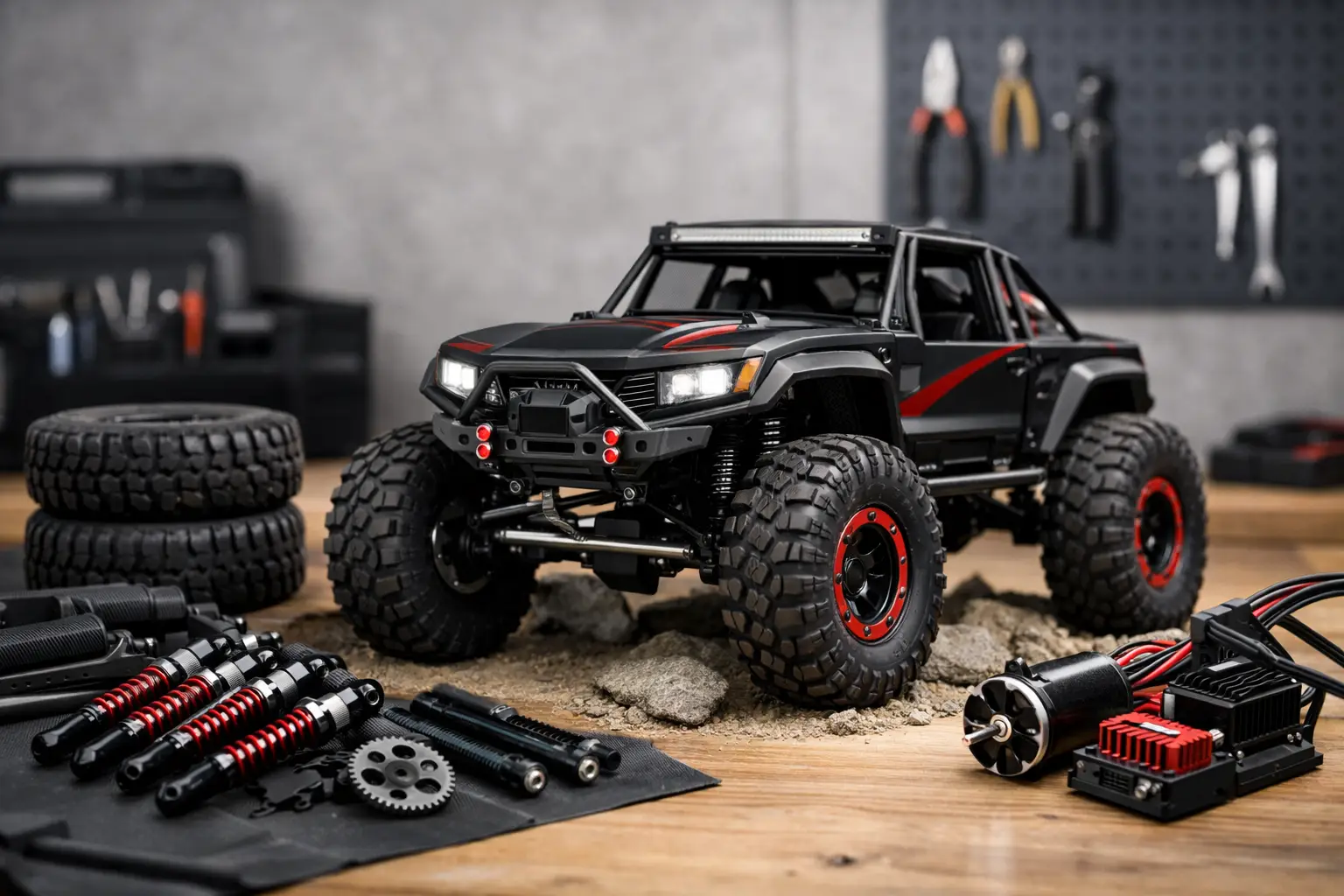
RC Crawler Upgrades Guide - What Actually Improves Crawling Performance
A stock crawler can feel brilliant for:
-
woodland trails
-
casual rocks
-
light technical driving
right up until:
-
it tips on side hills
-
the steering gives up under load
-
the tyres lose grip on damp roots
-
the drivetrain starts struggling with added weight
That is normally the point where an RC crawler upgrades guide becomes useful.
Not to throw random alloy parts at the lorry, but to improve:
the areas genuinely holding it back.
The best upgrade path depends heavily on:
-
terrain
-
driving style
-
crawler weight
-
budget
-
intended use
A trail truck built for woodland runs needs a different setup from:
-
a technical rock crawler
-
a competition-style build
-
a heavy brass-loaded rig
RC Model Shop stocks a large range of:
for trail trucks, crawlers and technical off-road RC builds.
Start with the weak points you can actually feel
Most stock crawlers show their limits in:
-
tyres
-
steering
-
weight balance
-
suspension setup
long before they need:
-
huge brushless systems
-
extreme power upgrades
-
expensive driveline builds
That is good news because:
the biggest real-world gains usually come early.
For most crawlers:
-
Grip comes first
-
Control comes second
-
Durability follows
-
Power upgrades come later
Many beginners reverse that order and end up with:
-
overheating setups
-
awkward handling
-
unnecessary drivetrain stress
before the crawler even grips properly.
Tyres and foams change crawling performance massively
If there is one upgrade most crawlers benefit from immediately:
it is tyres and foams.
Stock tyres are often acceptable on:
-
dry dirt
-
casual terrain
-
smoother surfaces
but struggle on:
-
damp rock
-
slick roots
-
muddy UK woodland
-
technical climbs
A quality crawler tyre compound improves:
-
low-speed bite
-
climbing traction
-
side-hill grip
-
obstacle conformity
Foams matter just as much.
Foam too firm
-
reduced grip
-
tyre skipping
-
poor obstacle conformity
Foam too soft
-
sidewall collapse
-
unstable side-hills
-
vague handling
Heavier crawlers usually need:
-
firmer support
while lighter rigs can benefit from:
-
softer inserts
If the crawler feels:
-
nervous
-
unstable
-
unpredictable on off-camber sections
the tyre and foam setup is often the real problem.
Steering servo upgrades are usually overdue
Weak steering is one of the most common crawler complaints.
Typical symptoms:
-
delayed steering response
-
wheels refusing to turn under load
-
vague steering feel
-
servo strain on rocks
This gets worse once:
-
grippier tyres
-
brass weight
-
larger wheels
are added.
A stronger metal-geared servo usually improves:
-
steering precision
-
holding power
-
technical control
especially when the front axle is loaded heavily against obstacles.
However:
the servo is only part of the system.
If:
-
the horn flexes
-
the linkage binds
-
the steering geometry is sloppy
the crawler may still feel vague.
Many crawlers benefit from upgrading:
-
servo horn
-
steering links
-
steering geometry
alongside the servo itself.
Weight placement matters more than motor power
This surprises many beginners.
Most crawlers need:
better balance
before:
more power.
Front-biased weight helps:
-
climbing stability
-
front-end traction
-
technical control
This can come from:
-
brass portal covers
-
axle weights
-
brass knuckles
-
weighted wheels
-
low-mounted components
The important part is:
low-mounted weight.
High-mounted weight increases:
-
rollover tendency
-
instability
-
chassis flop
The goal is:
-
planted
not: -
simply heavier.
Too much brass eventually creates:
-
sluggish handling
-
drivetrain strain
-
steering overload
A sensible approach is:
-
Add moderate front-low weight
-
Test the crawler
-
Adjust gradually
More brass does NOT always mean:
more performance.
Suspension setup is often ignored
Many hobbyists immediately buy:
-
aluminium shocks
before checking:
-
preload
-
oil weight
-
spring rate
-
ride height
on the original setup.
Crawler suspension should usually feel:
-
controlled
-
composed
-
predictable
not:
-
tall
-
bouncy
-
overly stiff
Suspension too stiff
-
hopping on climbs
-
reduced grip
-
unstable side-hills
Suspension too soft
-
excessive roll
-
vague handling
-
chassis flop
Often:
-
fresh oil
-
proper preload
-
better spring choice
improves crawling dramatically before expensive shocks are even required.
Aftermarket shocks become worthwhile if:
-
the originals leak
-
bind badly
-
lack adjustment
-
struggle under added weight
Electronics upgrades - smoothness beats speed
In crawling:
smooth throttle matters far more than outright pace.
Most crawler drivers actually want:
-
low-speed precision
-
smooth startup
-
controlled braking
-
predictable torque delivery
rather than:
-
wheel speed
-
huge RPM
-
aggressive acceleration
Brushed crawler systems
Brushed setups remain popular because they:
-
are affordable
-
crawl smoothly
-
stay simple
-
offer excellent low-speed control
A quality brushed system still works extremely well for many:
-
trail trucks
-
technical crawlers
-
casual rock rigs
Brushless crawler systems
Brushless setups can provide:
-
smoother startup
-
improved efficiency
-
stronger torque
-
reduced maintenance
However:
crawler brushless systems need proper matching.
Sensored brushless systems are usually preferred because they:
-
improve low-speed precision
-
reduce cogging
-
deliver cleaner startup behaviour
Sensorless systems can feel:
-
jerky
-
abrupt
-
rough at crawling speeds
if poorly matched.
Battery choice affects handling too
Battery upgrades change:
-
runtime
-
balance
-
weight distribution
-
chassis behaviour
A larger battery increases runtime, but also:
-
adds weight
-
changes chassis balance
-
affects climbing behaviour
Some crawlers benefit from:
-
compact packs
-
lower-mounted batteries
-
cleaner weight distribution
Others prioritise:
-
long trail runtime
instead.
More voltage is not always better for crawling.
A crawler that:
-
creeps smoothly
-
stays controllable
-
manages heat well
usually performs better than:
-
a twitchy overpowered setup
You can browse a large range of RC batteries and LiPo packs suitable for crawler builds and trail trucks.
Gearing upgrades improve control
Lower gearing often helps crawlers by:
-
reducing motor strain
-
improving throttle precision
-
increasing usable torque
-
reducing heat
This becomes increasingly useful once:
-
larger tyres
-
brass weight
-
upgraded drivetrains
are installed.
A crawler that:
-
feels smoother
-
climbs cleanly
-
stays cooler
is usually more enjoyable than one simply:
-
spinning tyres aggressively.
Drivetrain upgrades are mostly about durability
Once:
-
tyre grip
-
steering
-
weight
increase, drivetrain stress rises too.
That is when:
-
steel gears
-
stronger shafts
-
upgraded axles
-
reinforced transmission parts
start making sense.
However:
not every crawler needs full alloy drivetrains immediately.
For lighter trail trucks:
-
stock drivetrains may remain perfectly adequate.
For heavier builds:
-
repeated failures
-
stripped gears
-
twisted shafts
often justify upgrades properly.
You can browse a large range of RC overhaul and drivetrain upgrades suitable for crawler durability builds.
Premium crawler upgrades - when they make sense
High-end CNC upgrade parts exist for a reason.
Premium upgrades can improve:
-
tolerances
-
durability
-
steering precision
-
driveline strength
-
weight distribution
However:
premium parts only make sense when solving a real limitation.
For serious crawler builders, brands like Vitavon produce:
-
precision-machined crawler components
-
premium axle upgrades
-
CNC steering systems
-
drivetrain upgrades
You can browse a wide range of Vitavon upgrades and premium CNC crawler parts suitable for advanced RC crawler builds.
Traxxas crawler upgrades
Traxxas crawler owners often focus on:
-
steering
-
portal durability
-
driveline strength
-
suspension tuning
because those areas show the biggest real-world gains first.
You can browse compatible Traxxas upgrades and crawler parts suitable for TRX-series RC vehicles.
Common crawler upgrade mistakes
The biggest mistake is:
upgrading everything at once.
That makes it impossible to identify:
-
what improved
-
what caused problems
-
what actually mattered
Other common mistakes include:
-
too much brass
-
chasing speed over control
-
ignoring tyre setup
-
oversized electronics
-
poor balance
-
unnecessary alloy everywhere
A crawler with:
-
excellent tyres
-
balanced weight
-
good steering
-
sensible gearing
usually outperforms:
-
a heavy overbuilt crawler
with random expensive upgrades.
A smarter crawler upgrade path
For most RTR crawlers:
-
Tyres and foams
-
Steering servo
-
Weight balance
-
Suspension tuning
-
Electronics and gearing
-
Durability upgrades
is a sensible route.
That order keeps:
-
costs sensible
-
upgrades logical
-
performance gains noticeable
without creating unnecessary stress elsewhere.
At RC Model Shop, the focus is always helping crawler owners match upgrades properly to:
-
the terrain
-
the chassis
-
the driving style
-
the crawler weight
rather than simply recommending the most expensive components available.
Because the best crawler upgrade is usually:
the one solving the real problem you actually feel on the rocks.
Frequently Asked Questions
What is the best first RC crawler upgrade?
For most crawlers:
-
tyres and foams
deliver the biggest immediate improvement in traction and control.
Are crawler servo upgrades worth it?
Yes. Stronger metal-geared servos usually improve:
-
steering precision
-
holding power
-
technical crawling control
especially with heavier tyres and brass upgrades.
Is brass weight good for crawlers?
Yes, when used carefully. Low-mounted front-biased weight improves climbing and stability, but excessive weight can strain drivetrains and steering systems.
Are brushless crawler systems better?
Sensored brushless systems can improve:
-
smoothness
-
efficiency
-
low-speed precision
but good brushed systems still work extremely well for many crawlers.
Should I upgrade crawler shocks immediately?
Not necessarily. Proper setup and tuning often improve stock shocks dramatically before replacement becomes necessary.
Written by the RC team at RCModelShop.co.uk / Appliance Electronics UK Ltd, UK supplier of crawler upgrades, Vitavon CNC parts, Traxxas upgrades and RC accessories.