
RC Car Beginner Guide for Your First Model
12/07/2026
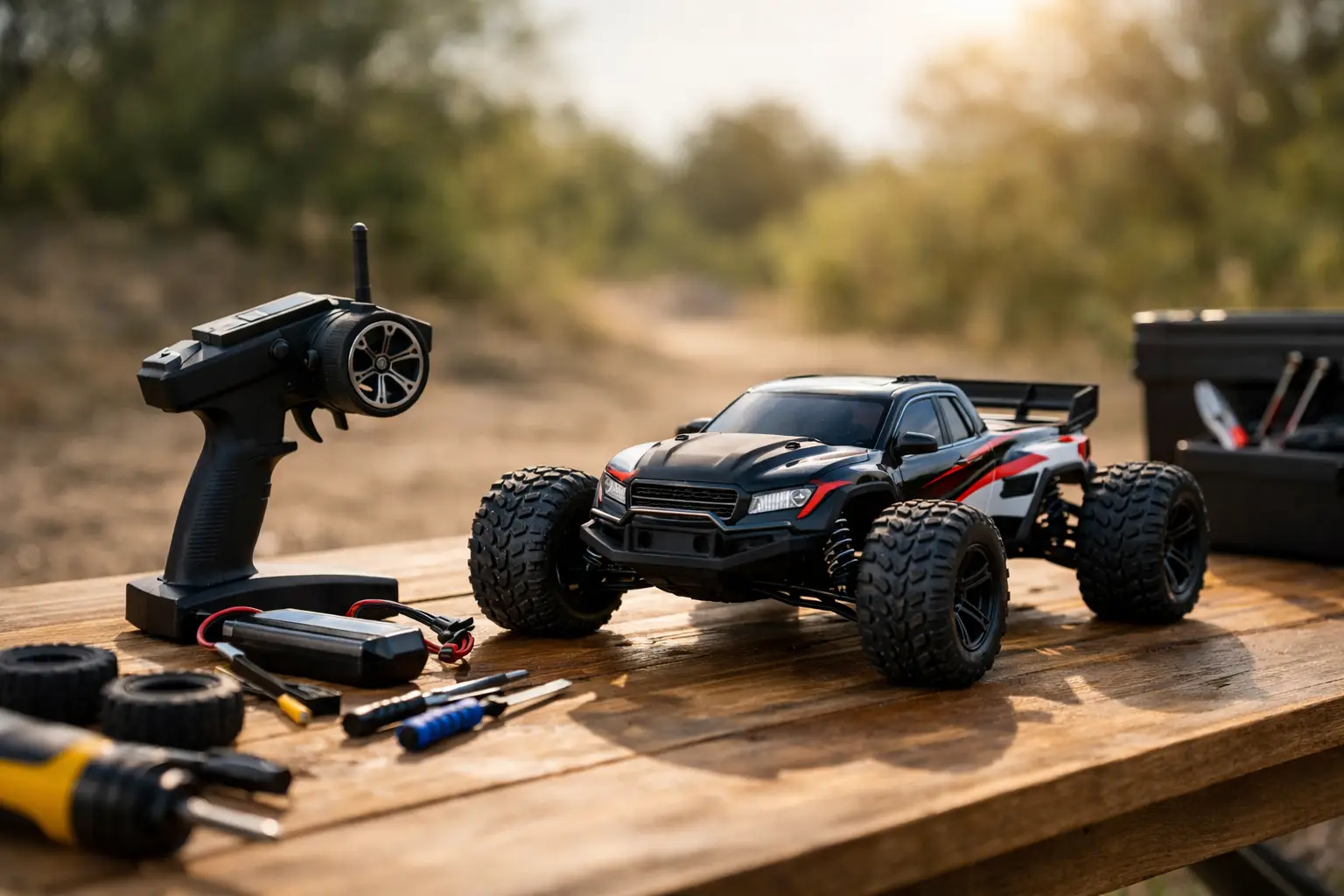
RC Car Beginner Guide – How to Choose Your First RC Car
Buying your first RC car can feel overwhelming. With so many scales, motor types, batteries and brands available, it's easy to focus on specifications instead of choosing a model that actually suits how and where you'll drive.
The best first RC car should make you want to charge another battery and head straight back out, not spend your first afternoon searching for replacement parts or wondering why it won't drive properly.
Whether you're buying for yourself or someone new to the hobby, this guide explains everything you need to know before making your first purchase.
If you're looking for your first RC car, browse our ranges of:
RTR Electric Brushed RC Cars
https://www.applianceelectronics.co.uk/products/382/rtr-electric-brushed-motors
RTR Electric Brushless RC Cars
https://www.applianceelectronics.co.uk/products/383/rtr-electric-brushless-motor
Start by Thinking About Where You'll Drive
One of the biggest mistakes beginners make is buying the fastest RC car they can afford rather than the one best suited to where they'll actually use it.
A small model might be brilliant on smooth tarmac, patios or driveways but will quickly struggle in long grass, gravel or rough terrain.
Larger 1/10 scale vehicles cope much better with parks, compact dirt tracks and uneven ground, while 1/8 scale models offer incredible performance but require more room, larger batteries and generally cost more to maintain.
If you'll mainly be driving around parks or open spaces, a monster truck, stadium truck or short course truck is usually the best place to start. Their larger tyres and increased ground clearance make them forgiving over bumps, grass and loose surfaces.
Buggies offer sharper handling and excellent speed, especially on prepared dirt tracks or smooth surfaces, but their lower ride height means they're less suited to rough ground.
Rock crawlers are completely different again. They're designed to climb over rocks, roots and obstacles at low speed rather than jump or race. If careful technical driving appeals more than outright speed, a crawler can be an excellent first choice.
RTR or Kit?
For almost every beginner, an RTR (Ready to Run) vehicle is the easiest and most enjoyable way to get started.
Most RTR models include:
-
Fully assembled vehicle
-
Radio transmitter
-
Steering servo
-
Electronic Speed Controller (ESC)
-
Motor
-
Receiver
Some also include a battery and USB charger, while others require these to be purchased separately. Always check exactly what's included before ordering.
RC kits are hugely rewarding to build and teach you how every component works, but you'll also need to buy the electronics, radio system, wheels, tyres, batteries and charger separately.
Unless you're specifically looking for the building experience, an RTR model gets you driving much sooner.
Understanding Batteries
The battery you choose has a huge effect on your RC car's performance.
NiMH Batteries
NiMH batteries remain a popular choice for beginners because they're simple to use and relatively forgiving. They don't require as much care as LiPo batteries, although they're generally heavier and offer less performance.
LiPo Batteries
LiPo batteries provide:
-
More acceleration
-
Higher top speeds
-
Longer run times
-
Reduced weight
However, they also require more care.
Always charge LiPo batteries with a suitable balance charger, never leave them charging unattended and inspect them regularly for damage or swelling.
For most 1/10 scale RC cars, a 2S LiPo provides an excellent balance between speed and control.
Many models can also run 3S LiPo batteries, but the extra performance brings shorter reaction times, harder impacts and increased wear on drivetrain components.
Before Buying a Battery
Always check:
-
Battery connector type
-
Battery compartment dimensions
-
Maximum battery voltage supported by the ESC
-
Whether Low Voltage Cut-Off (LVC) is enabled
A battery can be electrically compatible but still too large to fit inside the chassis.
Many experienced hobbyists also prefer owning two batteries rather than one oversized pack. While one cools down after a run, the second can be charging or ready to go.
Brushed or Brushless?
One of the biggest decisions for any beginner is choosing between brushed and brushless power.
Our range of RTR Electric Brushed RC Cars offers affordable, beginner-friendly models that are ideal for learning the hobby.
https://www.applianceelectronics.co.uk/products/382/rtr-electric-brushed-motors
Brushed motors are:
-
Less expensive
-
Smooth and predictable
-
Easy to maintain
-
Ideal for beginners and younger drivers
Brushless systems deliver:
-
Higher efficiency
-
Faster acceleration
-
Greater top speed
-
Less routine motor maintenance
If you're looking for maximum performance, browse our RTR Electric Brushless RC Cars here:
https://www.applianceelectronics.co.uk/products/383/rtr-electric-brushless-motor
If you do choose a brushless model as your first RC car, look for one that offers throttle limiting or training mode. Reducing the available power while learning is far more useful than buying a slower vehicle you'll outgrow within a few weeks.
Remember, speed figures often require optional batteries and perfect conditions. A well-balanced 25mph RC car is usually much more enjoyable than a 50mph model that's constantly crashing into kerbs.
Buy a Brand With Good Spare Parts Support
Every RC vehicle eventually needs replacement parts.
That's completely normal.
Body clips disappear.
Tyres wear out.
Suspension arms break after heavy crashes.
Bearings eventually need replacing.
The difference between a great beginner RC car and a frustrating one is how easy it is to obtain those replacement parts.
Well-supported brands such as Traxxas, Arrma, FTX, Losi, Tamiya and Team Associated all have excellent parts availability, making repairs straightforward.
Before buying any RC vehicle, it's worth checking that common replacement items like suspension arms, driveshafts, body mounts, wheel nuts and gears are readily available.
Set Up Your RC Car Before Driving
Don't charge the battery and immediately head for the biggest jump you can find.
Spend ten minutes checking everything first.
Make sure:
-
Wheel nuts are tight.
-
Steering moves freely.
-
Tyres are securely glued.
-
Transmitter batteries are installed.
-
Steering trim is centred.
With the wheels off the ground, confirm that:
-
Steering turns the correct direction.
-
Throttle moves the vehicle forwards.
-
Brakes operate correctly.
If your transmitter allows throttle limiting, reduce the maximum power while you get used to driving.
Learning smooth steering and throttle control prevents far more crashes than fitting expensive aluminium upgrades.
Keep Your RC Car Reliable
Looking after your RC car doesn't take long.
After every run:
-
Switch the vehicle off before the transmitter.
-
Remove the battery.
-
Brush away dirt and grass.
-
Inspect suspension arms and steering links.
-
Check wheel nuts.
-
Look for damaged bearings or loose screws.
If you've driven through puddles or wet grass, dry the vehicle thoroughly.
Water-resistant electronics are designed to cope with damp conditions, but bearings, steel screws and drivetrain components can still corrode if they're left wet.
A little maintenance after each run can significantly increase the life of your RC car.
Beginner RC Buying Checklist
Before your first drive, make sure you have:
? RC Car
? Suitable Battery
? Compatible Charger
? AA Batteries (if required)
? Spare Body Clips
? Basic Hex Driver Set
? Cross Wrench or Wheel Nut Driver
? LiPo Charging Bag (recommended)
Frequently Asked Questions
What is the best RC car for a beginner?
Most beginners will be happiest with a 1/10 scale RTR electric model. It offers a great balance of performance, durability, affordability and readily available spare parts.
Should I buy brushed or brushless?
Brushed models are ideal for learning and generally cost less. Brushless models offer significantly more speed and performance but are often better suited once you've gained a little experience.
Is LiPo better than NiMH?
LiPo batteries provide more power and longer run times, while NiMH batteries are simpler to use and require less maintenance. Both are excellent choices depending on your experience and budget.
What scale RC car should I buy first?
For most people, 1/10 scale is the perfect starting point. It's large enough to cope with rough ground while remaining affordable and easy to transport.
What else do I need besides the RC car?
Depending on the model, you may also need a drive battery, charger and AA batteries for the transmitter. It's also worth picking up a basic tool kit and a few spare body clips before your first outing.
Final Thoughts
Your first RC car doesn't need to be the fastest or the most expensive model available. The best choice is one that suits where you'll drive, fits your budget and has readily available spare parts when they're eventually needed.
Take your time choosing the right model, learn the basics of battery care and maintenance, and you'll spend far more time enjoying your RC car than repairing it.
Whether you're looking for an affordable brushed model or a high-performance brushless machine, choosing a quality RTR vehicle from a trusted manufacturer is the perfect way to begin your RC journey.
Browse our range of RTR Electric Brushed RC Cars:
https://www.applianceelectronics.co.uk/products/382/rtr-electric-brushed-motors
Browse our range of RTR Electric Brushless RC Cars:
https://www.applianceelectronics.co.uk/products/383/rtr-electric-brushless-motor
Written by the RC Model Shop team — passionate RC enthusiasts helping customers choose the right RC cars, batteries, chargers, electronics and spare parts for every level of experience.