
RC Battery Charger Guide UK - Choosing the Right Charger for Your RC Batteries
04/05/2026
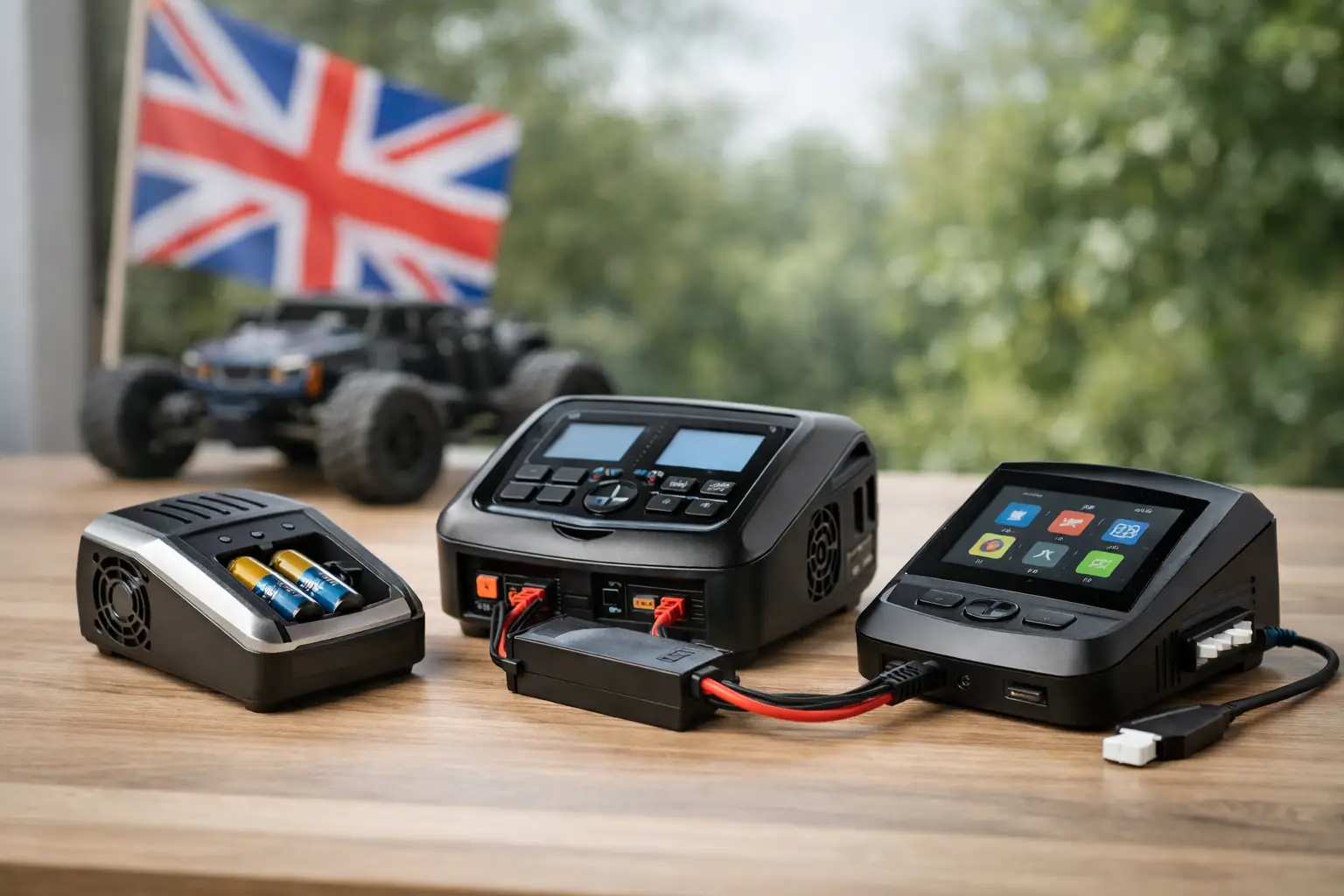
RC Battery Charger Guide UK - Choosing the Right Charger for Your RC Batteries
If you have ever bought the wrong charger for an RC battery, you usually find out at the worst possible moment - when fresh packs are sitting on the bench and the RC car is ready to run.
That is exactly why choosing the right RC battery charger matters.
On paper, many RC chargers look similar. In practice, the difference between a basic charger and a properly matched setup shows up very quickly in:
-
charging speed
-
battery compatibility
-
ease of use
-
safety features
-
long-term battery health
For UK RC hobbyists, the best charger is rarely the one with the biggest specification sheet. It is the one that suits:
-
the batteries you actually use
-
your charging routine
-
your future upgrade plans
-
your experience level
RC Model Shop stocks a large range of RC battery chargers and charging accessories suitable for LiPo, NiMH and modern brushless RC setups.
Why RC battery chargers vary so much
A charger is not just a power cable with a screen attached.
Different chargers support different:
-
battery chemistries
-
cell counts
-
wattage outputs
-
charging speeds
-
balancing functions
That matters because charging requirements change dramatically between:
-
a small crawler battery
-
a 2S basher pack
-
a 6S speed-run setup
-
multiple race packs
A charger that feels perfectly adequate for occasional weekend use may become frustrating once:
-
battery sizes increase
-
multiple vehicles are involved
-
charging speed starts limiting drive time
The battery types most RC chargers support
Most modern RC chargers support several battery types, including:
-
LiPo
-
LiHV
-
LiFe
-
NiMH
-
NiCd
-
Pb batteries
For most RC car owners, LiPo support is the most important feature because LiPo batteries dominate modern RC performance setups.
However, flexibility still matters.
Many hobbyists still run:
-
older NiMH transmitter packs
-
crawler batteries
-
receiver packs
-
mixed battery collections
A charger supporting multiple chemistries keeps things simpler long-term.
RC Model Shop also stocks a large range of RC batteries and LiPo packs suitable for crawlers, bashers and brushless RC cars.
AC vs DC RC chargers
This is one of the biggest decisions for UK buyers.
AC RC chargers
AC chargers plug directly into a normal mains socket.
They are usually:
-
simpler
-
tidier
-
more beginner-friendly
-
easier for casual home use
For many hobbyists, AC chargers are the most practical overall option.
DC RC chargers
DC chargers require a separate power supply.
They are often:
-
more powerful for the money
-
better suited to workshop setups
-
popular with experienced hobbyists
However, the lower headline price can sometimes be misleading once a suitable power supply is added.
For many UK households, an integrated AC charger remains the easiest and cleanest setup.
Why balance charging matters
If you are using LiPo batteries, balance charging is not optional.
It is a core part of safe RC battery ownership.
Balance charging allows the charger to monitor and equalise individual cell voltages during charging.
This helps:
-
improve battery lifespan
-
maintain performance consistency
-
reduce cell imbalance
-
improve charging safety
Any serious RC charger should properly support:
-
balance charging
-
storage charging
-
adjustable charge rates
without making the menus overly complicated.
Charging speed vs battery lifespan
Faster charging sounds attractive until battery temperatures rise and pack lifespan starts dropping.
For most RC users, charging at around:
1C
remains the safest and most dependable long-term option.
Examples:
-
5000mAh battery = 5A charge rate
-
2200mAh battery = 2.2A charge rate
Some modern batteries support faster charging, but maximum charge rates are not always the smartest everyday choice.
Consistent battery care nearly always beats chasing the shortest possible charge time.
Choosing the right charger wattage
Wattage matters more than many beginners realise.
A charger may technically support:
-
4S
-
6S
-
higher charge rates
while still feeling painfully slow if the wattage is too low.
This becomes especially noticeable with:
-
large-capacity LiPos
-
multiple packs
-
larger-scale RC vehicles
If you regularly run:
-
monster trucks
-
race setups
-
aircraft
-
multiple RC cars
stepping up to a higher-output charger is usually worthwhile.
Single-channel vs dual-channel chargers
Single-channel chargers
Single-channel units are:
-
simpler
-
cheaper
-
ideal for beginners
-
perfect for casual use
If you only charge one or two packs at a time, they often make the most sense.
Dual-channel chargers
Dual-channel chargers become useful once:
-
multiple RC vehicles are involved
-
race-day charging matters
-
larger battery collections build up
They allow:
-
simultaneous charging
-
different battery types at once
-
better workshop efficiency
For experienced hobbyists, dual outputs can quickly become one of those features you would not want to lose afterwards.
Common RC charger mistakes
The biggest mistake is buying purely based on price.
Cheap chargers often become frustrating because of:
-
low wattage
-
limited compatibility
-
weak menus
-
poor balancing accuracy
-
restricted upgrade potential
Another common issue is buying too little charger for future needs.
A charger that barely supports your current setup may feel outdated very quickly once:
-
larger batteries
-
brushless systems
-
additional vehicles
arrive later.
It is also important to avoid:
-
incorrect battery settings
-
wrong cell counts
-
damaged charging leads
-
charging unattended
-
poor battery storage habits
Good charging habits matter just as much as the charger itself.
What UK RC hobbyists should check before buying
Before choosing an RC charger, check:
-
battery chemistry
-
common cell count
-
battery capacity
-
connector type
-
future upgrade plans
Then decide:
-
AC or DC
-
single or dual output
-
casual or heavy-use setup
The correct charger depends entirely on how the RC hobby actually fits into your routine.
A casual weekend crawler owner does not need the same charging setup as someone running:
-
multiple 6S bashers
-
race buggies
-
aircraft packs
-
all-day track sessions
Are premium RC chargers worth it?
Usually, yes - if the features match your usage.
A better charger often provides:
-
safer charging
-
more accurate balancing
-
faster workflow
-
better menus
-
stronger long-term reliability
That becomes more noticeable over time than many hobbyists initially expect.
The charger is one of the few RC workshop tools used almost every single time the vehicle runs.
Good charging equipment quietly improves the entire ownership experience.
A smarter way to choose an RC charger
The best RC charger is not necessarily the fastest or most expensive.
It is the one that:
-
suits your batteries properly
-
supports your future upgrades
-
remains simple to use
-
feels dependable every time you plug a pack in
At RC Model Shop, the focus is always on helping hobbyists match chargers correctly to:
-
the battery setup
-
the vehicle type
-
the experience level
-
the intended use
rather than simply recommending the biggest specification available.
Reliable charging is not the most glamorous part of RC ownership, but it is one of the most important.
Get it right and everything else in the hobby becomes easier.
Frequently Asked Questions
What is the best RC charger for LiPo batteries?
The best RC charger is one that properly supports:
-
balance charging
-
storage charging
-
suitable wattage
-
correct cell count compatibility
for your battery setup.
Is AC or DC better for RC chargers?
AC chargers are simpler for home use, while DC chargers are often better for dedicated workshop setups with external power supplies.
What does balance charging do?
Balance charging equalises individual cell voltages in LiPo batteries to improve:
-
safety
-
lifespan
-
charging consistency
How fast should I charge RC batteries?
For most RC batteries, charging at around 1C is considered the safest long-term option.
Are dual-channel RC chargers worth it?
For hobbyists charging multiple packs regularly, dual-channel chargers can save significant time and improve charging convenience.
Written by the RC team at RCModelShop.co.uk / Appliance Electronics UK Ltd, UK supplier of RC chargers, LiPo batteries and RC charging accessories.