
How to Waterproof RC Electronics Properly
06/06/2026
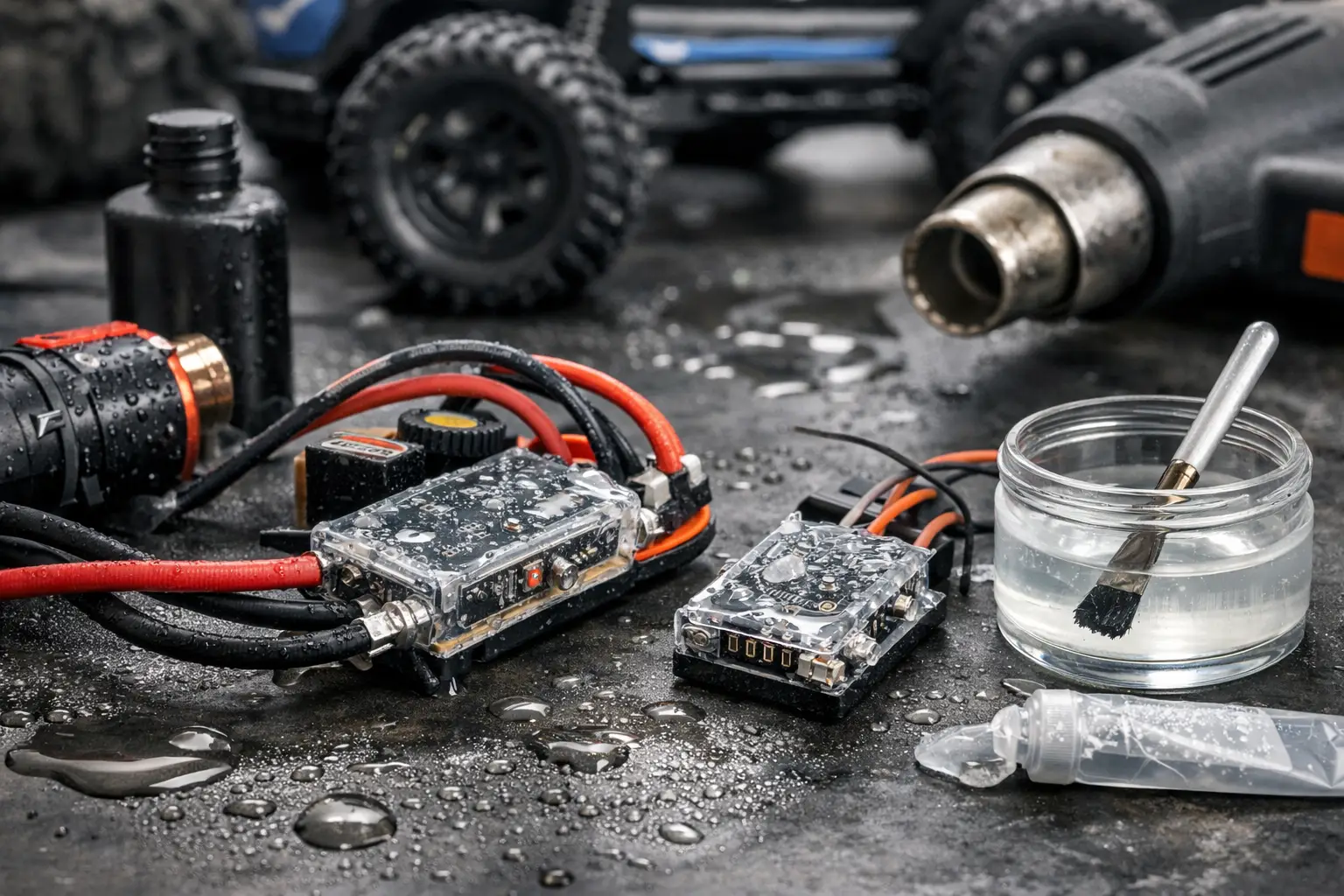
Waterproofing Is Only Part of the Job
Learning how to waterproof RC electronics can significantly improve reliability when driving through wet grass, mud, puddles and other challenging conditions.
However, waterproofing should always be viewed as part of a wider maintenance routine rather than a one-time modification.
Protecting receivers, servos, ESCs and connectors can help reduce the risk of failures, but regular inspection, cleaning and drying remain equally important. Even the best waterproof electronics benefit from proper after-run care.
Whether you drive RC bashers, rock crawlers, monster trucks, boats or other hobby-grade models, a sensible waterproofing strategy can help keep your vehicle running reliably while reducing the risk of costly repairs and unexpected downtime.
The goal is not to make every component indestructible. Instead, it is to reduce the risk of moisture-related failures while keeping the vehicle easy to maintain and repair.
By combining sensible waterproofing techniques with proper after-run maintenance, you can enjoy wet-weather driving with greater confidence while helping your electronics last longer.
Frequently Asked Questions
Can RC electronics be made completely waterproof?
Not usually. Most waterproofing methods improve water resistance rather than making electronics completely waterproof. Even electronics advertised as waterproof can still fail if seals become damaged or water enters through wiring, connectors or switches.
What is the easiest RC component to waterproof?
The receiver is often the easiest component to protect. Many vehicles include sealed receiver boxes, while others can be protected using waterproof receiver cases, heat shrink tubing or similar methods.
Are waterproof servos worth buying?
For drivers who regularly run in wet conditions, waterproof servos are often one of the best upgrades available. They generally offer greater reliability than attempting to waterproof a standard servo yourself.
Can brushless motors get wet?
Many brushless motors can tolerate occasional exposure to water, but bearings, sensor ports and connectors remain vulnerable. Proper cleaning and drying after wet running is still essential.
Is it safe to run LiPo batteries in wet conditions?
LiPo batteries can generally handle light splashes, but they should never be deliberately submerged. Always inspect the battery, wiring and connectors after wet use and never charge a damaged or moisture-contaminated battery.
Should I waterproof my ESC?
If your ESC is not already waterproof and you intend to drive in wet conditions, adding suitable protection can help reduce the risk of failures. Always follow the manufacturer's guidance before applying coatings or modifications.
What causes RC electronics to fail after water exposure?
Water itself is often only part of the problem. Corrosion, trapped moisture, contaminated connectors and poor post-run maintenance frequently cause failures days or even weeks after a wet run.
What is the best way to protect RC electronics during winter?
Using waterproof electronics, protecting connectors, sealing receivers where necessary and thoroughly cleaning and drying the model after every run are usually the most effective ways to improve reliability during winter use.
Written by the RC team at RCModelShop.co.uk / Appliance Electronics UK Ltd, specialists in RC cars, crawlers, boats, aircraft, batteries, chargers, electronics, upgrades and replacement parts from leading hobby brands.