
How to Store LiPo Batteries Safely - A Complete RC Storage Guide
02/06/2026
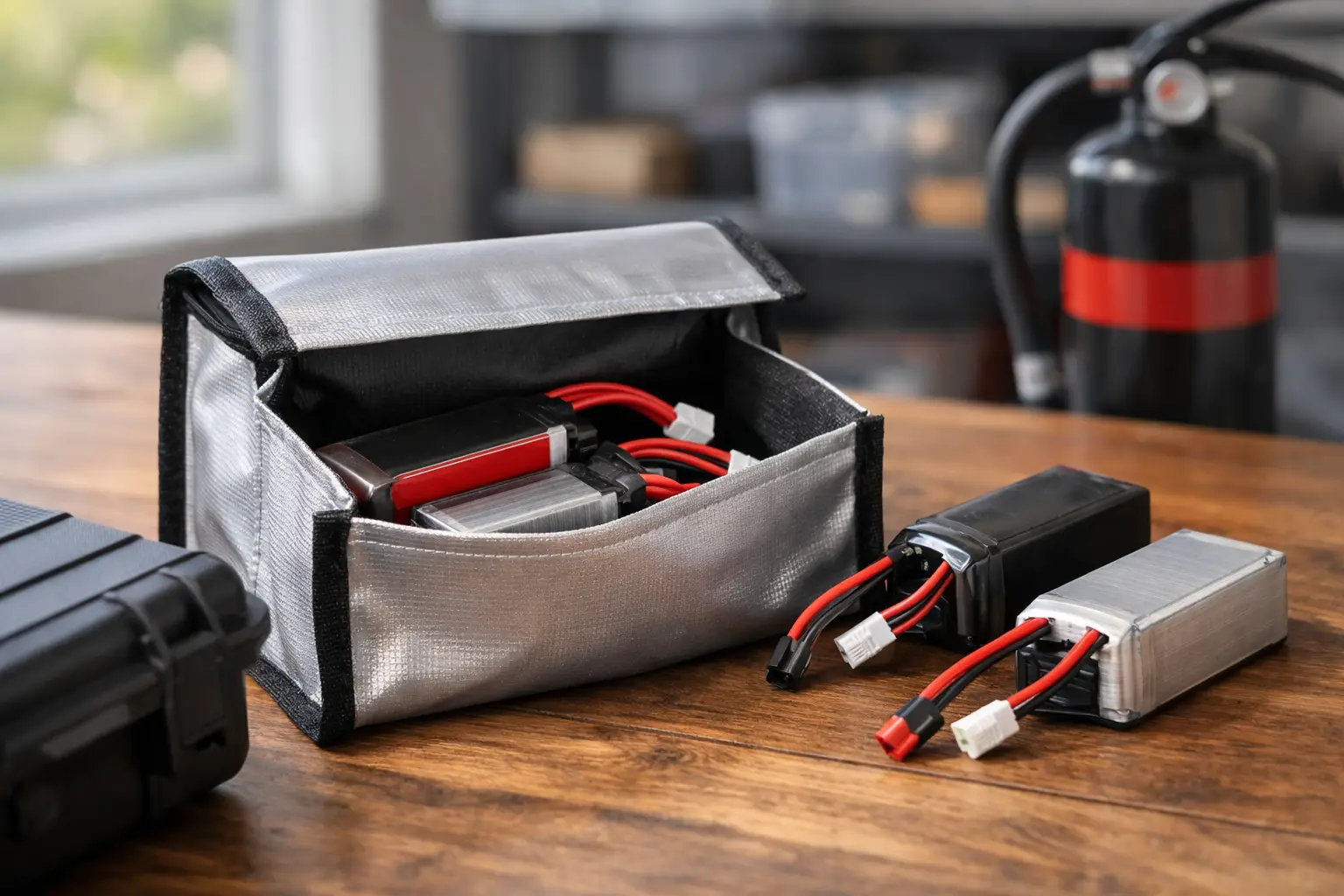
A puffed pack in the pit box or a battery left fully charged for weeks is usually how people learn how to store LiPo batteries the hard way.
LiPo batteries deliver excellent performance for RC cars, crawlers, boats and aircraft, but they do not forgive poor handling. If you want longer battery life, consistent performance and fewer safety concerns, proper storage is just as important as proper charging.
Many RC enthusiasts focus heavily on charging routines while overlooking what happens between runs. In reality, the way you store a LiPo battery can have a significant impact on how long it lasts and how well it performs.
Whether you run a single battery at weekends or rotate multiple packs every week, understanding proper LiPo storage is one of the simplest ways to protect your investment.
How Should LiPo Batteries Be Stored?
For best results, LiPo batteries should be stored:
- At approximately 3.8V to 3.85V per cell
- In a cool, dry location
- Away from direct sunlight
- Inside a LiPo safe bag or fire-resistant container
- Away from flammable materials
- Out of reach of children and pets
Most modern RC chargers include a dedicated storage mode which automatically charges or discharges the battery to the correct voltage.
Why Storage Voltage Matters
LiPo chemistry performs best when it is stored somewhere between fully charged and fully discharged.
A fully charged battery is ready to use but is not designed to sit on a shelf for extended periods. Leaving a pack fully charged for weeks can place additional stress on the cells, reducing lifespan and increasing the likelihood of swelling.
At the opposite end of the scale, storing a battery nearly empty can allow it to drift below the minimum safe voltage, potentially damaging the pack beyond recovery.
Storage mode exists for a reason.
For most LiPo batteries, storage voltage is approximately:
- 3.8V to 3.85V per cell
- 7.6V to 7.7V for a 2S pack
- 11.4V to 11.55V for a 3S pack
- 15.2V to 15.4V for a 4S pack
- 22.8V to 23.1V for a 6S pack
Using the storage function on your charger removes the guesswork and helps maintain battery health over the long term.
Browse RC battery chargers:
https://www.applianceelectronics.co.uk/products/447/battery-chargers
Or view battery and charger combo packages:
https://www.applianceelectronics.co.uk/products/431/battery-charger-combo
Let Batteries Cool Before Storage
If you have just finished a run, allow the battery to cool before charging or storing it.
Heat accelerates battery degradation and can increase stress on the cells. The same applies after charging. Allow the battery to settle before placing it into storage.
This is particularly important for:
- High-powered bashers
- Racing vehicles
- Boats
- Large-scale aircraft
- High-capacity 4S and 6S setups
A few minutes of patience can help improve battery longevity.
Where Should LiPo Batteries Be Stored?
The ideal storage location is cool, dry and stable.
Good examples include:
- Utility rooms
- Workshops
- Hobby rooms
- Indoor cupboards
- Dedicated charging stations
Poor storage locations include:
- Cars
- Garden sheds
- Lofts
- Conservatories
- Damp garages
Temperature extremes are never ideal.
A battery left in a hot vehicle during summer can suffer permanent damage even if it appears normal afterwards. Excessive cold is also undesirable, particularly when combined with moisture.
A stable indoor environment is usually the safest choice.
Use a LiPo Safe Bag or Fire-Resistant Box
A LiPo safe bag should be considered a minimum level of protection for most RC hobbyists.
While LiPo failures are relatively uncommon when batteries are handled correctly, safe storage provides an additional layer of protection should something go wrong.
A fire-resistant storage solution can help:
- Reduce risk
- Contain damage
- Separate batteries from combustible materials
- Improve overall storage safety
Browse LiPo safe bags and storage accessories:
https://www.applianceelectronics.co.uk/products/386/accessories-parts?F386=Lipo+Bags&openfilter=386
Whatever storage solution you choose, ensure batteries are not crushed and that wiring remains protected.
How to Organise Multiple LiPo Batteries
If you own several batteries, organisation becomes important.
Labelling batteries makes it easier to:
- Track usage
- Rotate packs evenly
- Monitor battery age
- Identify connector types
- Spot underperforming batteries
Many hobbyists label:
- Purchase date
- Cell count
- Capacity
- Connector type
It can also be helpful to keep batteries in separate compartments or individual LiPo bags to prevent connectors from contacting each other.
Balance leads should never be pinched, stretched or trapped beneath heavy equipment.
How Long Can LiPo Batteries Be Stored?
A healthy LiPo battery stored correctly can often sit safely for several weeks or even months.
However, batteries should still be inspected periodically.
Factors affecting storage life include:
- Battery quality
- Battery age
- Previous usage
- Storage temperature
- Overall condition
Most good-quality packs hold storage voltage extremely well.
Older packs may self-discharge more quickly and require occasional checking.
If you are storing batteries over winter or during a long break from the hobby, checking voltages every few weeks is good practice.
Choosing the Right LiPo Batteries
Different RC models place different demands on batteries.
A crawler running a 2S pack has very different requirements compared to a 6S basher or high-performance aircraft.
Regardless of the application, proper storage remains essential for maintaining performance and extending battery life.
Browse RC LiPo batteries:
https://www.applianceelectronics.co.uk/products/432/batteries
Common LiPo Storage Mistakes
Most battery problems are caused by simple mistakes rather than manufacturing faults.
Common storage mistakes include:
- Leaving batteries fully charged for weeks
- Storing packs completely flat
- Keeping batteries in hot vehicles
- Ignoring physical damage
- Storing damaged batteries with healthy packs
- Allowing connectors to touch each other
- Forgetting batteries for months without inspection
Good storage habits are easy to develop and can significantly increase battery lifespan.
Signs a Battery Should Not Be Stored
Before putting a battery away, carry out a quick visual inspection.
Warning signs include:
- Swelling or puffing
- Damaged wiring
- Split heat shrink
- Loose connectors
- Dented battery cases
- Excessive heat after use
- Strong chemical odours
Some cosmetic wear is normal in RC use.
Swelling is not.
If a battery becomes noticeably puffed or refuses to balance correctly, stop using it until it has been inspected properly.
LiPo Storage Advice for Different RC Models
The storage principles remain the same across the RC hobby, but different models present different challenges.
RC Cars
Car batteries often experience impacts and vibration. Regular inspections after crashes or heavy bashing sessions are recommended.
RC Crawlers
Crawlers may only be used every few weekends. Storing batteries at the correct voltage becomes particularly important during longer gaps between runs.
RC Boats
Boating introduces moisture into the equation. Always ensure connectors and balance leads are dry before storage.
RC Aircraft
Aircraft batteries may spend longer periods between flying sessions. Storage voltage discipline becomes especially important for maintaining battery health.
Frequently Asked Questions
What voltage should LiPo batteries be stored at?
Most LiPo batteries should be stored at approximately 3.8V to 3.85V per cell.
Is it safe to leave LiPo batteries fully charged?
For short periods, yes. However, storing fully charged batteries for weeks or months can shorten battery lifespan and increase cell stress.
Should LiPo batteries be stored in a LiPo bag?
Yes. A LiPo safe bag or fire-resistant storage container provides an additional layer of protection and is strongly recommended.
Can LiPo batteries be stored in a garage?
Only if temperatures remain stable and the area stays dry. Most indoor locations are generally preferable.
How often should I check stored LiPo batteries?
Checking stored batteries every few weeks is considered good practice, especially for older packs.
Can I leave a LiPo battery inside my RC car?
It is better to remove the battery after use and store it safely at storage voltage.
What should I do if my LiPo battery is swollen?
Stop using the battery immediately and inspect it carefully. Swelling is not considered normal and should be treated seriously.
Final Thoughts
Good LiPo storage is not complicated.
Store batteries at the correct voltage, keep them in a cool dry location, use suitable protective storage and inspect them regularly.
Those simple habits can help extend battery life, improve reliability and reduce safety risks.
Whether you run RC cars, crawlers, boats or aircraft, taking a few extra minutes to store your batteries correctly is one of the easiest ways to protect both your equipment and your investment.
Written by the RC team at RCModelShop.co.uk / Appliance Electronics UK Ltd, UK supplier of RC cars, LiPo batteries, battery chargers, LiPo safe bags, crawler accessories and hobby-grade RC parts.