
Best RC Plane for Beginners UK Buyers
23/04/2026
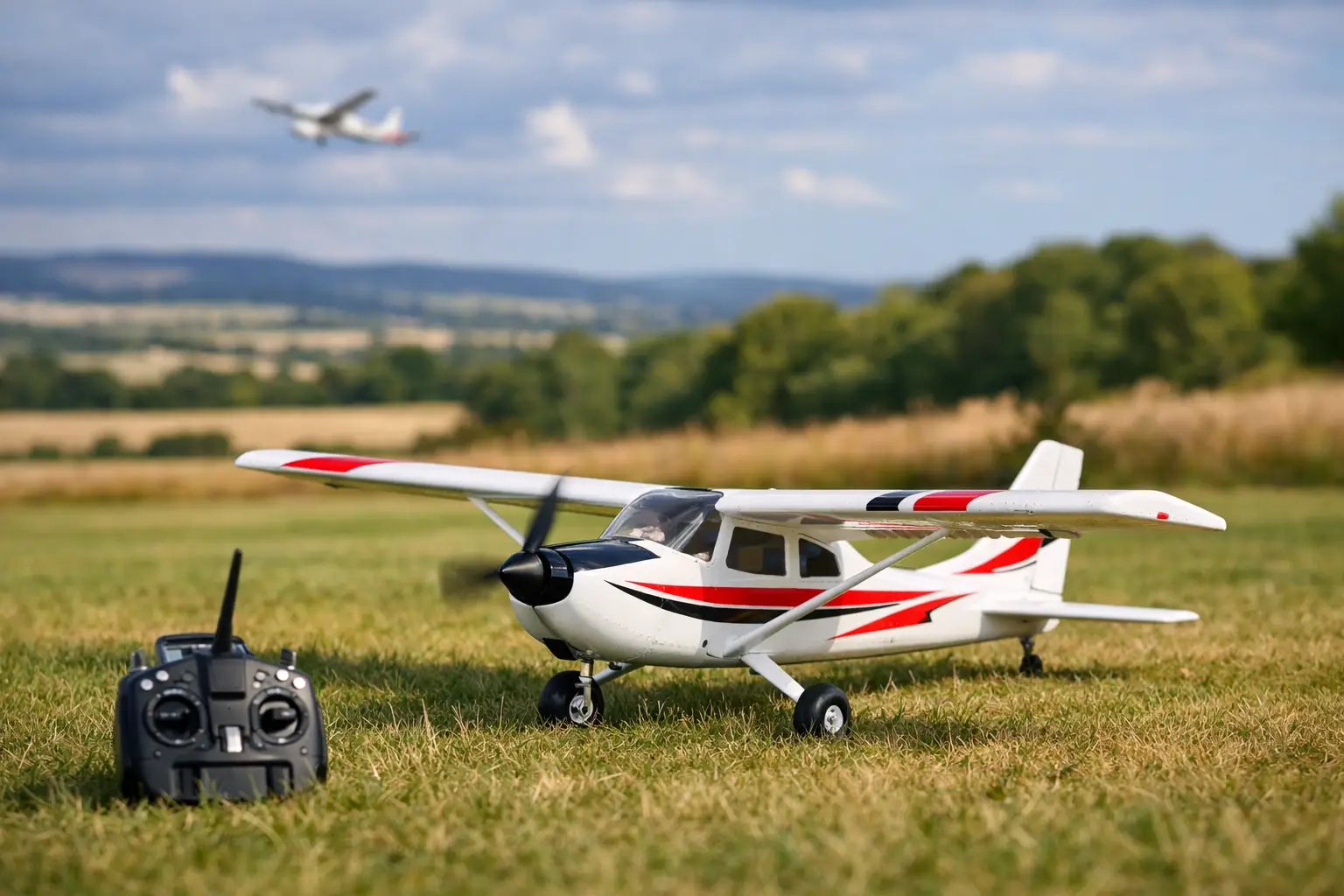
Best RC Plane for Beginners UK - Choosing Your First RC Aircraft Without the Headaches
Buying your first RC aircraft is usually where people get stuck.
Not because RC flying looks difficult, but because choosing the right beginner plane feels confusing very quickly. A model that looks amazing online can easily become frustrating if it:
-
flies too fast
-
struggles in British wind
-
breaks easily
-
uses awkward batteries
-
needs a huge runway
That is why choosing the best RC plane for beginners UK hobbyists should actually start with one question:
how easy is it to learn on?
The right beginner aircraft should:
-
give you time to react
-
recover from mistakes
-
survive rough landings
-
use easy-to-source batteries
-
remain affordable to repair
Get that first purchase right and RC flying feels approachable.
Get it wrong and even a good aircraft can feel impossible.
RC Model Shop stocks a large range of RC aircraft, trainers and flight models suitable for beginner and intermediate RC pilots.
What makes an RC plane beginner-friendly?
A good beginner RC plane is mostly about:
stability.
High-wing aircraft tend to be the safest starting point because the wing position naturally helps the aircraft:
-
self-stabilise
-
recover more gently
-
resist aggressive rolling
That matters massively during:
-
early turns
-
landing approach
-
throttle control learning
Foam construction also helps.
Foam-bodied RC aircraft are:
-
lighter
-
easier to repair
-
more forgiving during crashes
compared to more traditional balsa or composite builds.
The final factor is:
speed.
A very fast aircraft gives beginners less time to correct mistakes.
Slower stable trainers are usually:
-
calmer
-
easier to see
-
easier to recover
-
more confidence-inspiring
especially in UK conditions where wind can change quickly.
UK flying conditions matter more than beginners realise
Many RC plane guides online assume:
-
huge open flying sites
-
smooth runways
-
calm weather
That is not always realistic in Britain.
Many UK beginners fly from:
-
parks
-
sports fields
-
grass areas
-
local club sites
where:
-
surfaces vary
-
wind changes constantly
-
space may be limited
A beginner-friendly RC aircraft for UK conditions should ideally:
-
handle light wind
-
cope with grass take-offs
-
remain visible at moderate distance
-
avoid excessive speed
Very small ultra-light aircraft can become surprisingly difficult once typical British wind appears.
Slightly larger foam trainers are often easier overall because they feel:
-
calmer
-
more stable
-
less twitchy outdoors
The safest RC aircraft types for beginners
High-wing trainers
This is still the best overall starting point for most beginners.
High-wing trainers are designed specifically to provide:
-
stable flight
-
gentle handling
-
forgiving control response
Many modern trainers also include:
-
beginner flight modes
-
self-levelling assistance
-
panic recovery systems
These are not gimmicks.
For new pilots, they genuinely reduce frustration during the early learning phase.
Park flyers
Park flyers are useful when:
-
storage space is limited
-
transport matters
-
flying sites are smaller
They are:
-
lightweight
-
portable
-
easy to store
However:
smaller aircraft react more to wind.
In calm conditions they can be excellent.
In gusty UK weather they may become harder than beginners expect.
Gliders and powered gliders
Gliders often suit:
-
patient beginners
-
smoother flying styles
-
calm flying sites
They usually reward:
-
gentle control inputs
-
efficient flight
-
calmer flying behaviour
Some powered gliders also remain airborne impressively well on modest throttle.
The trade-off is that they sometimes need:
-
more open space
-
longer landing areas
than compact trainers.
Ready-to-Fly vs Bind-and-Fly
This is one of the most important buying decisions.
Ready-to-Fly (RTF)
RTF models are usually best for beginners because they typically include:
-
transmitter
-
battery
-
charger
-
assembled aircraft
This avoids:
-
compatibility confusion
-
radio setup mistakes
-
missing accessories
For first-time buyers, that simplicity matters.
Bind-and-Fly (BNF)
BNF aircraft suit hobbyists who already own:
-
compatible transmitters
-
existing radio systems
-
multiple aircraft
They can offer:
-
better long-term value
-
improved radio quality
-
easier fleet expansion
but they are not always the simplest starting point.
If buying as a gift:
RTF is normally the safest option.
How many channels should beginners use?
RC aircraft are usually described as:
-
2-channel
-
3-channel
-
4-channel
2-channel aircraft
Usually:
-
throttle
-
steering/yaw only
These are simple but can become limiting quickly.
3-channel aircraft
Adds:
-
pitch/elevator control
This creates:
-
smoother turns
-
better climb control
-
more realistic flying
For many beginners:
3-channel is the sweet spot.
4-channel aircraft
Adds:
-
aileron roll control
This gives:
-
more precise handling
-
aerobatic potential
-
greater long-term progression
A stable 4-channel trainer with beginner flight assistance can actually work very well for ambitious beginners.
RC aircraft batteries matter more than people expect
Battery choice affects:
-
flight time
-
charging convenience
-
replacement cost
-
long-term running expense
Most beginner aircraft now use:
LiPo batteries.
They are:
-
lightweight
-
powerful
-
efficient
However, battery availability matters.
The best beginner aircraft usually use:
-
easy-to-source packs
-
standard connectors
-
sensible replacement costs
Having:
-
two or three batteries
massively improves flying enjoyment because one short flight often feels over far too quickly.
RC Model Shop stocks a large range of RC batteries and LiPo packs suitable for RC aircraft and beginner flight models.
Battery and charger combo kits simplify things
Many beginners underestimate:
-
charging setup
-
connector compatibility
-
battery management
Battery and charger bundles often simplify the process considerably.
You can browse compatible RC battery and charger combo kits here.
A clean charging setup removes much of the early frustration that puts beginners off RC flying.
Spare parts and repairability matter heavily
New pilots crash.
That is completely normal.
The difference between a frustrating RC aircraft and a good beginner aircraft is often:
spare parts availability.
Things like:
-
propellers
-
landing gear
-
batteries
-
wings
-
foam-safe accessories
should be:
-
affordable
-
easy to source
-
clearly compatible
A cheap aircraft with poor spare support quickly becomes expensive.
A slightly better-supported model is often much cheaper long-term because it stays repairable.
What to expect during your first flights
The first session should focus on:
-
smooth control
-
throttle management
-
basic turns
-
landing approach
not:
-
speed
-
aerobatics
-
aggressive manoeuvres
Pick:
-
a calm day
-
a wide open area
-
short controlled flights
Beginners often think take-off is hardest.
Usually:
landing takes longer to master.
Small smooth control inputs work much better than large aggressive corrections.
Common beginner RC plane mistakes
The biggest mistake is buying based on appearance alone.
Scale warbirds and aerobatic aircraft may look incredible, but they are usually:
-
faster
-
less forgiving
-
more expensive to repair
Another mistake is:
going too small.
Tiny aircraft are portable, but many react badly to:
-
wind
-
turbulence
-
rough take-offs
Slightly larger foam trainers are often easier outdoors despite looking less exciting online.
So what should most beginners actually buy?
For most UK beginners:
-
foam construction
-
high-wing layout
-
Ready-to-Fly setup
-
stable 3 or 4-channel handling
is the safest overall recommendation.
If the aircraft also includes:
-
beginner flight modes
-
self-levelling
-
panic recovery
that is usually a genuine advantage rather than a gimmick.
The best first RC plane is rarely:
-
the fastest
-
the biggest
-
the most scale-realistic
It is the one that:
-
stays repairable
-
survives mistakes
-
feels manageable
-
encourages regular flying
because confidence is what keeps people in the hobby long-term.
At RC Model Shop, the focus is always helping RC pilots match aircraft properly to:
-
the flying space
-
the experience level
-
the weather conditions
-
the intended use
rather than simply recommending the most aggressive model available.
A good beginner aircraft should make flying feel:
-
achievable
-
enjoyable
-
repeatable
from the very first launch.
Frequently Asked Questions
What is the best RC plane for beginners in the UK?
For most UK beginners, a foam-bodied high-wing Ready-to-Fly trainer offers the best balance of stability, repairability and ease of use.
Are 4-channel RC planes too difficult for beginners?
Not necessarily. Stable 4-channel trainers with beginner flight assistance can work very well for ambitious beginners.
Should beginners buy Ready-to-Fly RC planes?
Usually yes. RTF aircraft reduce:
-
compatibility mistakes
-
setup confusion
-
additional costs
making them ideal for first-time buyers.
Are small RC planes easier to fly?
Not always. Very small planes are often more affected by wind and can feel twitchy outdoors in UK conditions.
How many batteries should beginners buy?
Most beginners benefit from:
-
two or three batteries
because flight times are relatively short and spare packs improve flying sessions significantly.
Written by the RC team at RCModelShop.co.uk / Appliance Electronics UK Ltd, UK supplier of RC aircraft, trainers, LiPo batteries and RC flight accessories.