
Best RC Car for Beginners: What to Buy
15/04/2026
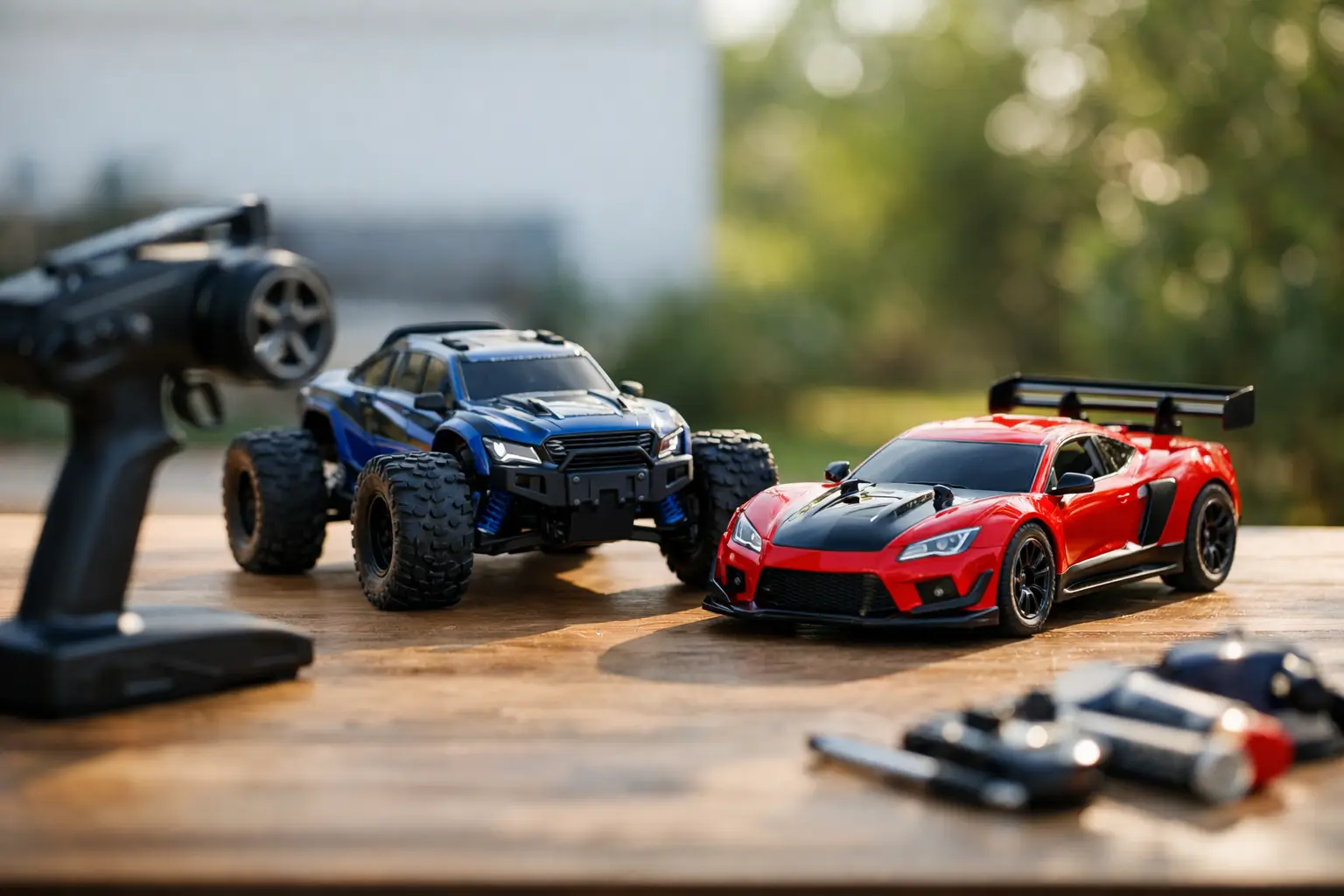
Best RC Car for Beginners - Choosing the Right First RC Car Without Regretting It
Buying your first RC car is usually where people either:
-
properly get into the hobby
or -
give up after one frustrating weekend.
The difference normally comes down to choosing:
the right beginner RC car.
Not:
-
the fastest model
-
the cheapest listing
-
the one with the most aggressive box art
but the one that is:
-
durable
-
easy to control
-
simple to maintain
-
backed by proper spare parts support
A beginner-friendly RC car should survive:
-
crashes
-
kerbs
-
rough learning mistakes
-
bad throttle control
without becoming:
-
impossible to repair
-
expensive to maintain
-
frustrating to drive
RC Model Shop stocks a large range of RC cars, buggies, monster trucks and crawler platforms suitable for beginner and hobby-grade RC driving.
What actually makes a good beginner RC car?
The best beginner RC car is usually:
the one that keeps you driving instead of constantly fixing things.
That means:
-
stable handling
-
sensible power delivery
-
decent battery life
-
strong parts support
-
straightforward maintenance
Many beginners focus on:
-
top speed
when:
drivability matters far more initially.
A manageable RC car builds:
-
confidence
-
control
-
better long-term enjoyment
A very fast RC car often creates:
-
crashes
-
frustration
-
broken parts
-
expensive mistakes
before the hobby even becomes enjoyable.
Ready-to-run RC cars are usually the safest option
For most beginners:
RTR (Ready-to-Run) models make the most sense.
RTR packages usually include:
-
transmitter
-
receiver
-
installed electronics
-
assembled chassis
That removes huge amounts of:
-
compatibility confusion
-
electronics setup mistakes
-
building complexity
You:
-
charge the battery
-
install transmitter batteries if needed
-
start driving
For first-time RC buyers:
simplicity matters.
Why 1/10 scale is usually the sweet spot
1/10 scale RC cars balance:
-
stability
-
visibility
-
parts availability
-
upgrade support
-
running costs
extremely well.
Smaller RC cars can be:
-
fun indoors
-
portable
-
cheaper
but they are often:
-
more sensitive to bumps
-
less capable on grass
-
less stable outdoors
Larger RC cars are excellent too, but:
-
batteries cost more
-
repairs cost more
-
running costs increase
For most beginners:
1/10 scale remains the safest all-round recommendation.
Choosing the right RC car type
There is no single “best” beginner RC car.
The right choice depends heavily on:
-
surface type
-
driving style
-
age
-
budget
-
available space
RC buggies
Buggies remain one of the safest beginner options.
They offer:
-
balanced handling
-
good outdoor ability
-
manageable size
-
decent clearance
A buggy usually works well on:
-
dirt
-
short grass
-
gravel
-
tarmac
-
parks
without feeling:
-
too tall
-
too twitchy
-
too specialised
For many first hobby-grade buyers:
buggies are the best all-round starting point.
Monster trucks
Monster trucks appeal immediately because they:
-
look aggressive
-
clear rough terrain easily
-
survive bumps well
-
handle poor surfaces better
They are excellent for:
-
younger users
-
rough parks
-
mixed terrain
-
casual bashing
The trade-off is:
-
slightly less precision
-
more body roll
-
higher centre of gravity
However:
for pure fun, monster trucks are hard to beat.
Short course trucks
Short course trucks sit nicely between:
-
buggies
and -
monster trucks.
They provide:
-
stable handling
-
strong off-road ability
-
protected wheel design
-
confidence-inspiring driving
Their body design also helps protect wheels during:
-
light crashes
-
rough impacts
-
casual contact
For many beginners:
short course trucks feel easier to drive quickly.
On-road touring cars
Touring cars work best on:
-
smooth tarmac
-
paved surfaces
-
driveways
-
car parks
They usually provide:
-
sharper handling
-
cleaner cornering
-
higher efficiency on-road
The downside:
-
poor grass performance
-
limited rough-ground ability
-
lower clearance
For many UK buyers:
-
weather
-
parks
-
mixed terrain
make off-road RC cars more flexible overall.
Crawlers
Crawlers are completely different.
They focus on:
-
slow control
-
technical terrain
-
climbing ability
-
scale realism
rather than:
-
outright speed
If the buyer wants:
-
careful driving
-
trail exploration
-
obstacle crawling
they are excellent.
If they expect:
-
fast field running
-
jumps
-
high-speed bashing
then crawlers are the wrong choice entirely.
2WD vs 4WD for beginners
This depends on:
-
budget
-
terrain
-
intended use
2WD RC cars
2WD models are usually:
-
cheaper
-
lighter
-
easier to maintain
They also teach:
-
throttle control
-
surface awareness
-
smoother driving technique
For older beginners and hobby-focused users:
2WD still makes a lot of sense.
4WD RC cars
4WD improves:
-
traction
-
acceleration
-
rough-ground stability
-
beginner confidence
especially outdoors.
For:
-
parks
-
grass
-
gravel
-
mixed UK terrain
4WD is usually easier and more forgiving.
The trade-off:
-
higher cost
-
more drivetrain complexity
-
slightly more maintenance
If budget allows:
4WD is often the easiest route into outdoor RC.
Brushed vs brushless for first RC cars
Brushed RC systems
Brushed systems are often:
-
cheaper
-
easier to manage
-
smoother for beginners
-
less aggressive
They still provide:
-
plenty of fun
-
good speed
-
easier maintenance
for many users.
Brushless RC systems
Brushless setups offer:
-
more power
-
stronger acceleration
-
higher efficiency
-
better long-term upgrade potential
However:
beginners often underestimate how fast brushless systems can become.
Too much power too early often leads to:
-
repeated crashes
-
broken parts
-
overheating
-
frustration
A good brushed RC car is often:
the smarter first purchase.
Battery choice matters too
Most hobby-grade RC cars now use:
-
LiPo
or -
NiMH batteries.
LiPo batteries
Provide:
-
stronger punch
-
lower weight
-
better runtime efficiency
but require:
-
balance charging
-
proper storage
-
more careful handling
NiMH batteries
Are:
-
simpler
-
more forgiving
-
easier for beginners
although generally:
-
heavier
-
softer under acceleration
Either works fine for beginners if expectations are realistic.
RC Model Shop stocks a large range of RC batteries and LiPo packs suitable for beginner RC vehicles and hobby-grade setups.
Water resistance is useful in the UK
British weather matters.
Splash-resistant electronics make a huge difference when driving on:
-
damp grass
-
wet tarmac
-
muddy parks
However:
waterproof does not mean maintenance-free.
Wet driving still increases:
-
bearing wear
-
corrosion risk
-
drivetrain cleaning requirements
Regular cleaning still matters.
Spare parts support matters massively
This is where hobby-grade RC separates itself from:
-
toy-grade RC
Cheap unsupported RC cars become frustrating once:
-
suspension arms break
-
wheels crack
-
batteries fail
-
chargers stop working
A properly supported RC platform allows:
-
repairs
-
upgrades
-
easy maintenance
-
long-term ownership
That is usually worth far more than:
-
chasing the absolute lowest price
initially.
Common beginner RC mistakes
The biggest mistake:
buying for speed instead of usability.
Other common problems include:
-
buying too small
-
choosing the wrong surface type
-
ignoring battery requirements
-
overlooking spare parts support
-
underestimating rough UK terrain
A low on-road car may look amazing online but quickly becomes frustrating on:
-
grass
-
gravel
-
rough parks
Likewise:
-
a giant monster truck
may feel awkward in:
-
a tiny paved garden
The intended driving area matters heavily.
A smarter way to choose your first RC car
Start with three questions:
-
Where will it mostly be driven?
-
Who is using it?
-
Is simplicity or upgrade potential more important?
For many beginners:
-
1/10 buggy
-
short course truck
-
beginner monster truck
remain the safest all-round answers.
At RC Model Shop, the focus is always helping buyers match RC vehicles properly to:
-
terrain
-
experience level
-
budget
-
intended use
rather than simply recommending the fastest model available.
Because the best beginner RC car is usually:
the one that makes you want another battery pack, not another refund request.
Frequently Asked Questions
What is the best RC car type for beginners?
For many beginners, 1/10 scale buggies and short course trucks provide the best balance of:
-
handling
-
durability
-
parts support
-
outdoor ability
Is 2WD or 4WD better for beginners?
4WD is usually easier outdoors because it improves traction and stability, while 2WD is cheaper and teaches better throttle control.
Should beginners buy brushed or brushless RC cars?
Brushed systems are often the smarter beginner choice because they are easier to manage and still provide plenty of performance.
Are monster trucks good for beginners?
Yes. Monster trucks handle rough terrain well and are forgiving over uneven surfaces and beginner mistakes.
What scale RC car is best for beginners?
For most hobby-grade users, 1/10 scale offers the best balance of:
-
stability
-
upgrade support
-
visibility
-
running costs
Written by the RC team at RCModelShop.co.uk / Appliance Electronics UK Ltd, UK supplier of beginner RC cars, monster trucks, crawlers and hobby-grade RC vehicles.