
Axial SCX10 Review UK for Serious Trail Drivers
23/08/2026
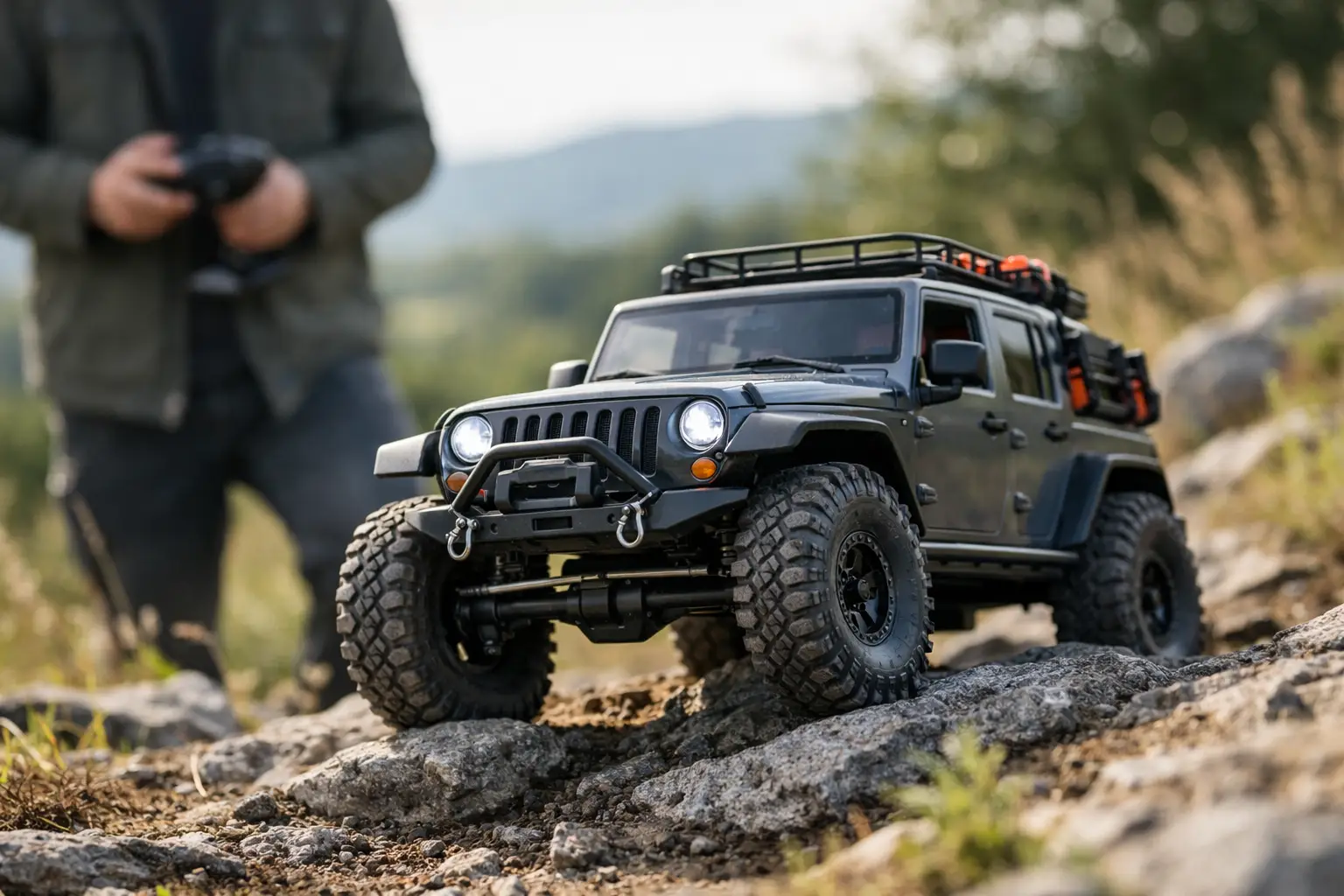
Axial SCX10 Review UK: Is It Still One of the Best RC Crawlers?
A crawler that looks right on the shelf but feels nervous on wet roots is no use to a regular trail driver. That is why an Axial SCX10 review UK buyers can actually use needs to look beyond body style and box specifications.
The SCX10 name covers several generations and versions, but the core appeal remains the same: a capable scale crawler with a huge following, good parts support and plenty of room to make the vehicle your own.
For many UK hobbyists, an Axial SCX10 is the model that turns a casual garden run into proper trail driving. It is not always the cheapest route into crawling, and it is not the best choice for every buyer. Get the right version, however, and it is a platform that can handle woodland routes, rocky banks and slow technical sections while rewarding careful driving rather than outright speed.
You can view the Axial SCX10 models and products available from RC Model Shop UK while comparing the different options.
Axial SCX10 review UK: what are you actually buying?
The first point is worth clearing up: the SCX10 is a platform name, not one single vehicle.
You will see older SCX10 and SCX10 II models on the second-hand market, alongside newer SCX10 III variants, ready-to-run trail lorries and more specialised kit-based options. Bodies, wheelbases, drivetrains and supplied electronics can vary considerably.
That can make comparisons confusing, but it is also one of the platform's strengths.
A short-wheelbase vehicle with a Jeep-style body will suit tight, technical sections differently from a longer-wheelbase pickup. A ready-to-run model gets a newcomer driving quickly, while a kit gives an experienced builder more control over the electronics, wheels, tyres and final specification.
The SCX10 III generation is where many buyers start. Depending on the particular version, you can find features such as portal axles and transmissions designed to accommodate additional functions.
Features such as DIG or a two-speed transmission can add another dimension to a build where supported by the particular model and electronics.
Portal axles increase ground clearance around the differential housings, while DIG can be used to help tighten a turn on difficult terrain. These features add interest and capability, but they should be viewed as mechanical systems to understand and maintain rather than magic fixes for poor tyre choice or heavy-handed driving.
Axial SCX10 trail performance in British conditions
An SCX10's strongest quality is its measured, predictable manner on the trail.
The chassis geometry, low-speed control and realistic weight transfer make it enjoyable at walking pace. It will climb surfaces that look unpromising, particularly once the tyres have found grip, but it does not completely disguise bad line choice.
That is exactly what many scale crawler owners want.
Wet woodland trails
On dry rock, the standard setup on a good ready-to-run SCX10 can be capable enough for casual crawling.
Damp woodland ground is often a more realistic UK test.
Mud, wet leaves, roots and slick stone can defeat a crawler that performed brilliantly on dry ground. Tyres therefore become extremely important.
Softer-compound tyres can improve traction, while carefully selected wheel weight can change how planted the crawler feels. However, simply adding large amounts of weight is not necessarily an improvement.
Too much rotating or unsprung weight can make the suspension work harder and place additional load on drivetrain and steering components.
Ground clearance
Ground clearance depends on the particular SCX10 version.
Portal-equipped models have an advantage around the differential housings when crossing ruts and rocks. Conventional axle configurations can still be extremely capable and may provide the more traditional scale appearance some owners prefer.
Neither arrangement removes the need to drive carefully.
Approach angle, departure angle, breakover angle, body overhang and wheelbase can all determine whether a crawler clears an obstacle.
Low-speed control
For trail driving, control matters considerably more than headline speed.
A crawler needs to be able to ease onto an obstacle, maintain a controlled wheel speed and allow the driver to make small throttle adjustments without constantly breaking traction.
The supplied power systems in ready-to-run crawlers are generally selected with this type of driving in mind.
There is always scope for upgrading later. A quality sensored brushless system, for example, can provide excellent low-speed control and efficiency.
However, we would not automatically recommend replacing perfectly serviceable electronics on a brand-new crawler before you've actually driven it.
Run the vehicle first. Learn what it does well and identify what you genuinely want to improve.
Scale detail versus all-out crawling capability
The SCX10 is heavily associated with scale trail driving rather than being purely a competition crawling platform.
That distinction matters.
A realistic body, bumpers, spare wheel, light kit and scale accessories all add character, but every item mounted high on the vehicle can raise its centre of gravity.
A fully loaded expedition-style build can look fantastic and still be less sure-footed on a steep side slope than a lighter crawler.
There is no wrong answer here.
If your favourite part of the hobby is creating a detailed scale rig, accepting a small compromise in ultimate climbing ability may be completely worthwhile.
If your priority is tackling the steepest possible lines at your local crawling spot, keep unnecessary weight out of the upper body and place any strategically added weight as low as reasonably possible.
Do not fit upgrades simply because they look impressive in photographs.
Which Axial SCX10 is right for you?
The right choice depends heavily on whether you want to drive, build or do a bit of both.
Ready-to-run Axial SCX10
A ready-to-run SCX10 is the sensible choice for many first-time crawler buyers.
You get an assembled vehicle with its electronics and radio equipment already selected. You can then check exactly what battery and charging equipment is included or required for the particular version.
Always check the battery compartment dimensions and connector type before ordering a battery.
A battery having the correct voltage does not necessarily mean it will physically fit the tray or have the correct connector.
For many trail applications, 2S provides perfectly usable performance. Some compatible systems can also run 3S for additional wheel speed and punch.
Always follow the voltage specification for the exact vehicle and electronics rather than assuming every SCX10 configuration accepts the same batteries.
Axial SCX10 kits
A kit-based SCX10 is better suited to hobbyists who enjoy building a crawler as much as driving it.
A kit gives you much greater control over the finished specification. You can choose the motor, ESC, steering servo, radio equipment and other components around your intended use.
However, remember that the price of the kit itself is not necessarily the finished cost of the crawler.
Once electronics, radio equipment, battery, charger and any other required components are included, a custom build can become considerably more expensive than an RTR model.
That is not necessarily a negative. Building and setting up the vehicle yourself is part of the appeal.
Buying an older SCX10
Older SCX10 models can still make interesting second-hand purchases, particularly for someone comfortable maintaining RC vehicles.
However, inspect what you are actually buying rather than focusing solely on the upgrades already fitted.
Check areas such as:
-
Rod ends and suspension links
-
Bearings
-
Driveshafts
-
Axles and gears
-
Steering components
-
Transmission
-
Motor and ESC
-
Wiring and connectors
-
Evidence of corrosion or prolonged wet use
A crawler advertised with hundreds of pounds of upgrades is not automatically worth more if the basic drivetrain has been poorly maintained.
Running costs and SCX10 spare parts
One of the biggest advantages of buying into an established crawler platform is parts support.
RC crawlers are designed to be maintained. Rod ends wear, bearings eventually need attention, servo components can become damaged and drivetrain components experience load every time the vehicle is used.
Being able to identify and obtain the correct replacement component makes ownership considerably easier.
RC Model Shop UK carries Axial SCX10 models, parts and related products, making it easier to search for SCX10-specific equipment when maintaining or upgrading your crawler.
When looking for replacement parts, use the exact model and manufacturer part number wherever possible.
The SCX10 name has been used across multiple generations and configurations, so a component being described simply as "SCX10 compatible" is not enough to guarantee that it fits your exact vehicle.
The best Axial SCX10 upgrades
The SCX10 has enormous upgrade potential, but that does not mean everything needs upgrading.
The best upgrade is one that addresses something you've identified while driving.
Tyres
Tyres can make one of the biggest differences to a trail crawler.
If your regular terrain consists of wet roots, mud and loose woodland surfaces, the ideal tyre may be different from one intended primarily for dry rock.
Compound, tread pattern, foam and tyre construction all affect performance.
Steering servo
A steering servo upgrade can be worthwhile if the original servo struggles to hold a line when the tyres are loaded against an obstacle.
This becomes particularly relevant when fitting heavier wheels, grippier tyres or additional front-end weight.
However, do not select a high-power servo without considering how it will be powered.
The ESC's BEC needs to be capable of supplying the servo appropriately. Some more demanding configurations may require changes to the power arrangement.
Adding weight
Low-mounted weight can improve stability and help the tyres stay planted, but more is not automatically better.
Brass components and other weighted upgrades should be fitted strategically.
Adding excessive weight increases the load placed on the steering, drivetrain, motor and suspension.
Aluminium parts
Aluminium components can add stiffness, durability and useful low-down weight in appropriate locations.
However, replacing every plastic component with metal is rarely necessary.
Plastic can flex under impact and is often inexpensive to replace. A rigid metal component may simply transfer the impact into another part of the vehicle.
Upgrade selectively rather than automatically replacing everything available in aluminium.
Maintaining an Axial SCX10 in UK weather
If you're regularly trail driving in Britain, your crawler is going to get wet and muddy.
Basic maintenance will usually provide more benefit than filling the vehicle with expensive upgrades.
After a muddy session, remove the worst contamination and inspect the vehicle rather than putting it straight into storage.
Pay attention to bearings, driveshafts, wheel hexes, steering components and exposed hardware.
Allow the vehicle to dry properly.
Water-resistant or waterproof-rated electronics can provide useful protection during normal running, but that does not mean the entire crawler should be repeatedly submerged or stored wet.
Check the manufacturer's guidance for the particular electronics installed in your vehicle.
Also inspect screws and wheel nuts periodically. Crawlers generate constant vibration and load changes, so hardware can gradually work loose.
A few minutes spent checking the vehicle after a trail session can prevent a loose component becoming a much larger repair.
Is the Axial SCX10 good for beginners?
Yes, the right SCX10 can make an excellent first serious crawler.
The relatively slow driving speed means beginners have time to think about steering and throttle inputs rather than simply reacting to a very fast vehicle.
It also teaches useful RC skills.
Drivers quickly learn about tyre placement, throttle control, weight transfer, approach angles and how different surfaces affect traction.
The strong parts and upgrade ecosystem also means the vehicle can develop alongside the owner.
You can start with an RTR crawler, enjoy it in standard form and gradually learn how different setup changes affect its behaviour.
That is often a much better introduction to RC modification than immediately replacing half of a brand-new vehicle.
Is the Axial SCX10 worth buying?
The Axial SCX10 remains a strong choice for drivers who want a realistic-looking crawler with genuine trail ability and a clear path for future maintenance and upgrades.
It feels most at home on a varied route where careful throttle work, tyre placement and realistic scale movement are part of the enjoyment.
The platform's parts support is also a major advantage for anyone planning to use their model regularly rather than leave it sitting on display.
Choose something lighter and more competition-focused if maximum technical crawling performance is your only goal.
Choose a less expensive entry-level crawler if you are unsure whether slow-speed trail driving is going to hold your interest.
But if you want a crawler you can run in standard form, maintain, repair and gradually tailor to your local terrain, the SCX10 has a lot going for it.
Start with the version that suits the way you actually plan to drive, then let time on the trail tell you which upgrades are genuinely worth fitting.
Frequently Asked Questions
Is the Axial SCX10 good for UK trail driving?
Yes. The SCX10 platform is particularly well suited to the type of mixed trail driving found across the UK, including woodland routes, rocks, mud, roots and uneven ground. Tyre choice becomes particularly important in wet conditions.
What is the difference between the SCX10 II and SCX10 III?
They are different generations of the SCX10 platform and can differ significantly in chassis, axles, transmission arrangements, body and other components. Always check the specification of the exact model rather than assuming all SCX10 parts are interchangeable.
Is the Axial SCX10 waterproof?
This depends on the exact model and the electronics fitted. Check the manufacturer's specifications for your particular vehicle. Even where electronics are described as waterproof or water-resistant, the crawler should still be cleaned and properly dried after wet running.
Should I run my Axial SCX10 on 2S or 3S?
That depends on the motor, ESC and exact vehicle specification. 2S can provide plenty of performance for normal trail driving, while compatible 3S systems can provide additional wheel speed. Never increase battery voltage without confirming that the complete power system supports it.
What should I upgrade first on an Axial SCX10?
Drive it first. If traction is limiting the vehicle, tyres may provide the biggest improvement. If steering performance is weak, consider the servo. If stability is the problem, carefully selected low-mounted weight may help. Upgrade according to an identified weakness rather than replacing components automatically.
Are Axial SCX10 spare parts easy to find in the UK?
The SCX10 is an established crawler platform with extensive parts support. You can browse our current Axial SCX10 models and parts at RC Model Shop UK.
Is an Axial SCX10 RTR or a kit better?
An RTR is generally the easier option if you primarily want to get out and drive. A kit is better suited to someone who enjoys building and wants greater control over the motor, ESC, servo, radio system and final specification.
Written by RC Model Shop UK
This Axial SCX10 review was written by the team at RC Model Shop UK, specialists in hobby-grade RC crawlers, cars, boats, aircraft, replacement parts and upgrades.
Crawler advice is an area where specifications only tell part of the story. Our team works with RC vehicles every day, helping customers choose models and identify compatible batteries, chargers, servos, tyres, drivetrain parts and upgrades.
We also understand that UK crawler use can be very different from driving on dry rocks in perfect conditions. Wet woodland trails, mud, roots, loose ground and changing surfaces put different demands on tyres, drivetrain components and vehicle setup.
Our approach to upgrading crawlers is straightforward: drive the model first and upgrade for a reason. A standard vehicle with the right tyres and a good setup can often be more enjoyable than a heavily modified crawler assembled from parts that do not work particularly well together.
The SCX10's established platform and parts support make it particularly attractive to owners who want a crawler they can maintain and develop over time.
Whether you're looking for your first Axial crawler, replacing a damaged component or planning your next upgrade, browse our current Axial SCX10 range and parts or contact RC Model Shop UK for help choosing the right equipment for your model.