
How to Choose RC Batteries Properly
17/04/2026
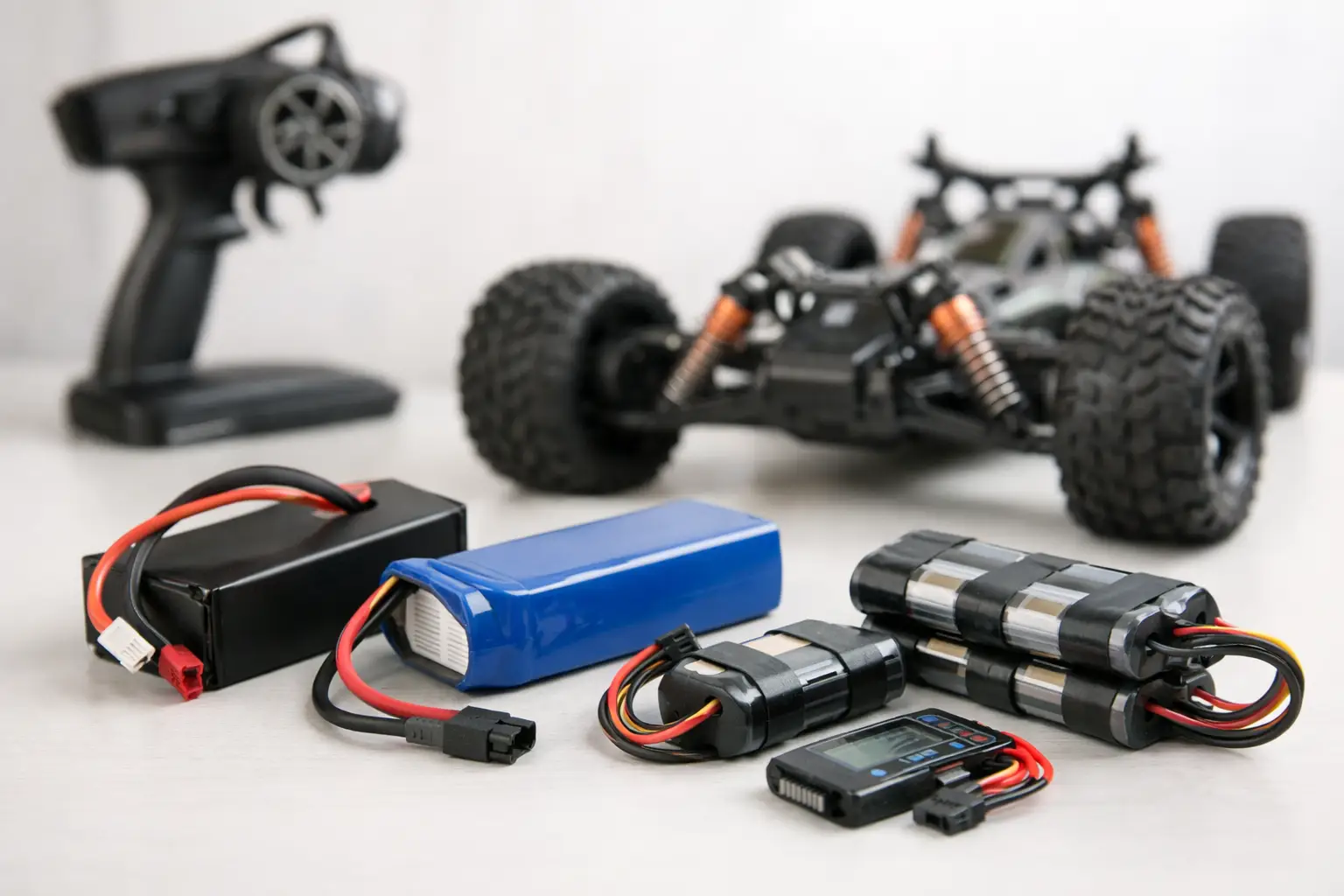
How to Choose RC Batteries Properly - Avoid Buying the Wrong Pack for Your RC Car
A fast RC car that cuts out after five minutes usually does not have:
-
a motor problem
-
an ESC problem
-
a gearing problem
More often:
the battery was the wrong choice from the beginning.
If you are learning how to choose RC batteries properly, the goal is not buying:
-
the biggest pack
-
the highest voltage
-
the most expensive battery
The goal is matching:
-
battery chemistry
-
voltage
-
capacity
-
discharge rate
-
physical size
to the RC vehicle you actually run.
That matters whether you drive:
-
bashers
-
crawlers
-
race cars
-
drift cars
-
aircraft
-
RC lorries
RC Model Shop stocks a large range of RC batteries and LiPo packs suitable for crawlers, bashers, aircraft and hobby-grade RC vehicles.
Start with compatibility first
The quickest way to narrow battery choices down is:
compatibility before performance.
Your:
-
ESC
-
motor
-
charger
-
battery tray
all set the limits.
Before buying any RC battery, check:
-
Supported battery chemistry
-
Voltage limits
-
Physical tray size
-
Connector compatibility
-
Charger support
Only once those basics are correct should you start comparing:
-
runtime
-
punch
-
discharge rate
-
battery weight
Skipping those checks is how buyers end up with:
-
overheating setups
-
batteries that do not fit
-
incompatible connectors
-
damaged electronics
LiPo vs NiMH - which is better?
For most RC hobbyists, the main choice is:
-
LiPo
or -
NiMH
Neither is universally “better.”
They simply suit different users.
LiPo batteries
LiPo batteries dominate modern hobby-grade RC because they provide:
-
lower weight
-
stronger acceleration
-
better voltage stability
-
improved throttle response
They are common in:
-
brushless bashers
-
crawlers
-
race cars
-
RC aircraft
However:
LiPo batteries require proper care.
That includes:
-
balance charging
-
storage charging
-
low-voltage protection
-
sensible handling
For experienced hobbyists:
-
the extra care is usually worth it.
For:
-
younger users
-
gift buyers
-
casual users
NiMH may still make more sense.
NiMH batteries
NiMH packs are:
-
simpler
-
more forgiving
-
easier for beginners
They work well for:
-
casual RC use
-
entry-level vehicles
-
younger hobbyists
They generally require:
-
less battery management
-
simpler charging routines
The trade-off is:
-
more weight
-
weaker punch
-
lower efficiency
If an RC vehicle feels:
-
sluggish
-
softer under acceleration
battery chemistry may be part of the reason.
Voltage affects speed AND stress
Voltage changes RC behaviour massively.
LiPo batteries are usually described as:
-
2S
-
3S
-
4S
2S LiPo
7.4V nominal
3S LiPo
11.1V nominal
Moving from:
-
2S to 3S
usually creates a very noticeable increase in:
-
acceleration
-
wheel speed
-
drivetrain load
-
motor heat
However:
more voltage also increases stress.
That affects:
-
ESC temperatures
-
drivetrain wear
-
tyre ballooning
-
battery demand
This is why:
“will it fit?”
is not the correct question.
The real question is:
“is the entire system designed for it?”
If the manual says:
-
2S only
stay on:
-
2S.
If the setup supports:
-
2S–3S
then choose based on:
-
speed goals
-
runtime
-
reliability
-
heat management
Capacity controls runtime
Capacity is measured in:
mAh.
Higher mAh usually means:
-
longer runtime
Example:
-
5000mAh generally lasts longer than 3000mAh
in the same RC vehicle.
However:
larger capacity also means more size and weight.
That extra weight affects:
-
handling
-
acceleration
-
balance
-
chassis response
especially in:
-
lightweight buggies
-
race cars
-
compact crawlers
For many RC cars:
3000mAh to 5000mAh
is a sensible general range.
There is no universal “best” capacity though.
C rating explained simply
C rating refers to:
how quickly the battery can safely deliver current.
This matters most on:
-
powerful brushless setups
-
heavy 4WD vehicles
-
monster trucks
-
aggressive acceleration builds
A battery with:
-
insufficient discharge capability
may:
-
sag under load
-
feel weak
-
run hotter
-
stress the electronics
However:
excessively high C ratings are not always necessary either.
Many buyers chase:
-
huge headline numbers
without needing them.
Real-world battery quality usually matters more than printed C ratings alone.
Battery fitment matters more than people expect
A battery can be:
-
electrically correct
while still: -
physically wrong.
Before buying, always check:
-
length
-
width
-
height
-
cable clearance
-
strap fitment
Hard case LiPos are extremely common in:
-
RC cars
-
trucks
-
bashers
because they provide:
-
additional protection
-
better durability
-
cleaner installation
Soft case batteries work well where:
-
space is tight
-
weight matters
-
racing performance is prioritised
Shorty packs also suit some:
-
race buggies
-
drift setups
-
competition chassis
Connector compatibility matters too
Common RC connectors include:
-
XT60
-
XT90
-
EC3
-
EC5
-
IC3
-
IC5
-
Deans
-
Traxxas connectors
Adapters can work temporarily, but:
direct connector matches are better.
Adapters:
-
add resistance
-
increase clutter
-
create additional failure points
A clean battery setup is usually:
-
safer
-
more reliable
-
easier to maintain
long-term.
Choosing RC batteries for different vehicle types
Bashers
Bashers usually need:
-
balanced runtime
-
strong punch
-
durable packs
-
sensible heat control
Hard case LiPos are extremely common here.
Crawlers
Crawlers often prioritise:
-
smooth power delivery
-
runtime
-
balance
-
weight placement
Maximum voltage is not always the best answer.
Many crawler owners prefer:
-
controlled low-speed behaviour
over: -
outright wheel speed
Race cars
Race setups care heavily about:
-
weight
-
dimensions
-
discharge consistency
-
balance
This is where:
-
shorty packs
-
lightweight batteries
-
tighter fitment
become more important.
Aircraft
Aircraft battery selection is much less forgiving.
Battery:
-
voltage
-
weight
-
discharge capability
all directly affect:
-
flight behaviour
-
propeller load
-
ESC stress
Manufacturer recommendations matter heavily here.
Chargers matter too
The battery is only half the system.
The charger must support:
-
the battery chemistry
-
cell count
-
balancing
-
connector compatibility
If moving from:
-
NiMH to LiPo
confirm the charger fully supports:
-
balance charging
-
storage charging
You can browse a large range of RC battery chargers and charging accessories suitable for modern LiPo setups.
Battery and charger bundles also simplify:
-
compatibility
-
charging setup
-
beginner mistakes
You can browse compatible battery and charger combo kits here.
Common RC battery mistakes
The biggest mistakes are:
-
too much voltage
-
poor fitment
-
ignoring C rating
-
buying for runtime only
-
overlooking connector compatibility
Another major mistake is:
assuming all packs with the same voltage are interchangeable.
They are not.
Dimensions, discharge rate, chemistry and intended use still matter heavily.
A smarter way to choose RC batteries
The best RC battery is usually the one that:
-
fits properly
-
supports the electronics safely
-
delivers enough runtime
-
stays reliable long-term
rather than simply producing the biggest numbers on paper.
Before buying:
-
Confirm voltage compatibility
-
Check tray dimensions
-
Match connector type
-
Consider runtime needs
-
Think about charger compatibility
That process avoids most expensive RC battery mistakes.
At RC Model Shop, the focus is always helping hobbyists match batteries properly to:
-
the RC vehicle
-
the electronics
-
the terrain
-
the intended use
rather than simply recommending the largest or most powerful battery available.
Because a properly matched RC battery should:
-
improve the whole driving experience
-
reduce frustration
-
protect the electronics
-
keep the RC vehicle running consistently
from the very first pack onward.
Frequently Asked Questions
What battery is best for RC cars?
For many hobby-grade RC cars, LiPo batteries offer the best balance of:
-
performance
-
runtime
-
weight
-
throttle response
provided the setup supports them properly.
Is 3S always better than 2S?
No. 3S increases:
-
speed
-
acceleration
-
heat
-
drivetrain stress
and only makes sense if the entire setup supports it safely.
What does mAh mean on RC batteries?
mAh measures:
battery capacity.
Higher mAh usually means longer runtime.
What does C rating mean?
C rating refers to how quickly the battery can safely deliver current under load.
Why does battery size matter?
A battery may:
-
electrically work
but still: -
not fit the chassis properly
so physical dimensions matter heavily.
Written by the RC team at RCModelShop.co.uk / Appliance Electronics UK Ltd, UK supplier of RC batteries, chargers and hobby-grade RC electronics.